






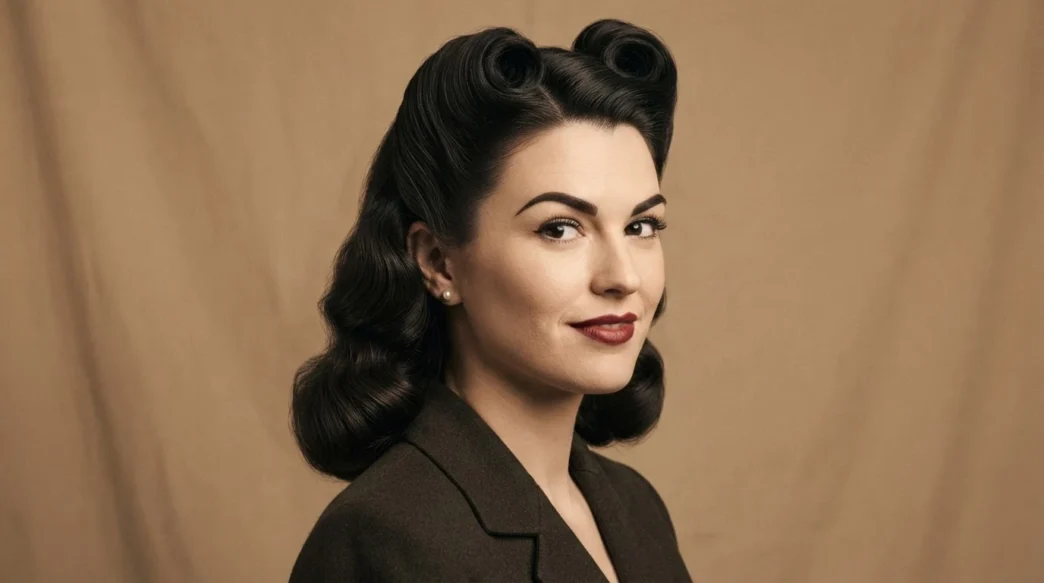
Forties hair is built, not styled, and that is the part most tutorials skip past. A victory roll is a structure with tension holding it up, and once you know that, the question stops being how do I do it and becomes how much time do I have this morning. So that is how this list is ordered: cheapest first, with real minutes on every one.
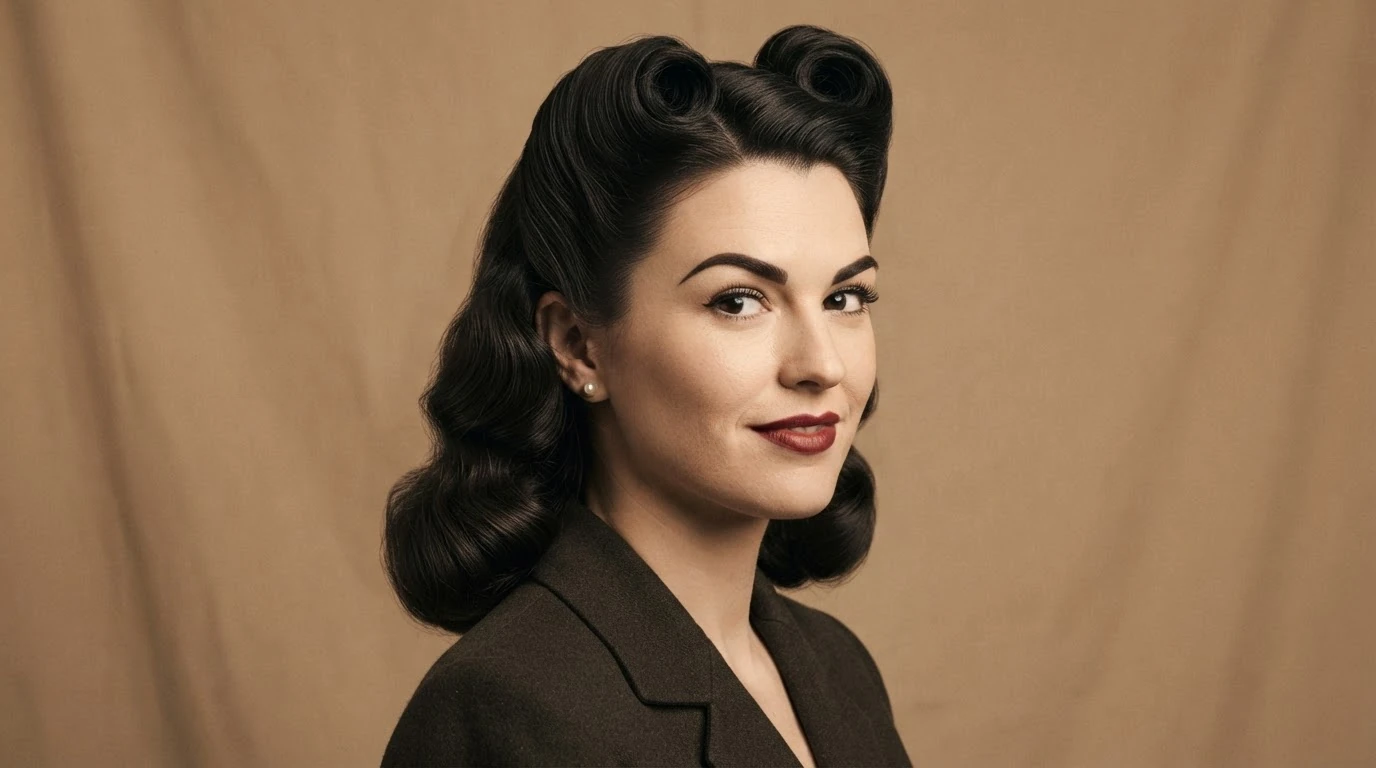
1. The Single Front Roll — 8 minutes
One roll, set slightly off-centre above the forehead, with the rest of the hair left down. It is the cheapest way into forties hair and the one I would start anybody on, because there is no symmetry to get wrong. Take a section about four fingers wide from the front hairline, backcomb the underside lightly, roll it toward your face and pin it from underneath at the two points where it meets the scalp.
What holds it is the backcombing, not the pins — the pins only stop it unrolling. Finished, it reads as a soft wave with a lift at the front rather than as a costume, which is why it survives an office.
2. The Faux Roll Over Padding — 10 minutes
The same shape as the single roll, built around a small pad of hair or a rolled-up sock rather than around itself. Two minutes more and considerably more forgiving on fine hair, which will not hold a roll of its own diameter for long.
The pad carries the shape and the hair only has to cover it, so what holds it is the pin through the pad rather than tension in the hair. Colour-match the pad or it shows through at the ends by the afternoon.
3. The Low Side Roll — 12 minutes
A roll that sits behind the ear rather than above the forehead, with the length swept across and tucked under. Nothing on the crown, which makes it the least noticeable set here and the easiest to wear with a hat.
A pair of crossed pins at the nape does the work. Finished, it gives a clean line from temple to jaw and reads more 1946 than 1943, which is a real distinction if you care about the year.
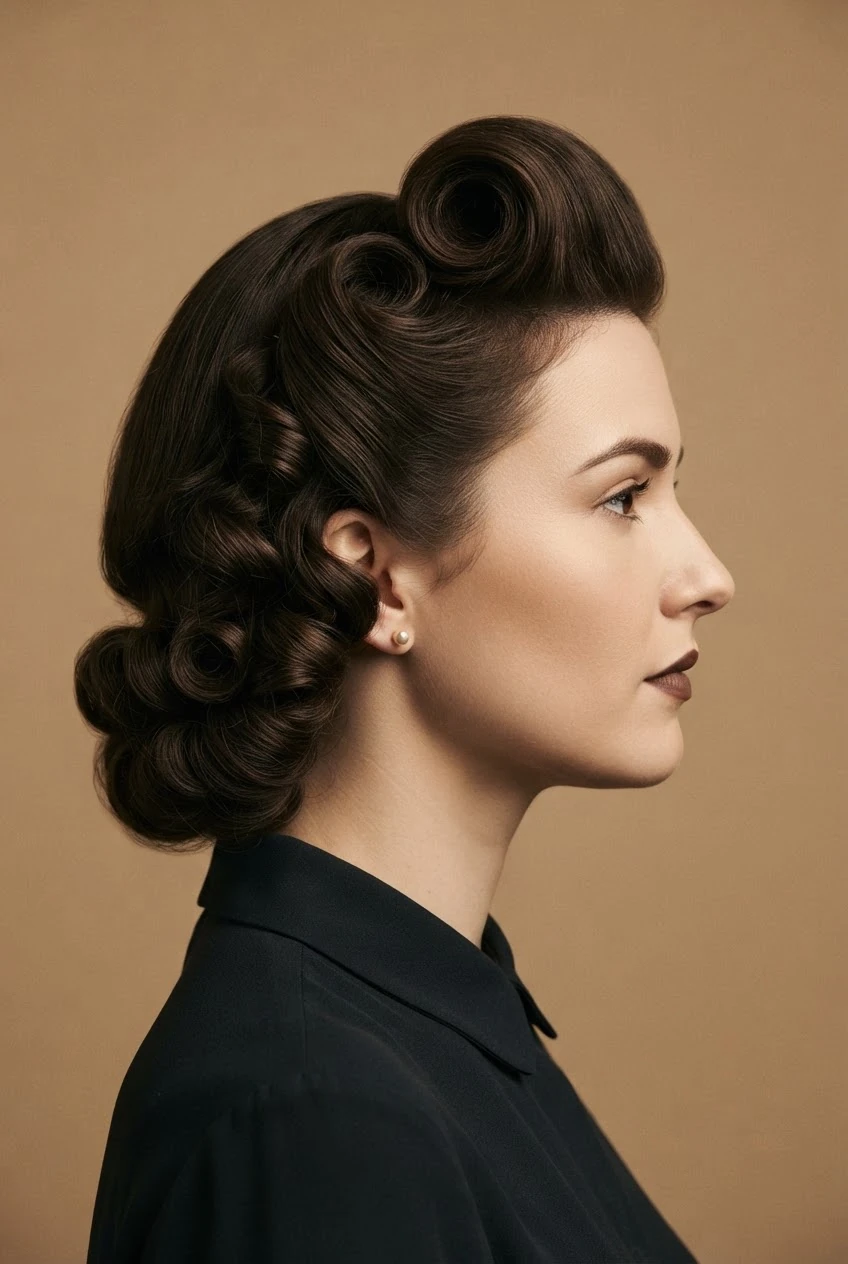
4. The Halo Roll — 18 minutes
One continuous roll running from one temple, around the back of the head, to the other. It is a single movement rather than a set of separate rolls, and it takes longer mostly because you cannot see the back half while you are doing it.
Tension is what holds this, kept even the whole way round. If it collapses it collapses at the back first, which you will not notice until somebody tells you, so it is worth a hand mirror the first few times.
5. The Classic Pair — 20 minutes
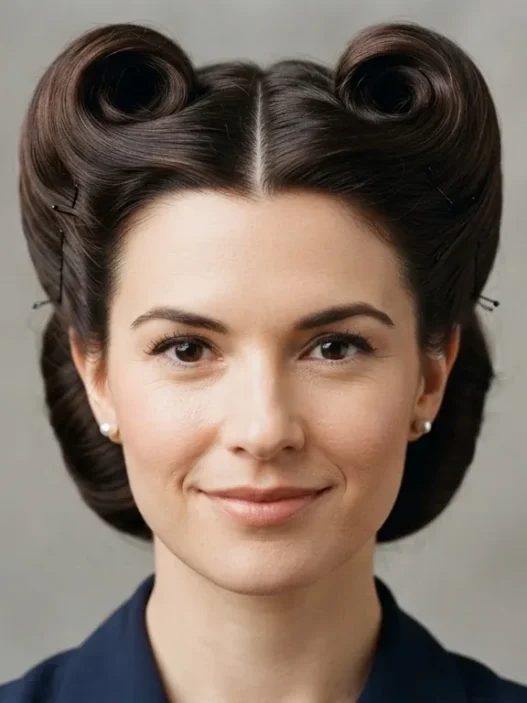
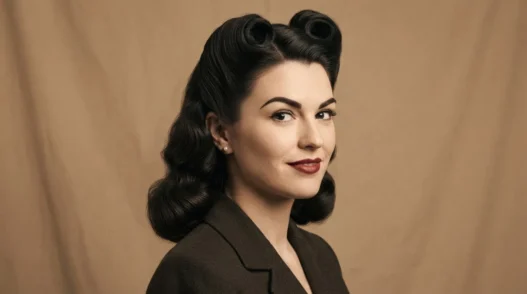
Two rolls above the forehead, the shape everybody pictures when they hear victory rolls. Twenty minutes is honest for a practised pair; the first dozen attempts will take forty and one roll will be larger than the other.
What holds them is a firm backcomb at the base of each section and four pins per roll, driven in underneath and toward the opposite roll. The symmetry is the whole difficulty and it is a measuring problem, not a rolling one — part the two sections with a comb, not by eye.
6. The Roll and Snood — 25 minutes
A rolled front with the entire length gathered into a snood at the nape. The roll is the same twenty-minute pair; the extra five minutes are spent getting the length into the snood without a lump showing through the net.
Two pins carry the weight of the snood, at the top corners where it meets the head, and everything else is decoration. It is the most practical set on this list and it was practical for the same reason in 1943 — nothing is loose.
7. The Rolled Front With Waved Length — 35 minutes
The pair, plus the length below set into finger waves or brushed-out pin curls. This is where the time starts to be real, because the length has to be set before the rolls go in and the set has to be dry.
The rolls hold on backcombing as before; the waves hold on whatever you set them with. Finished, this is the full period silhouette, and it is the first set on this list that will not pass unremarked at work.
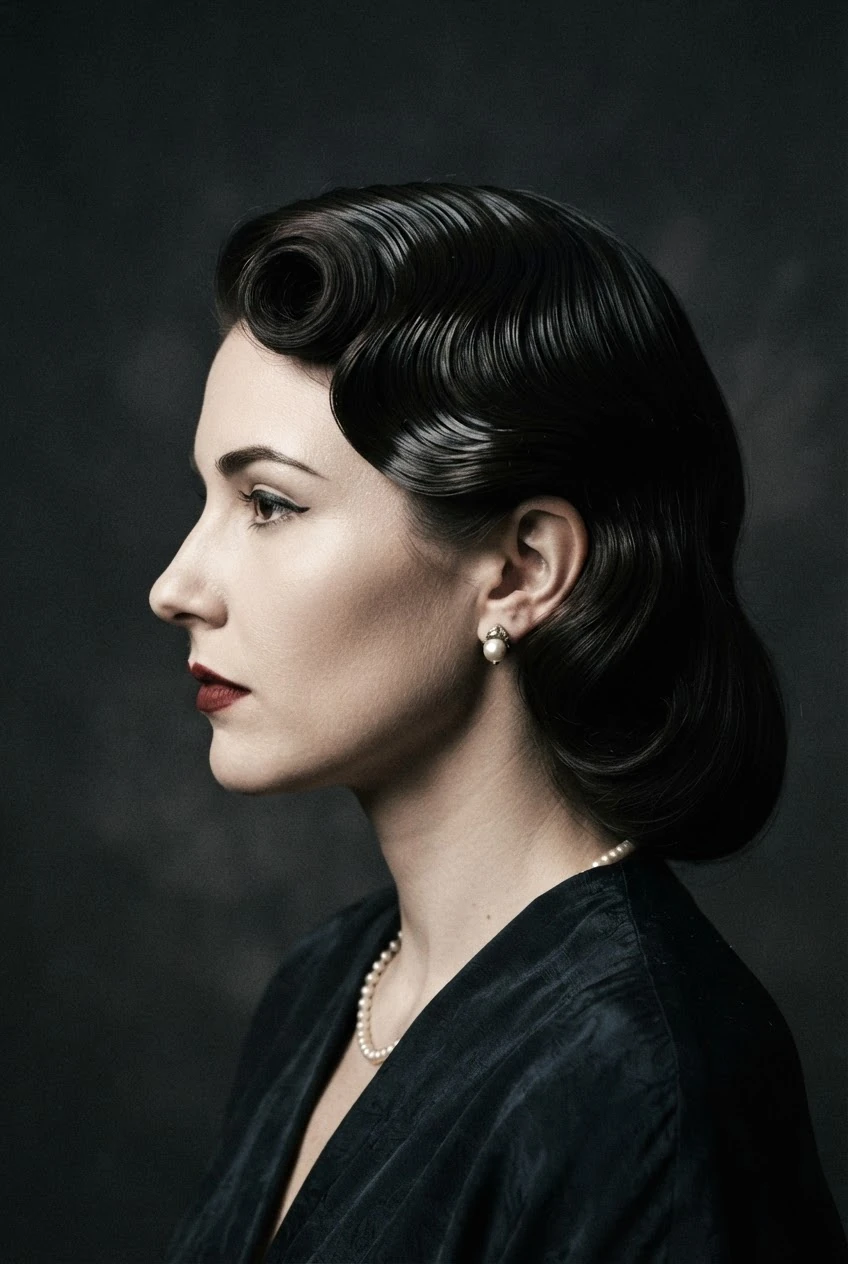
8. The Full Set Over Pin Curls — overnight, plus 25 minutes
Pin-curl the whole head at night, sleep on it, brush out in the morning and build the rolls into hair that already has shape in it. The overnight part is unavoidable and the morning part is quicker than starting cold, because set hair rolls itself.
The set holds the rolls, so the pins have almost nothing to do and there is no backcombing at all. This is the version that lasts two days, and the reason forties hair was washed weekly rather than daily.
9. The Wet Set Under a Dryer — 90 minutes under the hood
Setting lotion, rollers and pin curls on damp hair, ninety minutes under a hood dryer, then a brush-out and the rolls. It is the way it was actually done, and there is no faster route to this particular finish.
Everything holds because the hair was reshaped while it dried, not while it was dry. If you have ever wondered why your rolls drop by lunchtime and the photographs from 1944 do not, this is the answer and it is ninety minutes long.
What Goes Wrong the First Time
Two things, and neither is the rolling. The first is that the sections are parted by eye, so one roll ends up wider at the base than the other and no amount of adjusting afterwards fixes it — part them with a comb against the centre of your forehead. The second is that the pins go in from the top, where they are visible and where they have nothing to grip. Every pin goes in from underneath, through the base of the roll, angled toward the opposite side of your head.
If a roll has collapsed by mid-morning, the fault is almost always at the base and almost never in the pinning. Backcomb it harder next time, or set the hair first and stop backcombing altogether.
Start with the single front roll. It takes eight minutes, it teaches you the hand movement, and it is the only one on this list you can wear to work while you are still learning.