



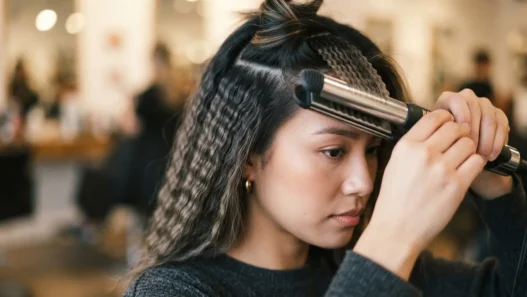

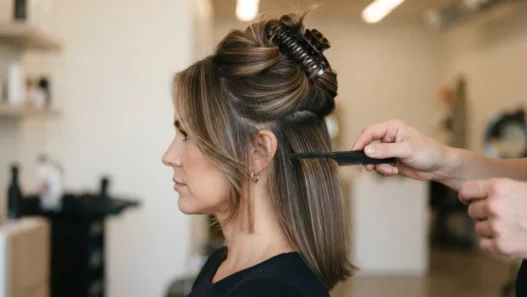

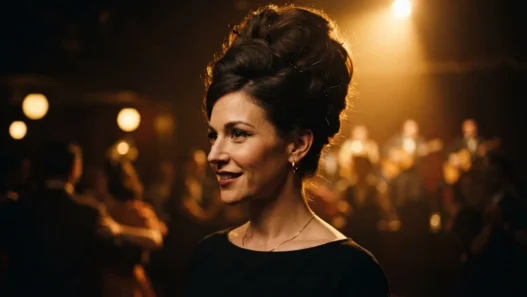

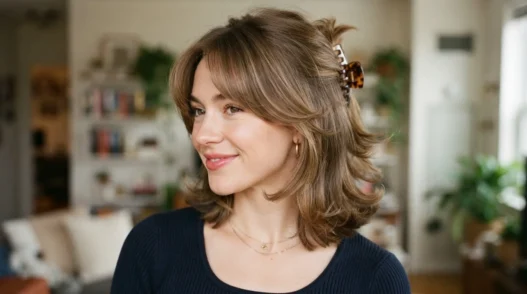
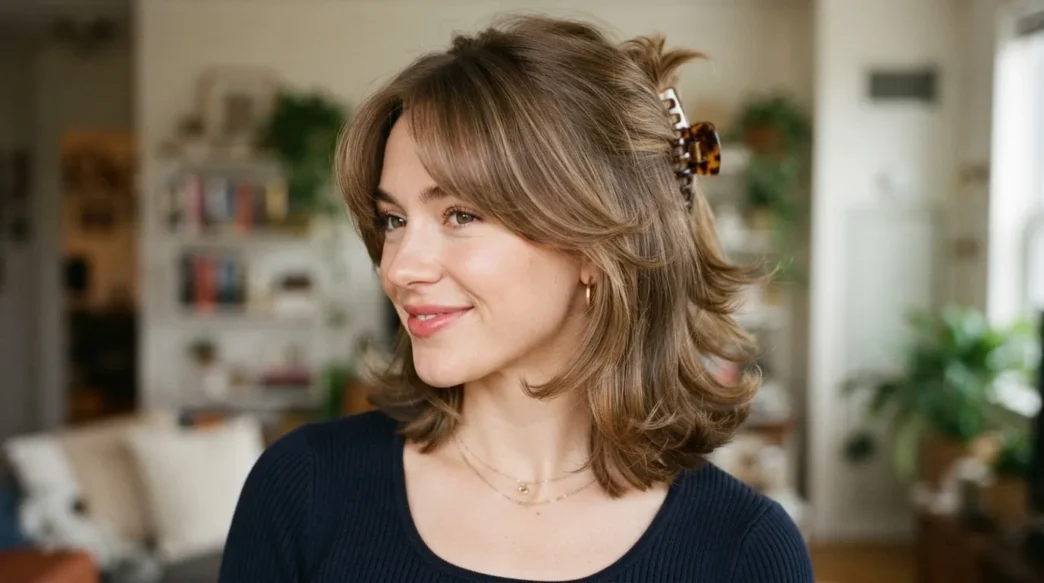
I have been obsessed with the hardware in my bathroom drawer for longer than I care to admit. There’s a whole graveyard of butterfly clips, banana clips, and single-tooth combs in there — and every single one of them was designed to do something structural, not just decorative. That’s the thing people miss about nineties hair: the clips weren’t an afterthought. They were the actual architecture. When you pair them with 90s layers and curtain bangs, every piece of hardware has a job.
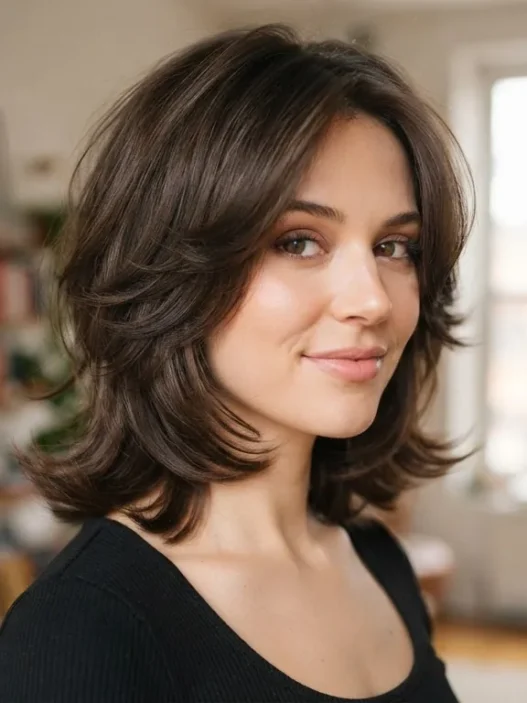
Curtain bangs split at the center and fall away from the face. Layers are cut to move — to spring forward, to flip at the ends, to stack in visible steps from crown to shoulder. So the clip you choose determines whether those layers land softly or fall flat. This is what I keep telling people when they ask me why their hair looks nothing like the reference photo they saved. It’s the clip. It’s always the clip.
What’s Sitting in This Drawer
- 1. The Claw Clip Crown
- 2. The Single Side Comb
- 3. The Butterfly Clip Half-Up
- 4. The French Barrette Center Part
- 5. The Double Jaw Clip Stack
- 6. The Snap Clip Face Frame
- 7. The Banana Clip Twist
- 8. The Bobby Pin Curtain
- 9. The Velvet Scrunchie Pull-Through
- 10. The Tortoiseshell Slide Lift
- 11. The Invisible Pin Curtain Set
1. The Claw Clip Crown
Best for: medium to thick hair. Hold: strong.
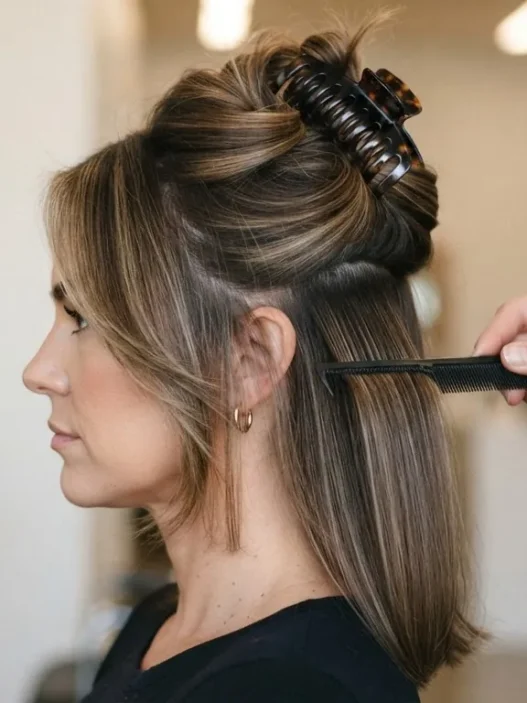
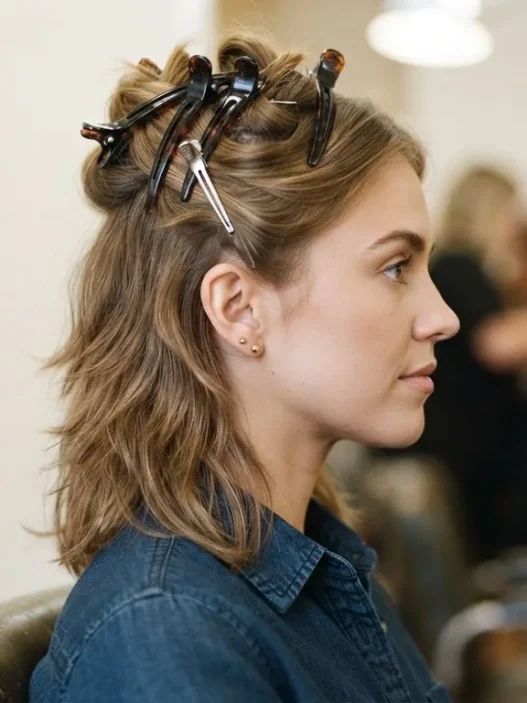
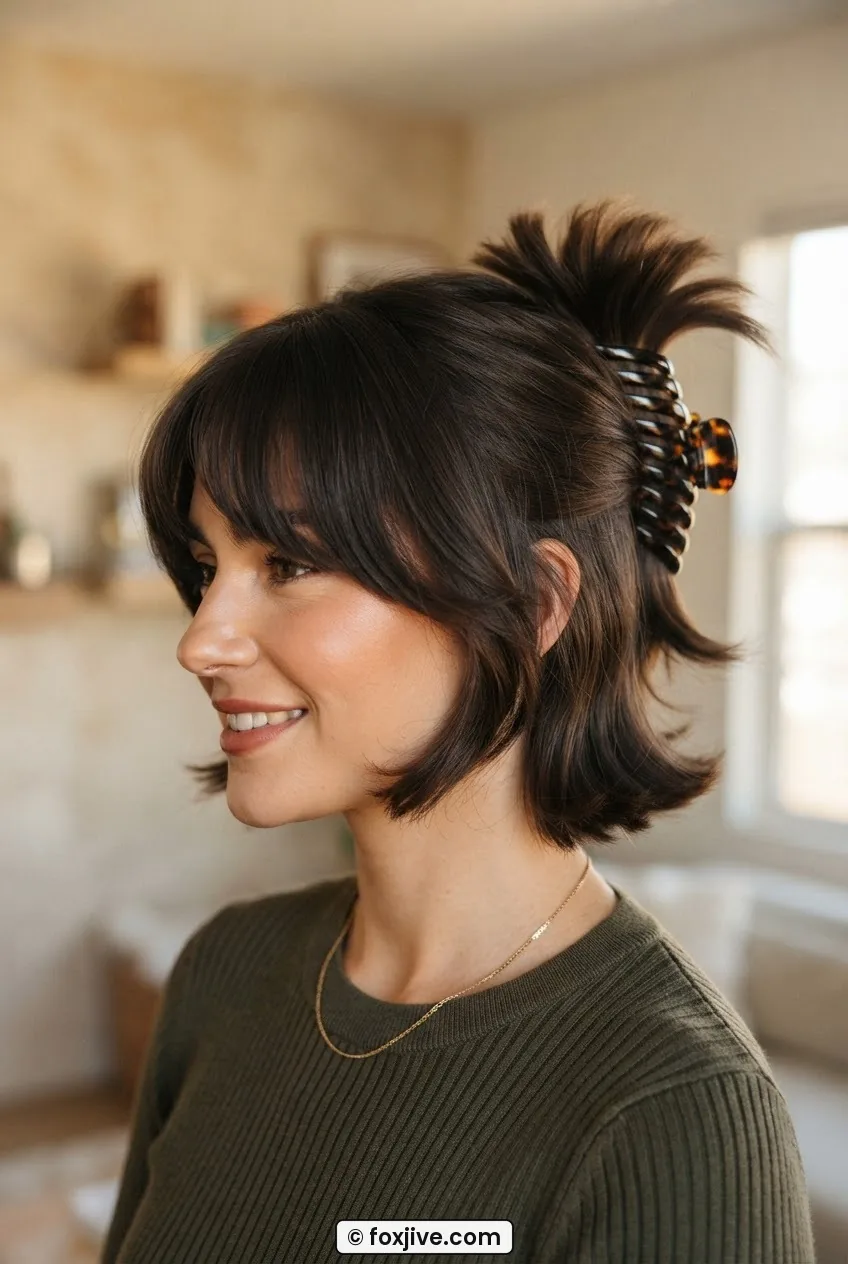
The claw clip crown is the laziest-looking thing with the most deliberate construction. You gather the back layers loosely, clip them at the occipital bone, and let the shorter pieces — those classic nineties face-framing layers — fall completely free around the front. The curtain bangs split and drape forward on both sides, which is exactly the point. You’re not hiding them. You’re showcasing them.
Look at her in the photo — the way her layers cascade in front of the clip while the back is secure and lifted. That slight loft at the crown comes entirely from how the claw teeth grip the hair at an upward angle. Nothing else is doing that. And it handles thick hair without slipping because those teeth span a wide section.
2. The Single Side Comb
Best for: fine to medium hair. Hold: directional.
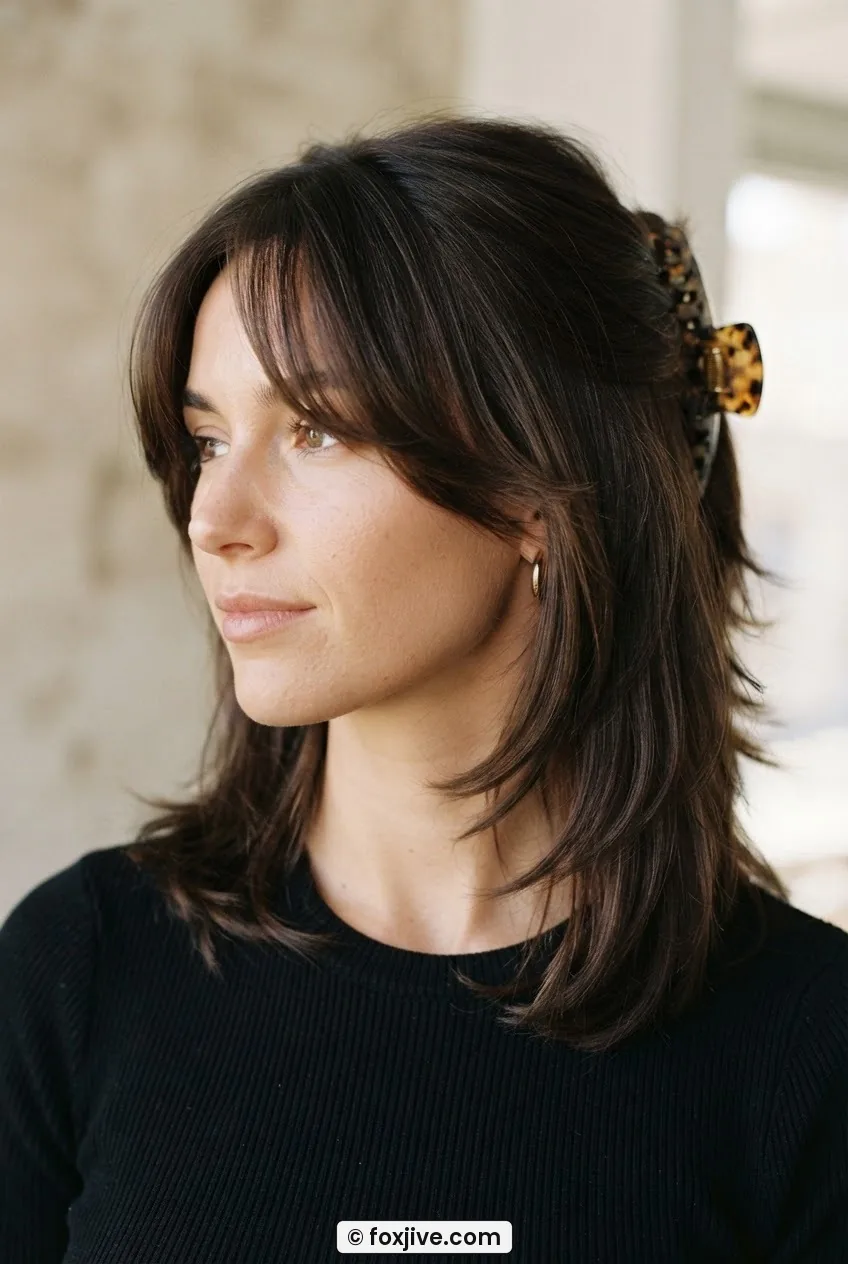
This is the one I reach for when I want something that reads vintage but not costume-y. A single tortoiseshell or acrylic side comb, slid into the hair just above the ear on one side, pins a portion of the curtain bang back and changes the whole silhouette of the cut. One side open, one side anchored. Asymmetry is so inherently nineties that it barely needs explaining.
For this to work with 90s face framing layers, you need to direct the comb teeth downward into the hair — not sideways. That’s what creates hold rather than just a surface decoration. Fine hair especially benefits because the comb distributes pressure across multiple strands instead of stressing one section.
3. The Butterfly Clip Half-Up
Best for: fine to medium hair. Hold: moderate — decorative as much as structural.
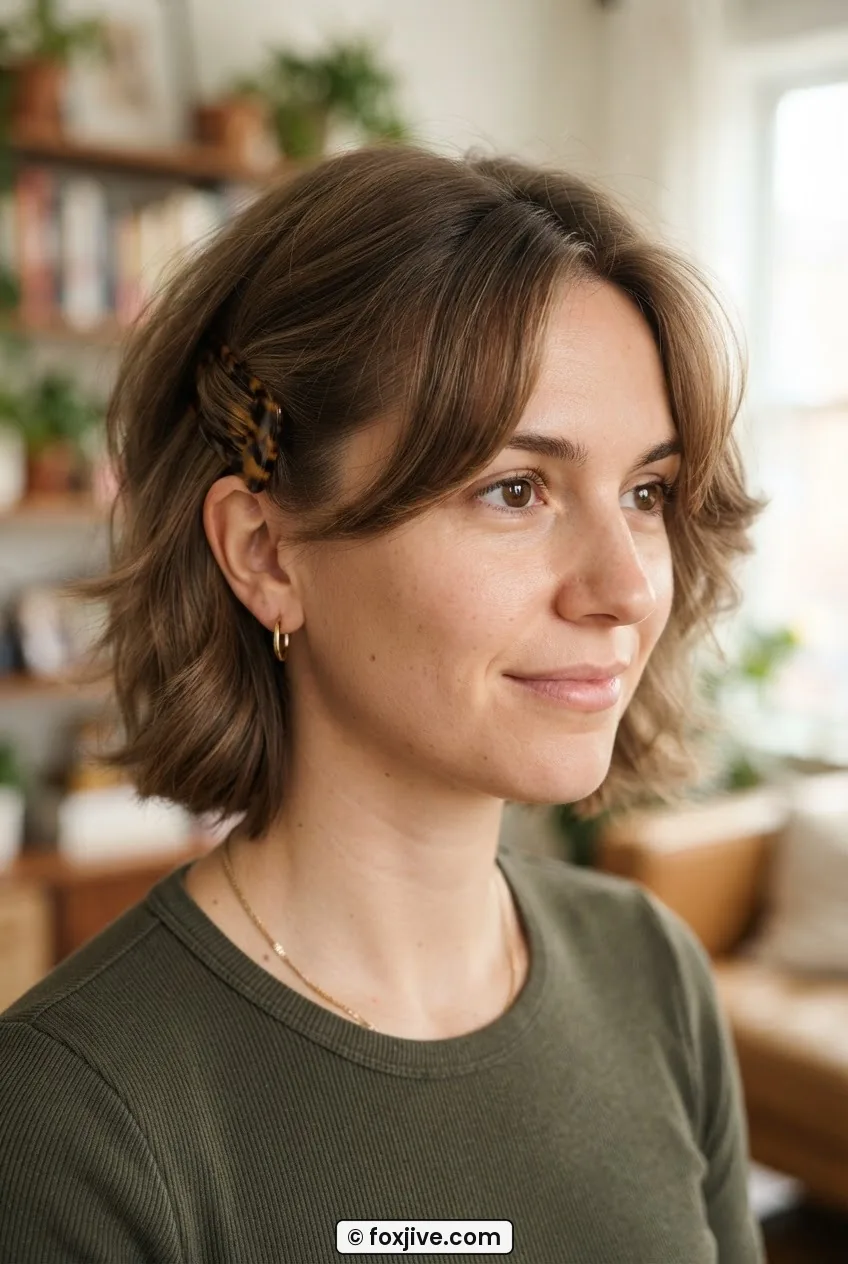
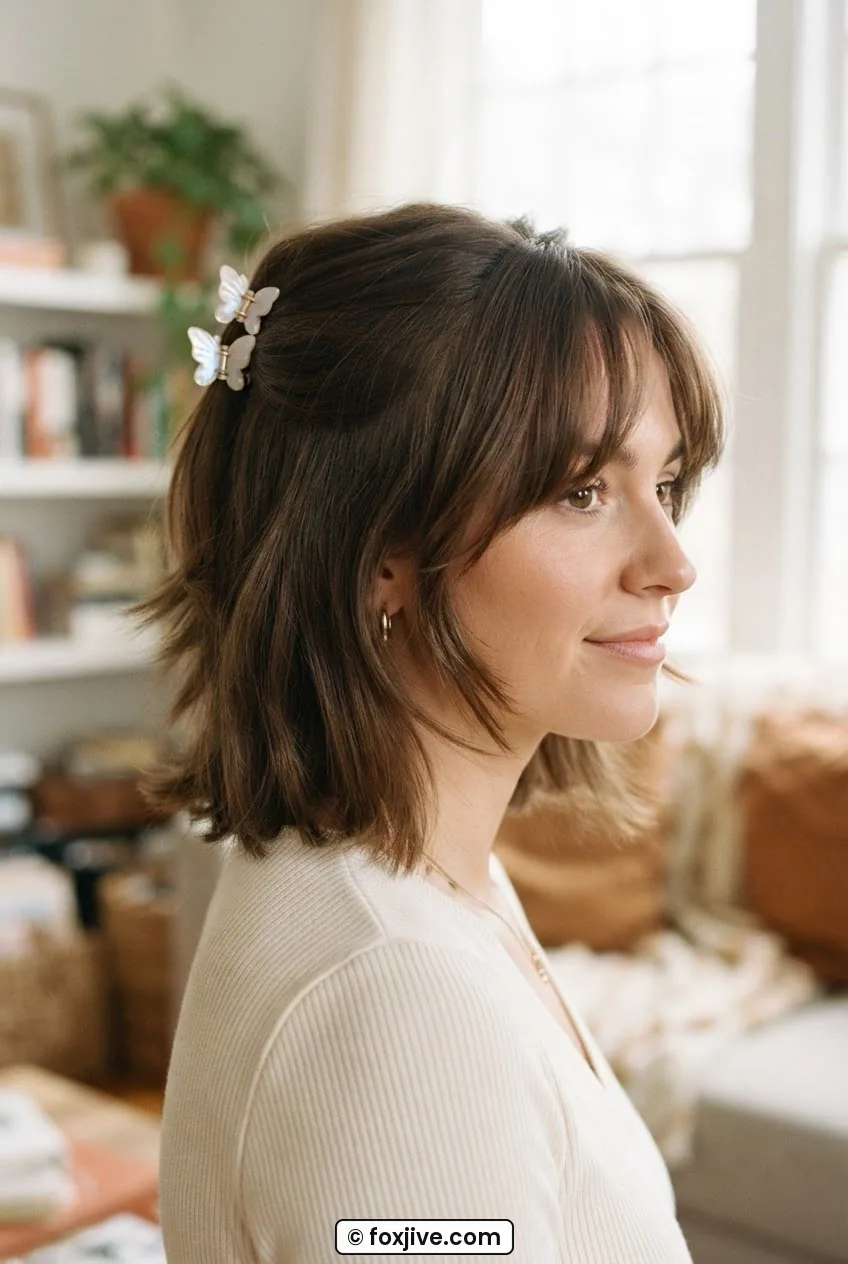
We have to talk about the butterfly clip. It’s back in a massive way and honestly it never should have left. The half-up version takes the top section of your layered hair — crown to just behind the ears — and clips it with one or two butterfly clips positioned vertically at the back of the gathered section. The curtain bangs stay completely out, framing the face, and the rest of the layers fall loose underneath.
This is a look built on nostalgia but it functions on layered lobs and mid-length cuts especially well. I’ve seen it done with iridescent clips that catch the light when the wearer moves — genuinely stunning. The Foxjive.Com archive has some brilliant reference images if you want to see how the nineties actually styled these versus how we’re interpreting them now in 2026.
4. The French Barrette Center Part
Best for: all hair thicknesses. Hold: firm and flat.
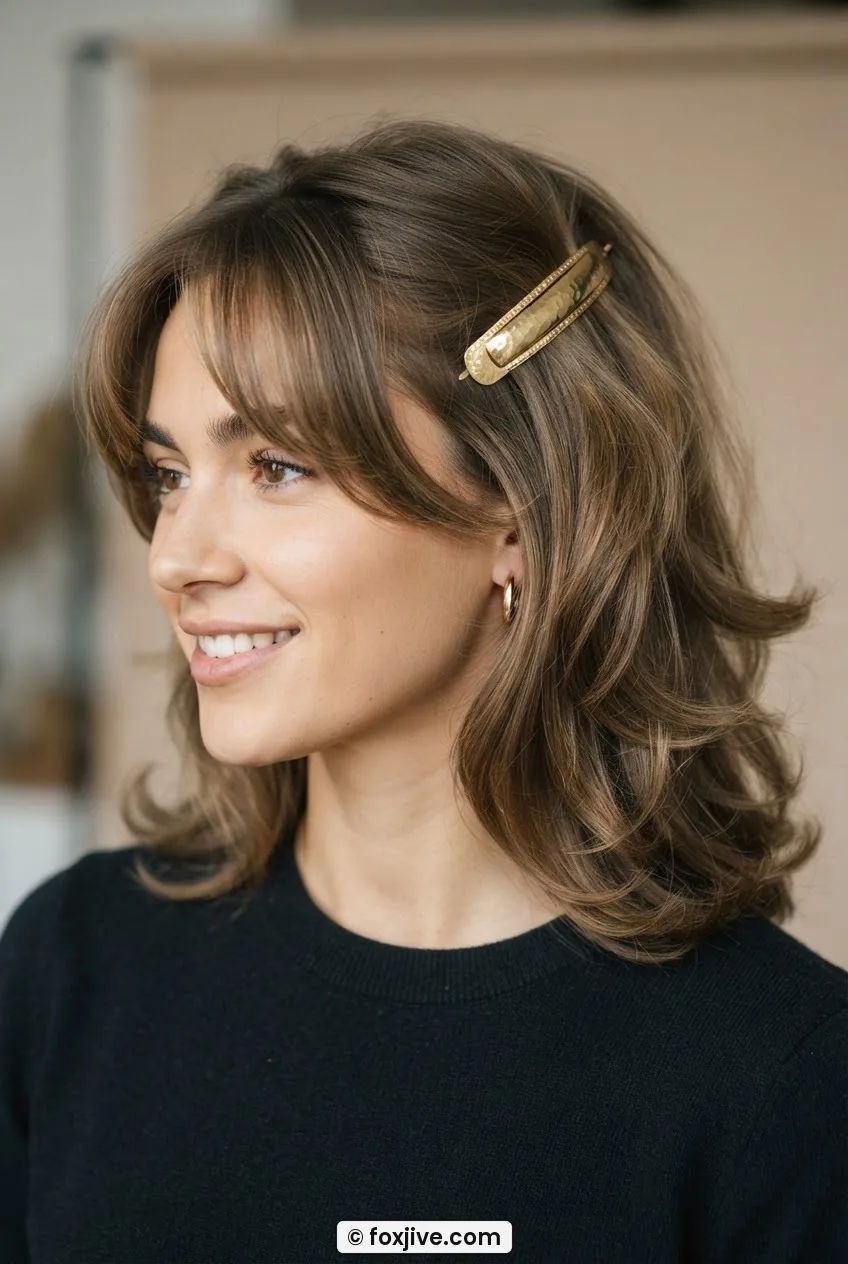
There’s something so quietly authoritative about a French barrette. The long, flat body lies close to the scalp, which means it doesn’t compete with the volume of the layers below it — it just holds. For curtain bangs specifically, I love placing a single French barrette horizontally across the back at mid-crown level, gathering just the top layer of hair and letting everything else, bangs included, hang loose.
It works on thick hair when you choose a large-format barrette with a strong clasp. Smaller ones snap open under pressure. And you can read up on using barrettes in layered cuts to find the right clasp gauge before you buy.
5. The Double Jaw Clip Stack
Best for: thick and very thick hair. Hold: exceptionally strong.
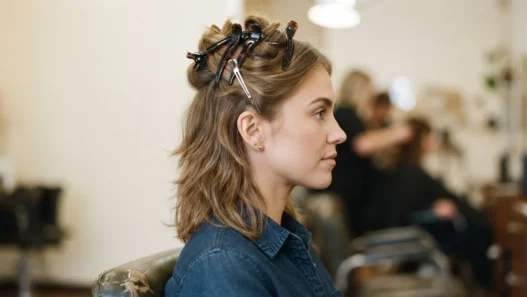
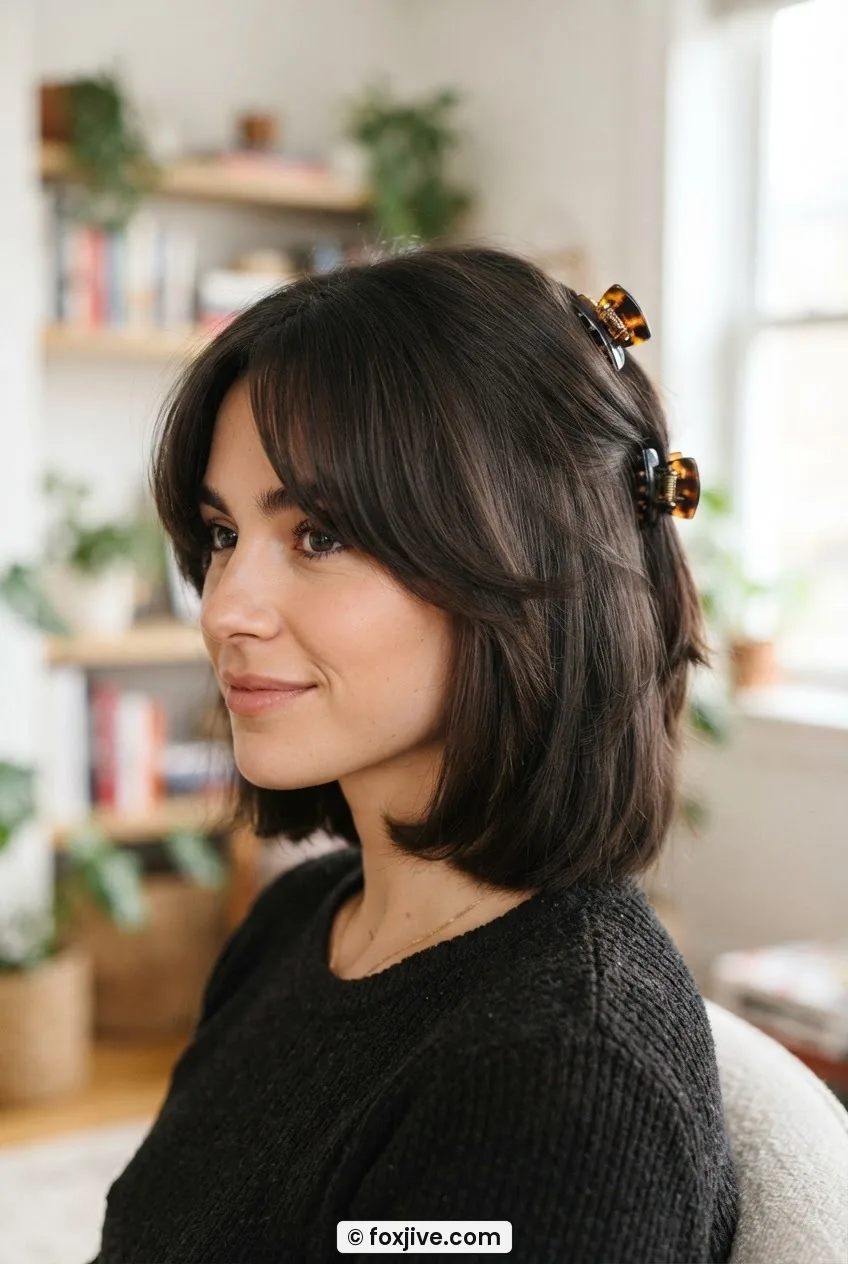
This one is pure function elevated into style. Two mini jaw clips stacked vertically down the back of the head — one at the crown, one at the nape — hold the entire back section of a 90s layered cut in place while the face-framing pieces and curtain bangs do their thing up front. The stacking means you’re distributing the weight of thick hair across two grip points instead of one, which prevents the dreaded single-clip slip that ruins your look by noon.
She’s working this exact setup in the photo below, and notice how the layers in front still have movement — the hair isn’t rigid just because the back is locked in. That’s the whole art of 90s layers and curtain bangs: structure at the back, freedom at the front.
My personal pick has always been the double jaw clip stack for thick hair days. I discovered it by accident when one clip kept slipping and I just added a second one below it — and suddenly my hair stayed put through an entire workday. Sometimes the solution is embarrassingly simple.
6. The Snap Clip Face Frame
Best for: fine to medium hair. Hold: light and directional.
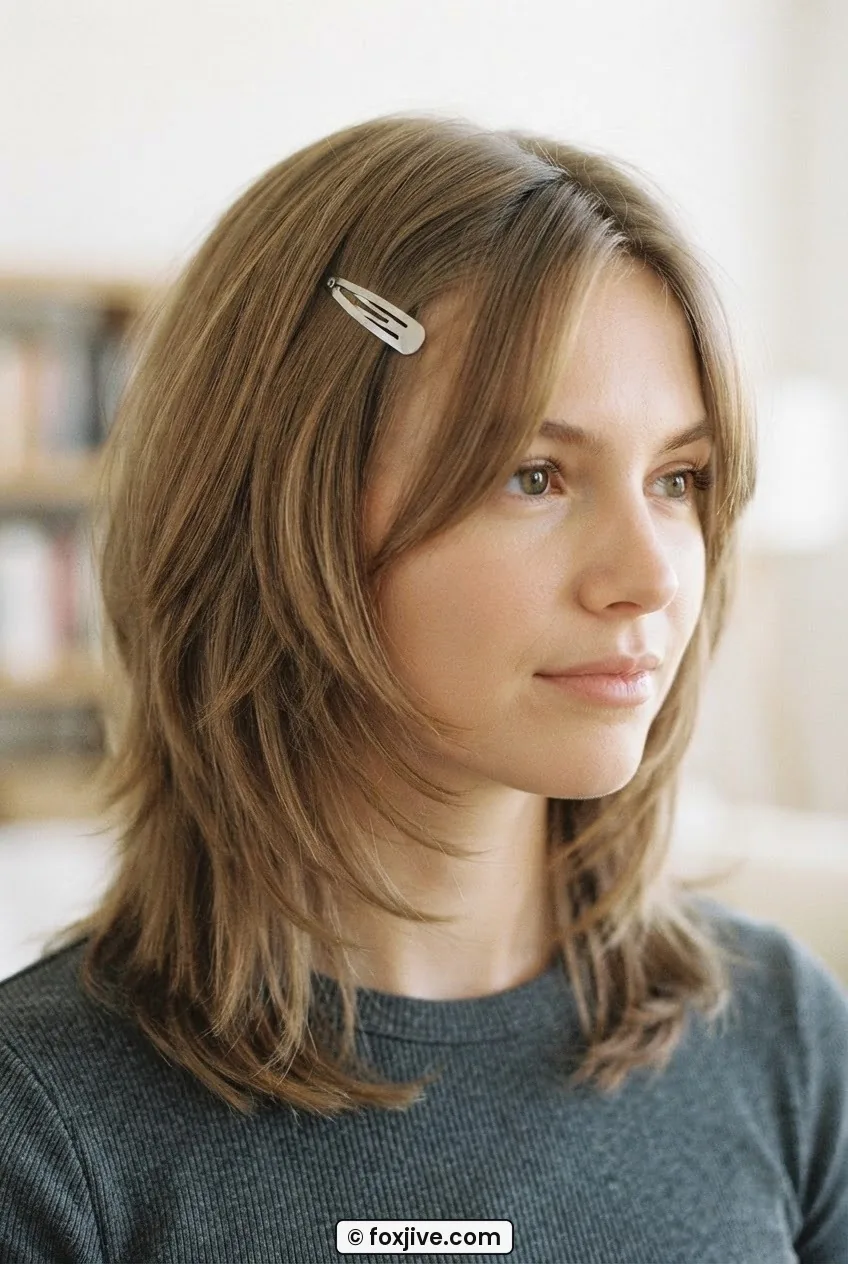
Snap clips — those small hinged metal or plastic clips — are underrated as a precision tool for 90s face framing layers. The technique is simple: take the very shortest layer that falls around your face, the piece that swings forward and tickles your cheekbone, and pin it back at a slight angle with a single snap clip positioned close to the temple. You’re not removing the curtain bang effect. You’re adjusting how far it falls.
Works beautifully on fine hair because a snap clip doesn’t add weight or create a pressure point the way a heavier clip does. And if you’re growing out a fringe and finding the center section falls into your eyes, two snap clips — one on each side, directing the bang outward — solve the problem while keeping the look intentional rather than accidental.
7. The Banana Clip Twist
Best for: thick and very thick hair. Hold: strong with built-in volume.
If you’ve never used a banana clip on a 90s layered cut, you have been missing one of the most satisfying hair moments available to you. The banana clip — that long curved clip with interlocking teeth — gathers all your back hair into a twisted column that fans out at the top. The result looks effortful. It is not. The curtain bangs fall forward naturally because the clip starts behind the ear line and pulls nothing from the front sections.
Thick hair was basically born for banana clips. The teeth interlock across a huge surface area, which means there’s real mechanical grip rather than just friction. And the twist adds volume at the crown that layers alone can’t always provide. I’m also a big fan of pairing this with flicked ends — that very Rachel-era flip at the tips — which 90s flicked ends can walk you through technically.
8. The Bobby Pin Curtain
Best for: all hair thicknesses, especially fine hair. Hold: precise, targeted.
Bobby pins get dismissed as boring, which is bizarre because they’re the most versatile piece of hardware that exists. For nineties curtain bangs specifically, the technique is to use two crossed bobby pins at each temple — that classic X placement — to hold the outer edge of the curtain bang at exactly the angle you want. Too far forward and it falls into your eye. Too far back and you lose the whole curtain effect. The X crossing gives you fine control over that middle-ground drape.
This also works as a finishing move after you’ve done a bigger clip at the back. Set the large clip first, then use bobby pins to dial in the hang of each bang section. The nineties look I’m referencing here has always been about precision made to look casual. Bobby pins are how you achieve that contradiction.

9. The Velvet Scrunchie Pull-Through
Best for: medium to thick hair. Hold: soft, low-tension.
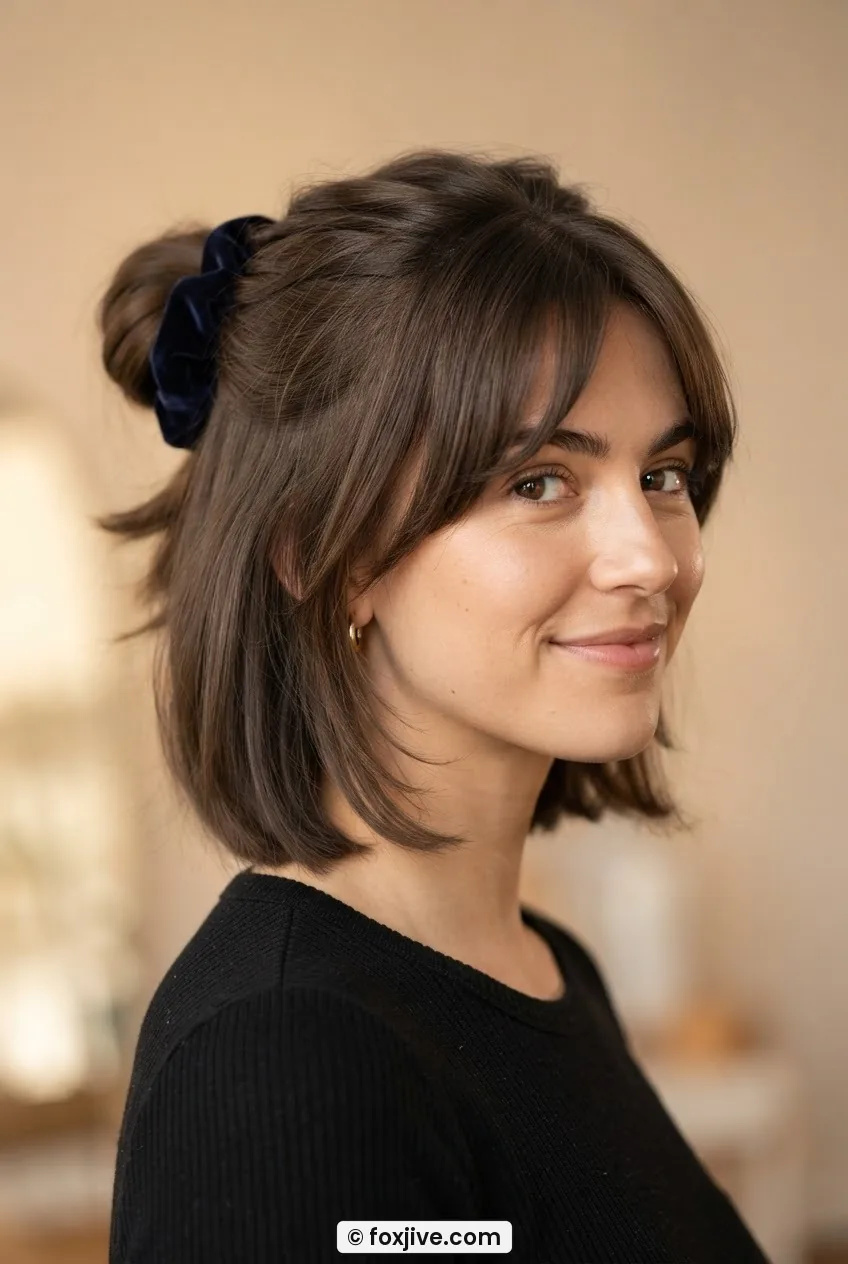
Technically a scrunchie is a fabric-covered elastic, not a clip, but I’m including it because the pull-through technique is so specifically suited to 90s layers. You gather a loose, low ponytail at the nape, pull it halfway through the scrunchie on the last loop, and leave a soft loop of hair fanned out rather than a full ponytail. The result is a hybrid between a half-up and a low bun that reads as very deliberate nineties.
The velvet fabric is crucial — it grips the hair without creasing it, which matters when your layers are styled with a subtle bend or flip. A shiny elastic would just slide. And because the technique doesn’t pull tight, it works even for people who are sensitive to tension at the hairline, which is worth noting for anyone pairing this with delicate curtain bangs that need to lay flat at the center part.
10. The Tortoiseshell Slide Lift
Best for: fine to medium hair. Hold: light surface grip.
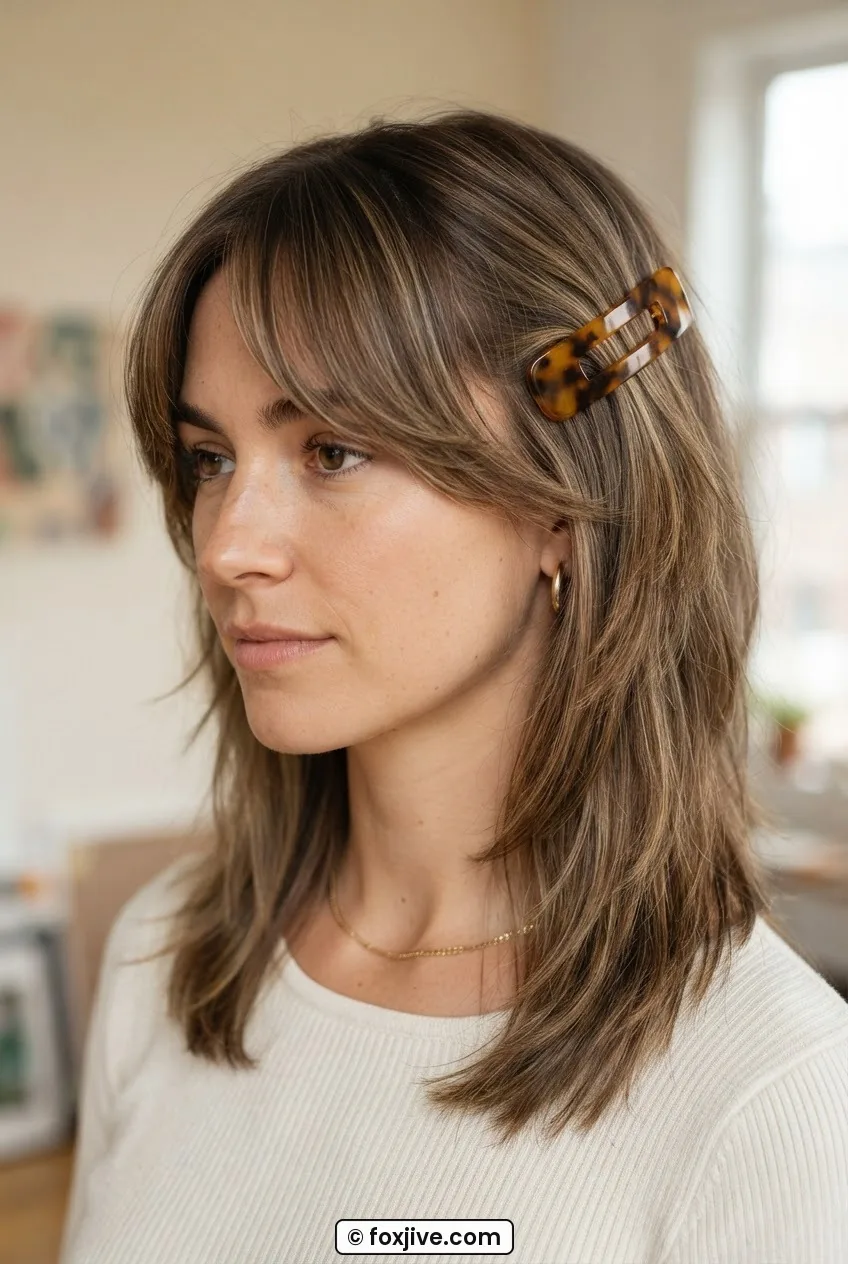
A hair slide — or hair stick clip — is the flat decorative piece that slides horizontally through a section of hair to hold it against the head. For 90s face framing layers, I love using a wide tortoiseshell slide positioned just above one ear to gather and hold about a quarter of the hair on that side, sweeping it slightly behind the ear while the rest of the layers stay free. The curtain bang on the opposite side becomes the focal point of the whole look.
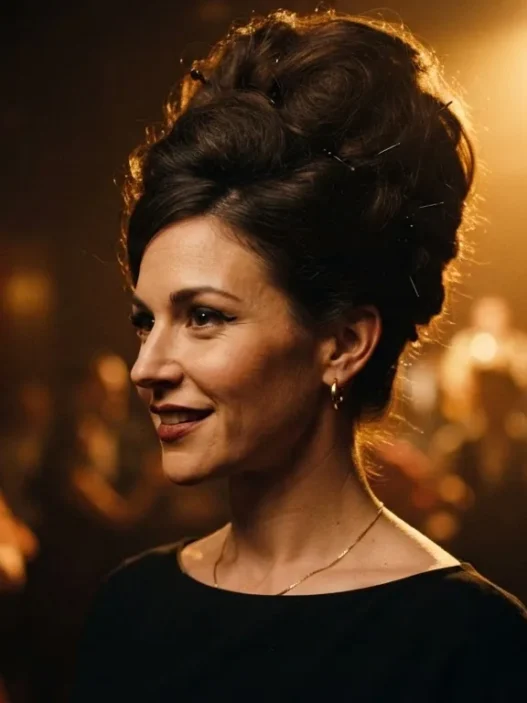
The nineties connection here is direct — slides and barrettes in amber and tortoiseshell resin were everywhere in that decade. If you’re researching the broader arc of vintage accessory trends, the way decades before the nineties used clips and pins is fascinating context. For instance, the sculpted hardware of 1940s hairstyles — especially Victory Rolls — used pinning techniques that you can trace forward all the way to how nineties stylists handled volume and hold. The hardware changed; the philosophy of structural pinning didn’t.
11. The Invisible Pin Curtain Set
Best for: all hair thicknesses. Hold: setting and shaping rather than ongoing hold.
This is less of a wear-out-the-door style and more of a technique that makes everything else on this list work better. Invisible pins — the very fine, barely-there pins that blend into light or dark hair — are used while the hair is still warm from a round brush or a curling iron. You shape the curtain bang into its ideal drape, pin it in place, let it cool completely, then remove the pins. The shape holds for hours without any clip showing at all.
This is how a lot of editorial nineties looks were actually created on set. The clean, structured fall of curtain bangs in magazine shoots from that era wasn’t magic or just good hair — it was setting technique. The pins were removed before the camera clicked. Once your bangs are trained this way, you can reach for any of the other clips on this list knowing the foundational shape is already locked in.
For really understanding the broader culture of vintage styling technique, I’d recommend looking at resources on nineties styling tools because the tools from that era are genuinely different from what we reach for today. And if you want to see how decade-based styling philosophy connects across eras, reading about things like 9 Victory Roll Ideas Ranked by How Long They Take shows you how time investment has always shaped which looks people actually committed to daily.
Questions I Get About This
Do curtain bangs work on really thick hair, or do they just puff out?
They absolutely work on thick hair — the trick is point-cutting the ends so they taper rather than blunt-ending, which reduces bulk. The right clips (banana clip, double jaw stack) give you back control over the rest of the hair while the bangs hang freely. Ask your stylist specifically for point-cut curtain fringe on thick hair and show them a reference photo.
How do 90s layers differ from modern layers?
Nineties layers tend to be more squared-off and visible — you can see distinct steps in the cut rather than a seamless blend. Modern layers are usually blended out more softly. If you want that authentic decade look, tell your stylist you want the layer steps to show, especially around the face. Don’t let them feather everything into nothing.
Can I use these clip styles on a 90s lob haircut, or does it need to be longer?
A 90s lob is actually ideal for most of these — especially the banana clip, the claw clip crown, and the snap clip face frame. The lob length gives the clips enough hair to grip while keeping the face-framing pieces short enough to really feature the curtain bang effect. Longer hair is not a requirement.
How do I stop my clip from sliding out halfway through the day?
Two things: first, apply a tiny amount of texturizing spray or dry shampoo to the section before clipping — it adds grip. Second, make sure you’re grabbing the right thickness for your clip size. A small clip on a thick section will always slip. Match the clip span to the actual amount of hair you’re trying to hold.
Honestly, that drawer of clips you have? It’s not a junk drawer. It’s a toolkit. Every single piece in there was engineered to do something specific, and once you match the right hardware to the right section of a layered cut, the whole look clicks into place. If you want to chat about which clips work for your specific hair type or want me to geek out further on vintage decade styling, you’re always welcome to reach out through the Contact page. I read every message.