






I became mildly obsessed with forties hair about four years ago after stumbling across a box of my grandmother’s photographs. She had this look — rolls pinned just so, a slight wave at the temples — that felt completely modern and completely unrepeatable at the same time. That tension is what keeps pulling me back. Pin up hairstyles have this reputation for being theatrical, almost costume-y, but the versions I keep seeing in 2026 are doing something subtler. They’re borrowing a single structural detail from the archive and letting everything else stay relaxed. That’s the translation I want to talk about here.
Decades on the Table — What’s Inside
- 1. The Soft Victory Roll — 1943, and last Tuesday
- 2. The Sweetheart Wave — 1941, and the wedding season of 2026
- 3. The Bombshell Blowout — 1952, and every red carpet lately
- 4. The Half-Up Sausage Curl — 1945, and runway backstage this spring
- 5. The Low Side Swoop — 1938, and my last Saturday night
- 6. The Crown Braid Crossover — 1944, and the festival crowd this summer
- 7. The Pincurl Set Without the Set — 1940, and heat-free routines right now
- 8. The Bandana Roll — 1942, and every vintage market I’ve been to
- 9. The Faux-Bob Tuck — 1948, and long-hair people who are bored
- 10. The Pompadour Front — 1955, and the rockabilly revival of right now
- 11. The Loose Chignon Finish — 1939, and the lazy-elegant moment we’re in
1. The Soft Victory Roll — 1943, and last Tuesday
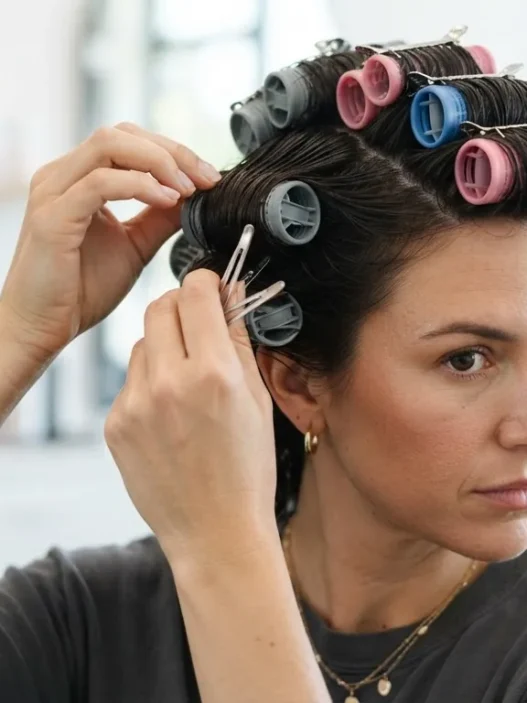
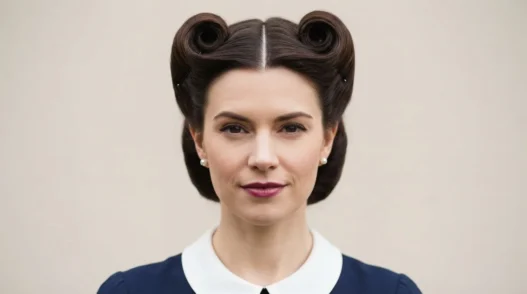
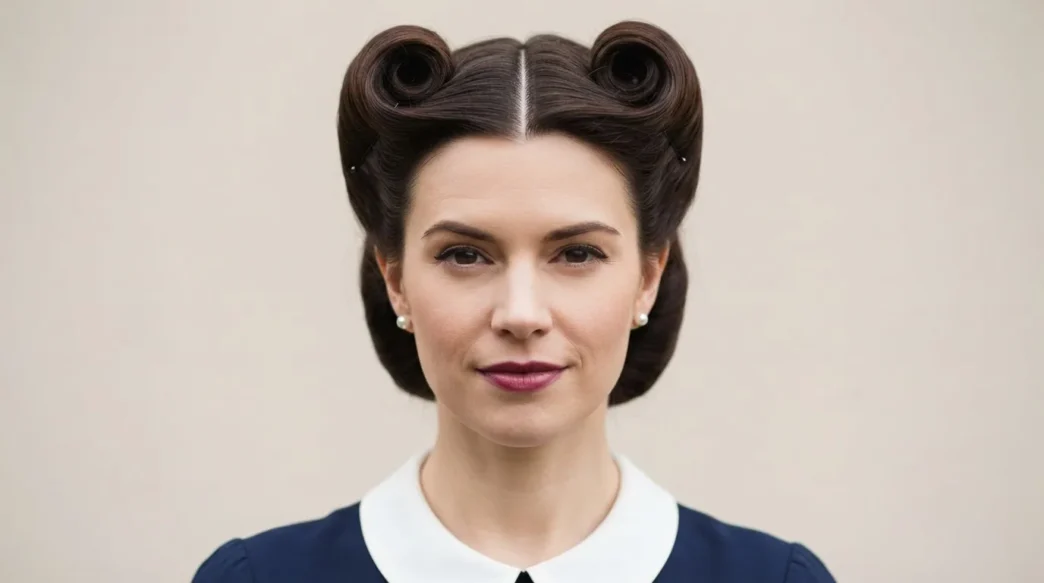
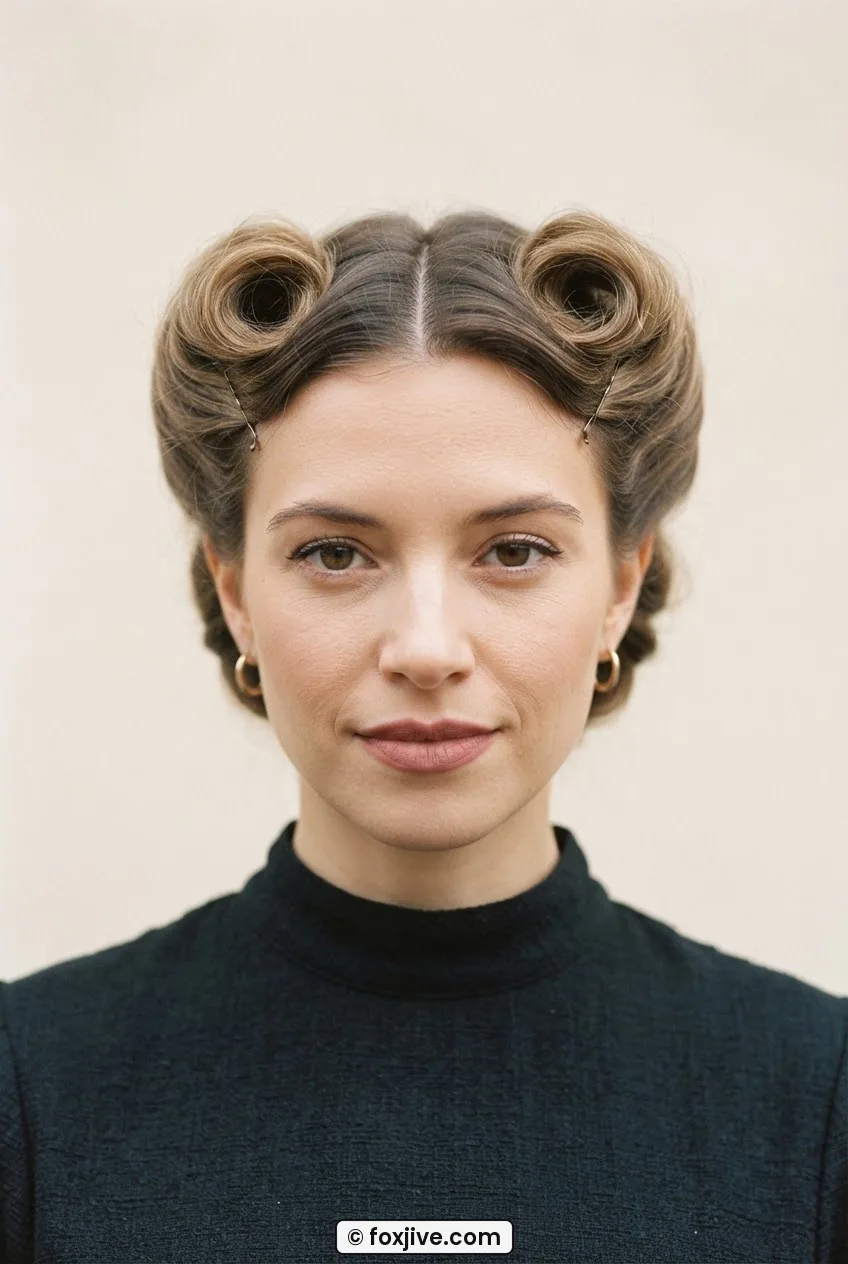
The original victory roll was architectural. Stiff, symmetrical, often lacquered into place. Women in wartime factories wore them partly because the shape kept hair off machinery — which is a very unglamorous origin story for something so striking. What’s happening now is different. The roll is still there, still framed around the face, but the interior is deliberately underdone. Looser. The hair isn’t packed tight into the cylinder; it’s coaxed into a soft tube with a round brush or a foam roller and then pinned with a single bobby pin rather than an entire packet. If you want to see what I mean by the difference in tension, the collection over at victory rolls through the 1940s on this site lays the range out clearly. The changed detail is the fill — modern versions leave air inside the roll, which gives it that lived-in quality the forties version never had.
2. The Sweetheart Wave — 1941, and the wedding season of 2026
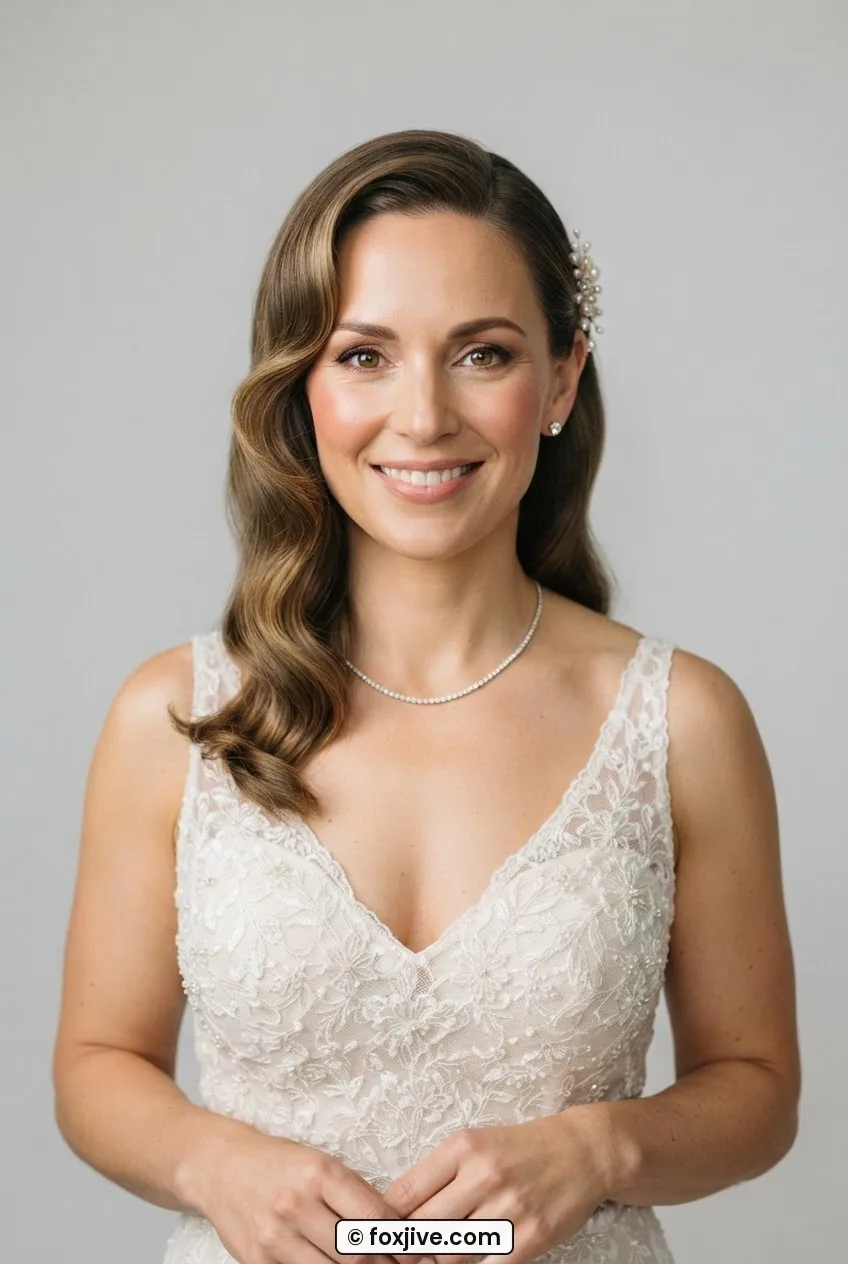
Side-swept waves that break just above the cheekbone and tuck behind one ear — this is the look that keeps showing up in bridal hair this year and I’m fully here for it. The forties version was set with wet finger waves, dried under a hood dryer, then brushed out into a single sweeping S-curve. Today’s version skips the water entirely. A large-barrel wand (at least 38mm), one pass per section, fingers instead of a brush to loosen it, and a single invisible pin behind the ear to anchor the sweep. The hair reads as effortlessly wavy rather than deliberately set. That’s the shift — from deliberate to accidental-looking. Everything about the modern silhouette signals ease, even when it took twenty minutes to build. You can read up on how finger waves are structured to understand why the set wave behaves differently to a wand wave — the internal movement is almost the opposite.
3. The Bombshell Blowout — 1952, and every red carpet lately
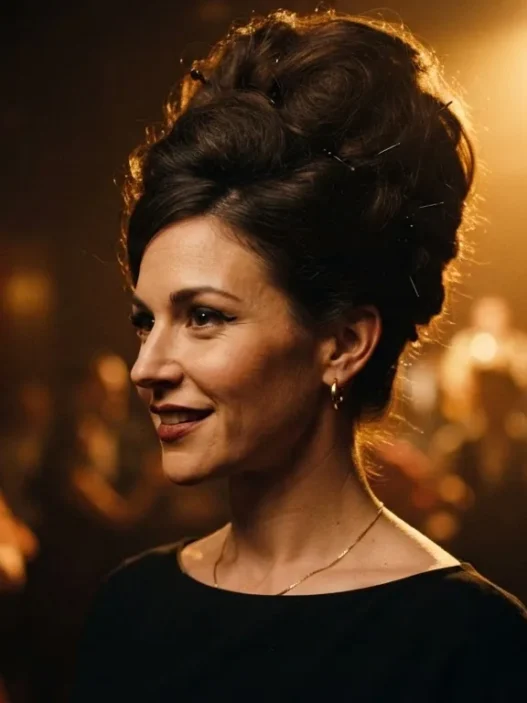
This one technically crosses into fifties territory, but the DNA is pure pin-up. High-volume roots, a wave that breaks at the crown and tumbles to one side, ends that curl back under slightly. In 1952, this required a set and a skilled finish with a brush and dryer. Now it’s a blowout with a Denman brush on the last pass and a single large velcro roller held at the crown for six minutes while you do your makeup. The detail that changed: the ends. The original curled firmly under, almost touching the neck — a very structured pageboy finish. The current version leaves the ends bent but not coiled, which keeps it from reading as retro costume. She’s got about three inches of loose end movement in the photo below, and that small decision is doing all the work of modernizing it.
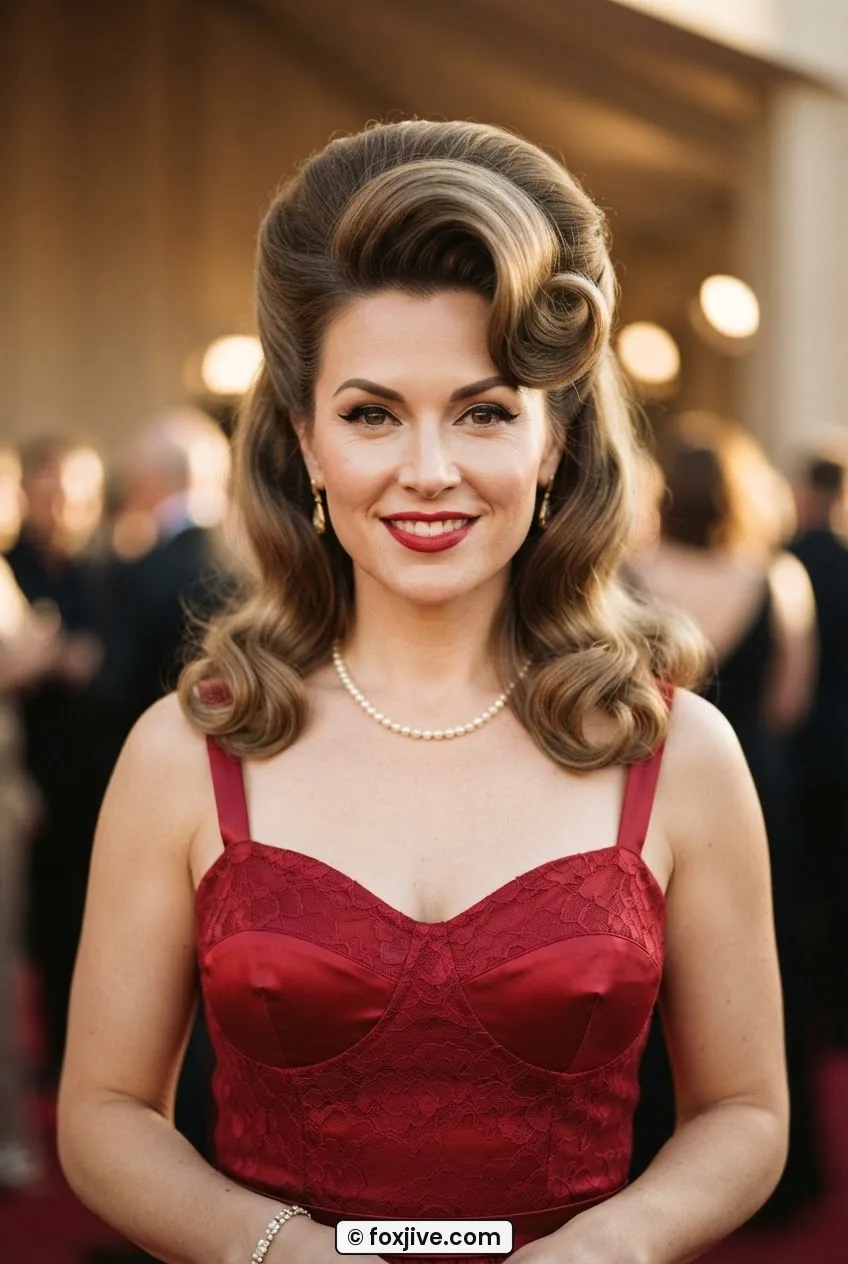
My personal pick in this whole list is the soft victory roll. I’ve tried it on a bad hair day with a diffuser and a single clip and it genuinely saved the situation. There’s something about the structure that tricks the eye — your hair looks considered even when you gave it four minutes. I think about my grandmother’s photograph every single time I do it.
4. The Half-Up Sausage Curl — 1945, and runway backstage this spring
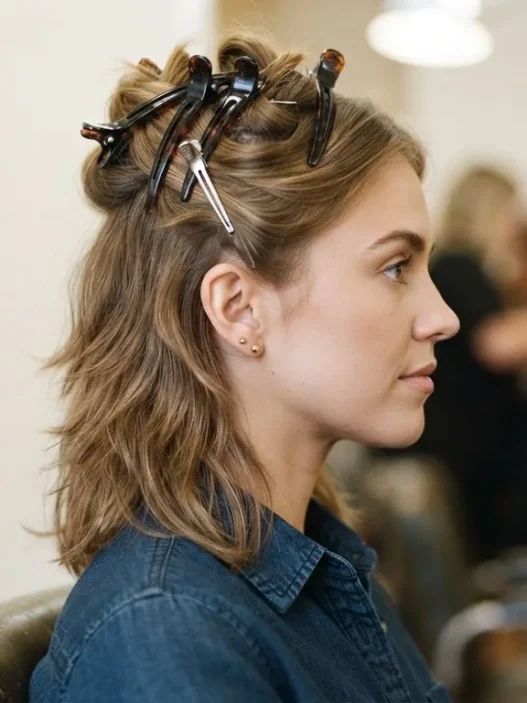
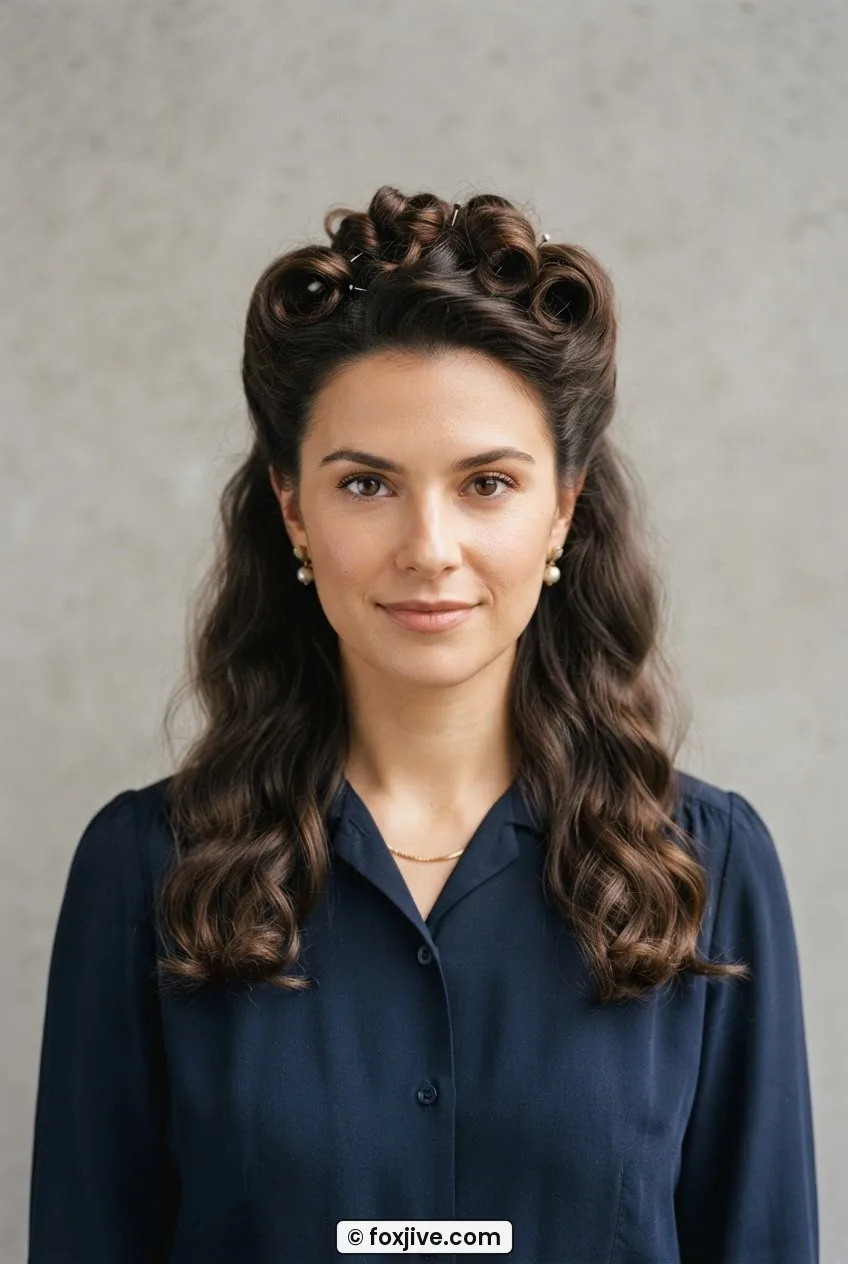
Late wartime hair started loosening up slightly — there was an optimism coming in that showed in the softening of silhouettes. The half-up style with a cluster of cylindrical curls pinned at the crown was a big part of that. Those curls were set overnight on metal rods, released, and pinned without separating them. You can find 9 victory roll ideas ranked by how long they take if you want to calibrate how much time this kind of pinned structure actually demands — because the modern version of the sausage curl takes almost no time by comparison. What changed is the curl tool. A thin flexi-rod on damp hair overnight gives you the same cylinder shape the rods did, but the result is softer and less uniform. Some of the curls in the cluster are slightly different sizes. That inconsistency is intentional now. In 1945, it would have been a mistake.
5. The Low Side Swoop — 1938, and my last Saturday night
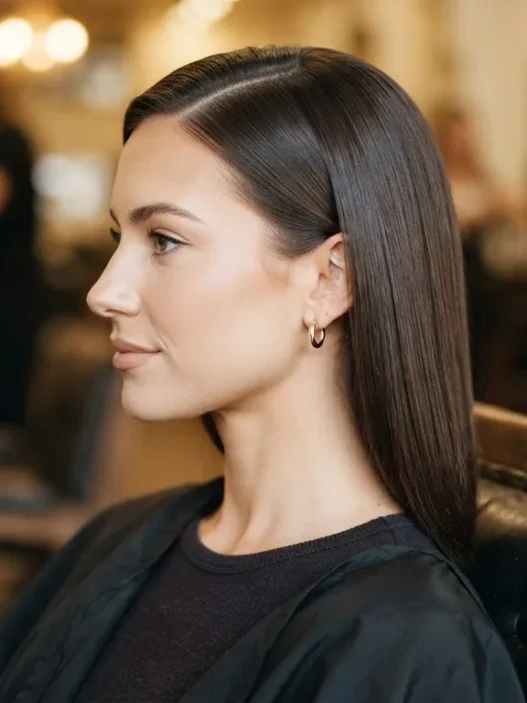
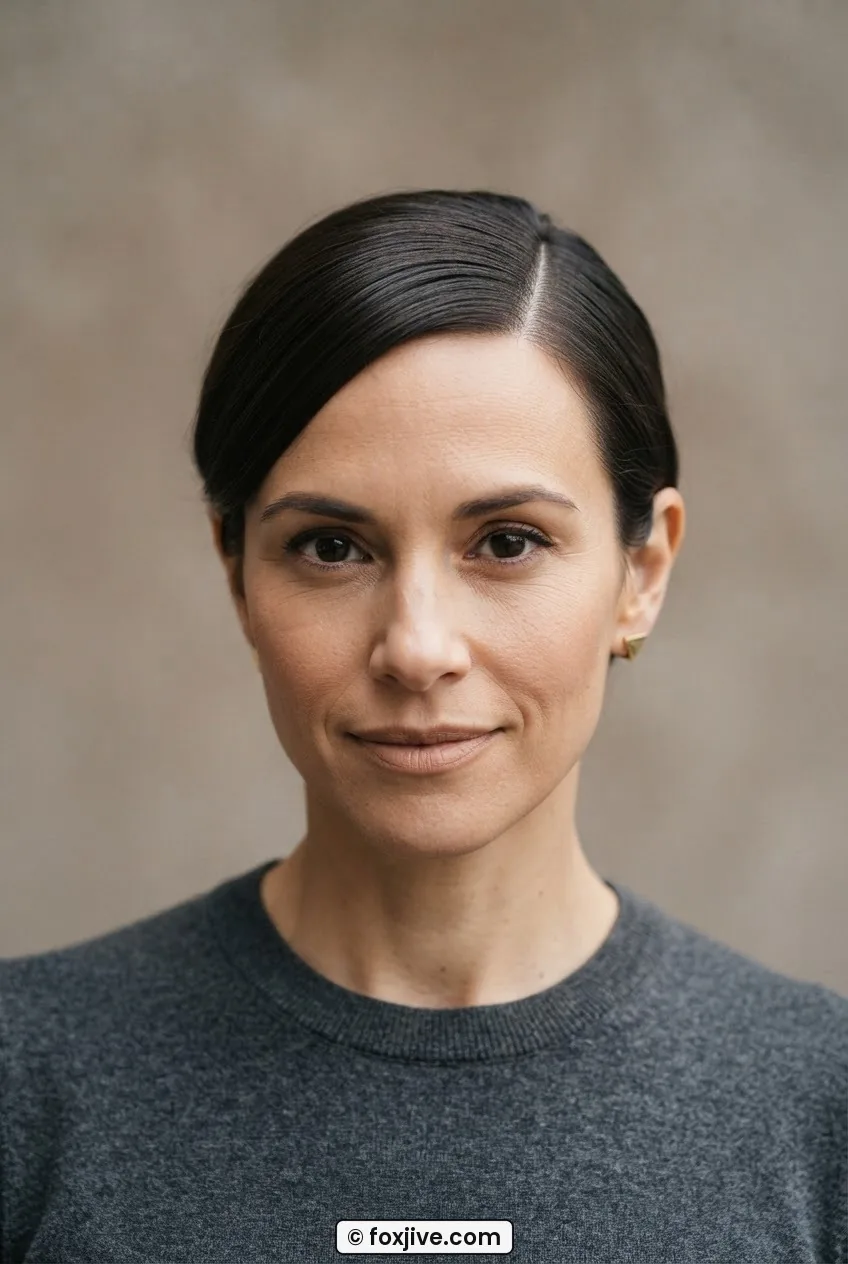
I wore a version of this last month and three people asked if I’d just come from a photoshoot. I had not. I had come from my bathroom with a paddle brush and a medium-hold spray. The late thirties gave us this deep side part with a smooth wave of hair that swept clean across the forehead and tucked behind the opposite ear — Hollywood-influenced, obviously, but accessible enough to be a daily look for ordinary women. The modern version keeps the deep part and the swoop but removes the lacquered finish. The surface is matte, or very lightly glossed. Texture spray on the lengths before you sweep it — that’s the changed detail. The original was glass-smooth; this one has grip and personality. Slides around less during the day, too, which is a practical win I didn’t expect.
6. The Crown Braid Crossover — 1944, and the festival crowd this summer
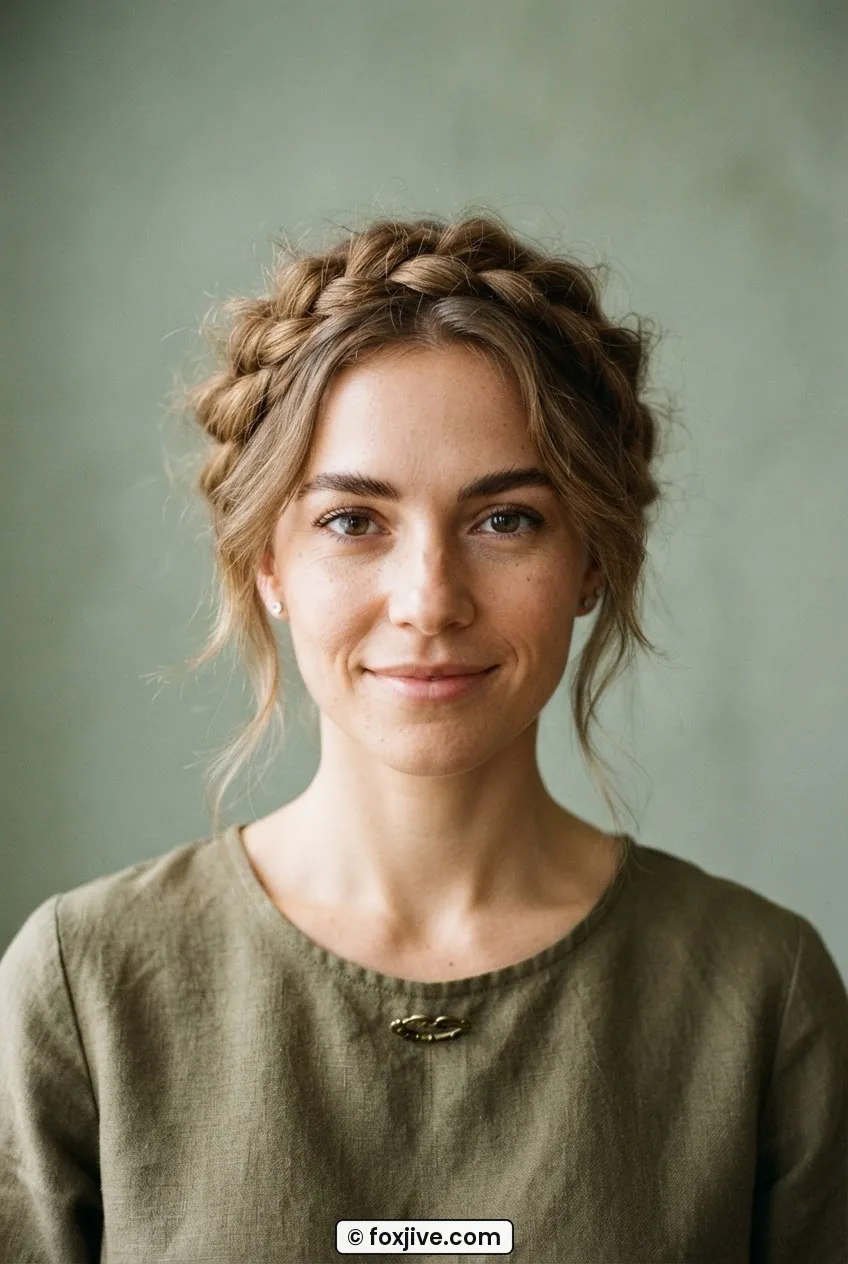
Wartime practicality met romanticism in the crown braid — hair plaited across the top of the head to keep it out of the way while still looking dressy. It showed up in factory poster art constantly, often paired with a bandana or under a cap. The festival version I’ve been seeing this year lifts that exact structure but swaps the tight plait for a loose, slightly undone braid that sits further back on the crown. Pieces are pulled out at the temples. The braid itself is barely holding together, which is sort of the point. What changed is the tightness — and with it, the whole message. The original said “I have this under control.” The current version says “I did this in the car.” Both are appealing, just to very different crowds.
7. The Pincurl Set Without the Set — 1940, and heat-free routines right now
Pin curls are having a genuine moment in the no-heat hair community, and the interesting thing is that the technique is almost identical to what women were doing in 1940. Wet hair, wound around the finger, secured flat against the scalp with a clip. Released in the morning. The forties set was designed to produce uniform, dense curls to be brushed into controlled waves. The heat-free version in 2026 is released and left mostly alone — maybe a single pass with fingers, maybe a light oil. The curls stay spiral rather than being brushed into a wave. That’s the entire change: a different release method producing a completely different texture. Same overnight labour, opposite aesthetic outcome. I find this particular evolution genuinely delightful — the technique survived but the goal flipped 180 degrees.
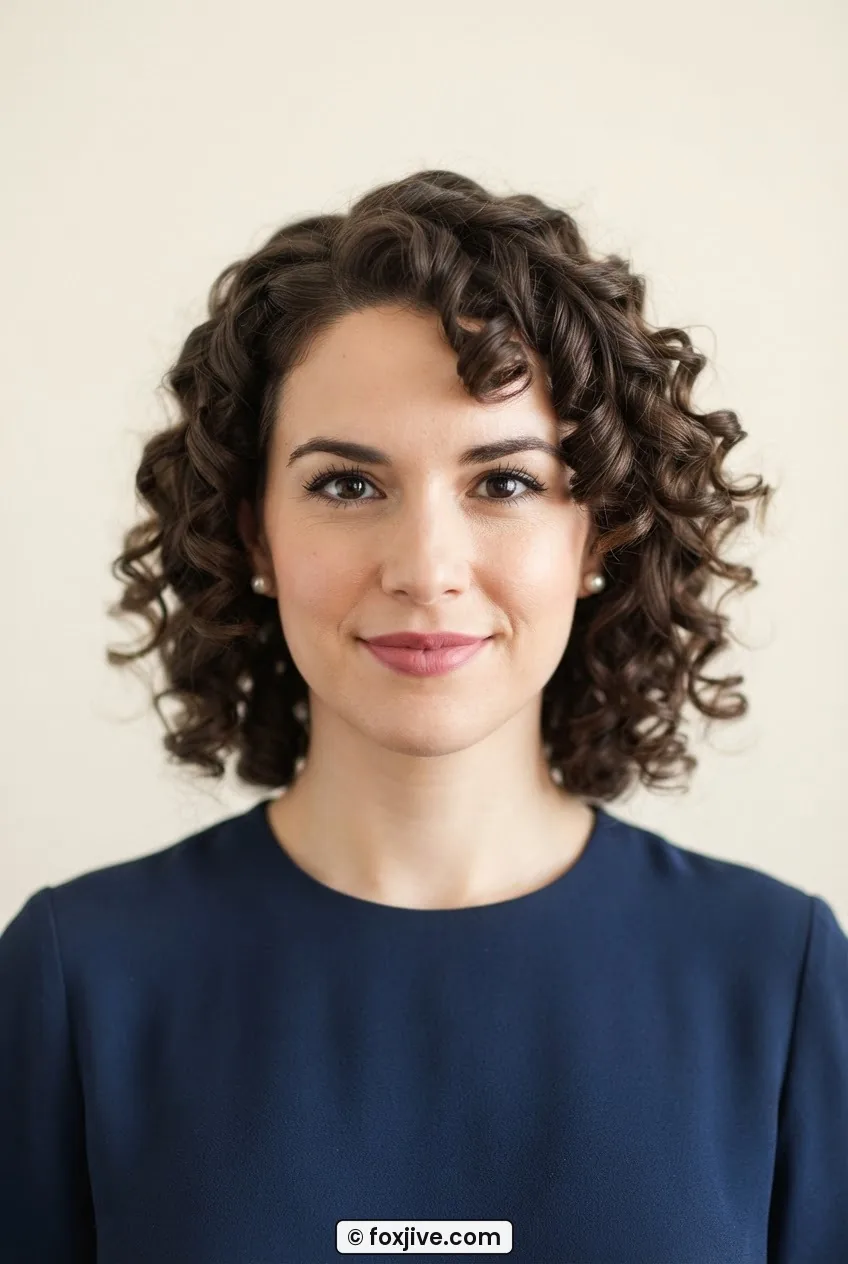
A Tutorial That Shows the Overnight Release
8. The Bandana Roll — 1942, and every vintage market I’ve been to
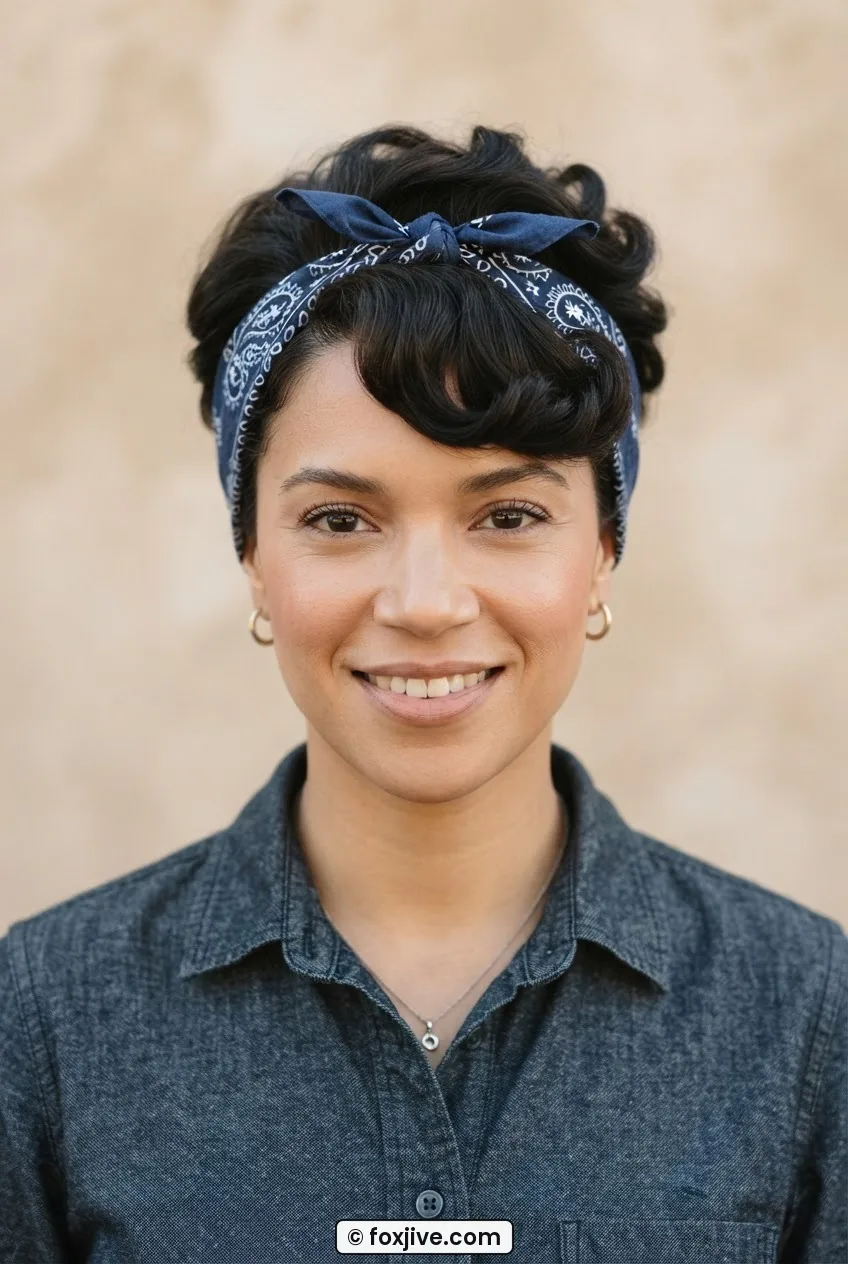
Rosie the Riveter made this iconic, but the bandana roll as a hairstyle was already common before the poster. Hair pinned up and back, a folded bandana tied over the front section to keep flyaways controlled and add colour. It’s everywhere again right now — vintage markets, retro events, even brunch spots that have no business being this aesthetically coherent. The changed detail is the bandana placement. In the original, it sat far forward, covering most of the top of the head for practical coverage. Now it sits further back, closer to a headband position, so more hair is visible in front. The look goes from workwear to accessory in about two inches of placement shift. Small adjustment, huge tonal difference.
9. The Faux-Bob Tuck — 1948, and long-hair people who are bored
Post-war, hair started growing out. But the bob silhouette was still so strongly associated with chicness that women developed ways to fake it — tucking the length under and pinning it at the nape to produce a bob illusion. It’s such an elegant workaround. In 2026, this is being done with a single large pin or even a narrow elastic, and the tuck is deliberately imperfect: a few pieces hanging loose at the nape, the ends of the roll slightly visible. The original was pinned invisibly and looked like a real bob. The modern version winks — you can see it’s a tuck. That visibility is the changed detail. It went from a convincing disguise to a deliberate styling choice, and the self-awareness makes it feel current rather than nostalgic. How faux bobs work on long hair so you can see the structural difference between the pin-up era version and today’s undone take.

10. The Pompadour Front — 1955, and the rockabilly revival of right now
Technically mid-fifties, technically bordering on rockabilly rather than pure pin-up — but this front section belongs in any honest roundup of pin up hairstyles because it kept showing up in pinup photography of that era constantly. The front hair rolled back and up, volumised to within an inch of its life, lacquered, and proud. The current rockabilly revival version (and yes, there absolutely is one, I see it at every themed event I attend) replaces the lacquer with a matte clay or a strong wax. The surface is textured rather than shellacked. It actually moves slightly when you turn your head, which the 1955 version categorically did not. That small movement is the update — the pompadour became a thing you wear rather than a thing that wears you. If you want to know more about how I got into this whole corner of retro styling, you can find me on my about page — the short version is: grandmother’s photographs, a lot of YouTube rabbit holes, and one very educational hairspray incident.
11. The Loose Chignon Finish — 1939, and the lazy-elegant moment we’re in
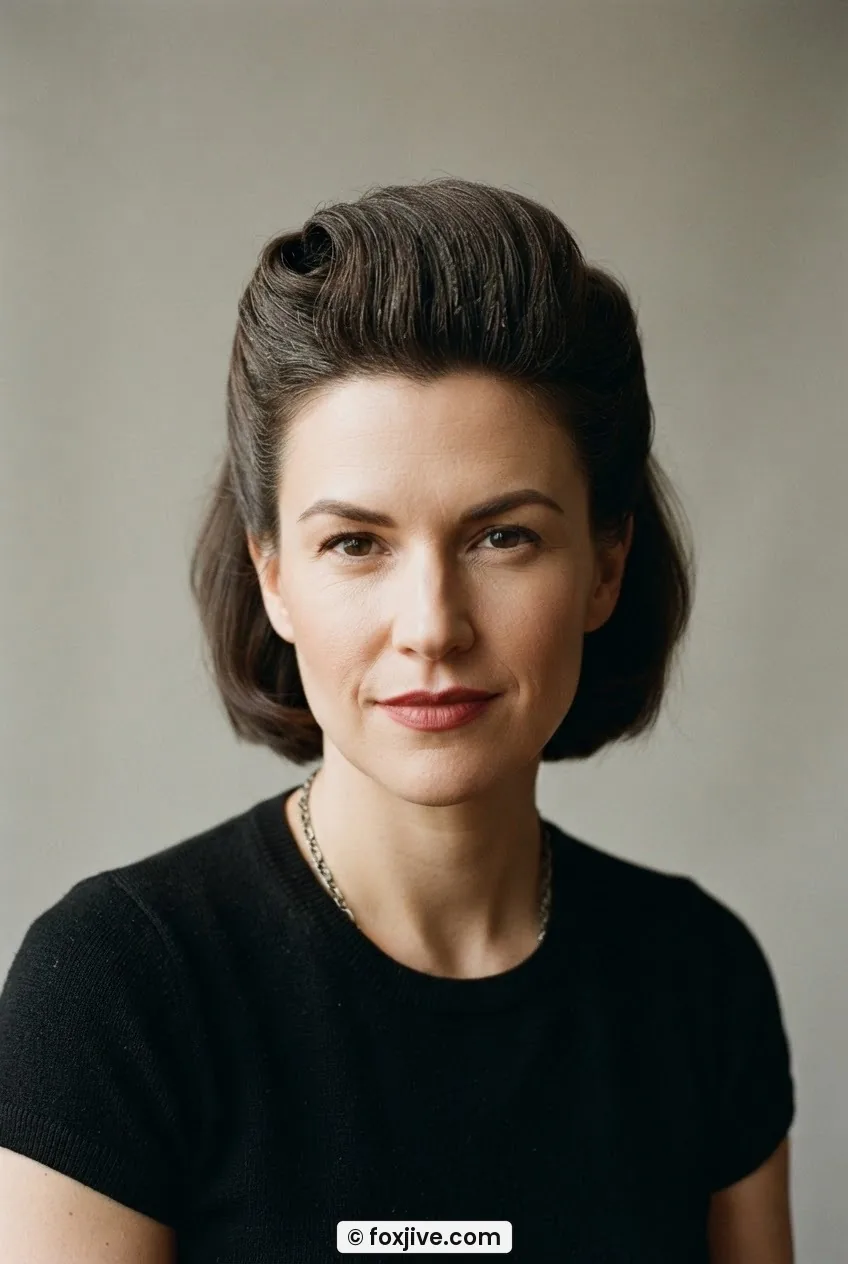
Late thirties hair — just before everything hardened into wartime practicality — had this beautiful softness to it. Low chignons with visible texture, small face-framing waves left out at the front, a general sense of controlled ease. It was aspirational but not inaccessible. That exact energy is what the current lazy-elegant aesthetic is chasing, and the chignon is the vehicle. The changed detail is the knot itself. Original versions were smooth, well-constructed buns that stayed put all day. The 2026 interpretation is a deliberately messy knot — twisted rather than folded, secured with a single pin through the centre, with at least two sections left loose around the face. It holds for about four hours before it starts softening further, which most people would consider a malfunction and which fans of this look consider a feature. Honestly? I’m in the second camp entirely. You can always drop me a note through the contact page if you want to talk through which of these styles works for a specific hair type — I love those conversations.

Questions I Get About These Looks
Do I need vintage tools to pull off pin-up hairstyles at home?
Not really. A large-barrel curling wand, a round brush, some bobby pins, and a light-hold spray cover about 80% of these looks. Flexi-rods and foam rollers are worth buying if you want to experiment with overnight sets — they’re cheap and genuinely useful — but none of the eleven styles here require anything specialist or hard to find.
Are these styles only for long hair?
Absolutely not. Victory rolls and pompadour fronts actually work better on medium-length hair — roughly chin to shoulder — because there’s less weight fighting the structure. The faux-bob tuck and the loose chignon obviously need more length to work, but the waves, swoops, and bandana roll adapt to almost any length from a longer pixie upward.
How do I stop these styles from looking like a Halloween costume?
Pick one element, not all of them. A soft victory roll with relaxed ends and modern clothing reads as stylish. Two hard rolls plus a full red lip plus a polka-dot dress plus a bandana all at once tips into costume territory. The modern revival versions I’ve described here are specifically calibrated to work as a single detail in a contemporary look — the changed detail in each entry is almost always the thing that keeps it wearable.
How long do these styles hold throughout the day?
The pinned structures — victory rolls, sausage curl clusters, faux-bob tucks — hold surprisingly well with a light mist of flexible spray once they’re set. Waves and swoops need a repin mid-afternoon if you have fine or slippery hair. The loose chignon is designed to soften, so factor that in rather than fighting it.
If there’s a throughline in all eleven of these, it’s that the revival isn’t nostalgia — it’s editing. Someone looked at a 1943 photograph and thought: what if I kept the shape but lost the rigidity? What if I kept the wave but dropped the lacquer? Those small subtractions are what make these pin-up-adjacent looks feel like they belong in 2026 rather than in a museum display. I’ll keep adding to this list as I spot new translations in the wild. There are always more coming through.