






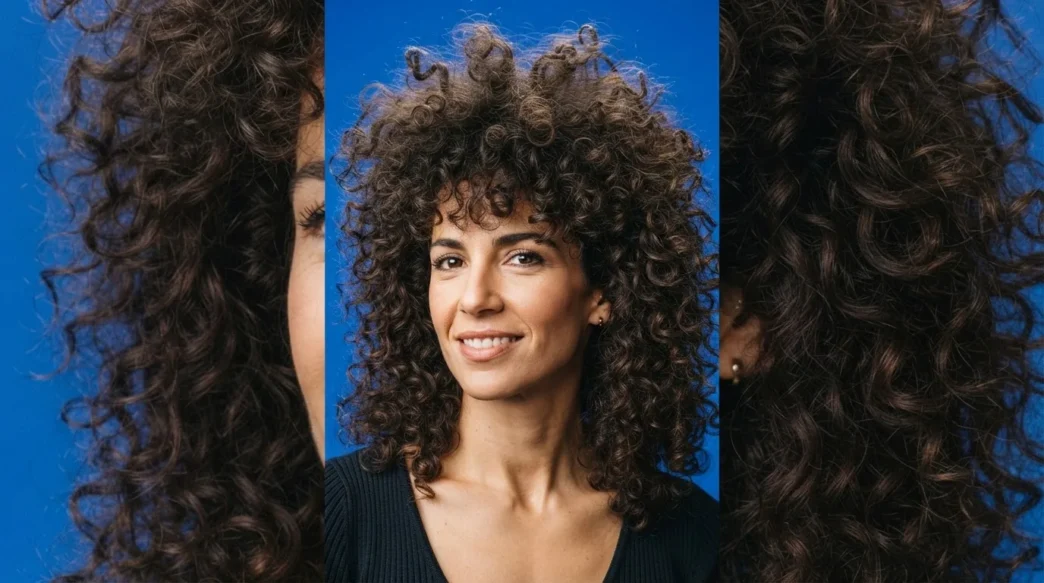
I have a theory about the eighties: it is the only decade that actually requires a translator. You cannot simply drop a 1985 style into 2026 and expect it to land — the proportions are off, the products are gone, and honestly most of us are not emotionally ready for that much hairspray. But here is what I keep noticing when I dig into archive photos or flip through vintage magazines at the market — underneath all that volume, there are genuinely great shapes. The bones are good. It just takes a bit of editing to find them. So that is exactly what this list is: eleven pairs. The original 80s big hair look, and the version you can actually leave the house in right now.
Inside This Post: Eighties Hair, Decoded
- 1. The Full Perm — and the version you can wear
- 2. The Crimped Wall — and the version you can wear
- 3. The Blowout Pyramid — and the version you can wear
- 4. Aquanet Helmet Hair — and the version you can wear
- 5. The Spiral Perm — and the version you can wear
- 6. The Side Ponytail Explosion — and the version you can wear
- 7. The Teased Crown — and the version you can wear
- 8. The Feathered Fringe — and the version you can wear
- 9. The Double-Crimped Bob — and the version you can wear
- 10. The Bandana Volume Look — and the version you can wear
- 11. The Wet-Look Curl Set — and the version you can wear
1. The Full Perm — and the version you can wear
The original was total commitment. A full chemical perm from root to tip meant you were walking out of the salon looking like a lion who had just been through a wind tunnel, and that was completely intentional. Every strand curled, maximum circumference, absolute dedication to the cause.
The wearable version? A body wave perm — sometimes called a blow out perm — that adds movement and gentle bend without the tight spiral situation. You keep texture, you keep a little volume, but the shape stays controlled. The difference between then and now is roughly the difference between a full orchestra and a string quartet. Same music, better for the room. If you want to understand how body wave perms actually work before booking, it is worth reading up before you sit in the chair.
2. The Crimped Wall — and the version you can wear
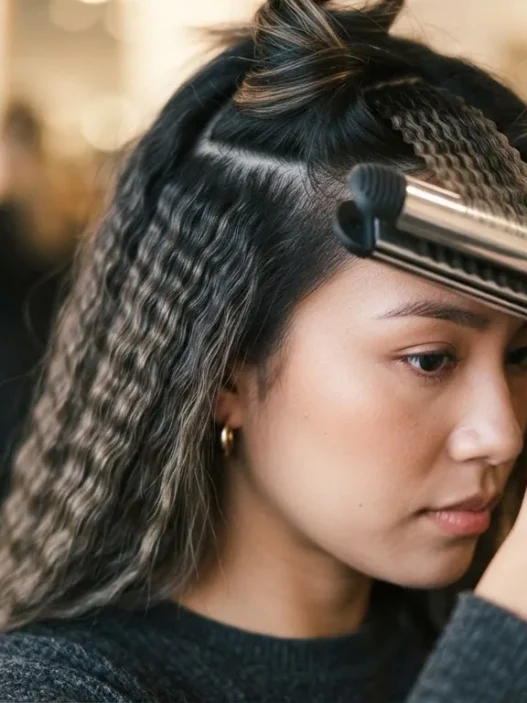
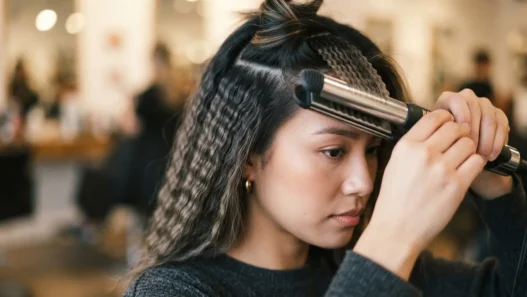
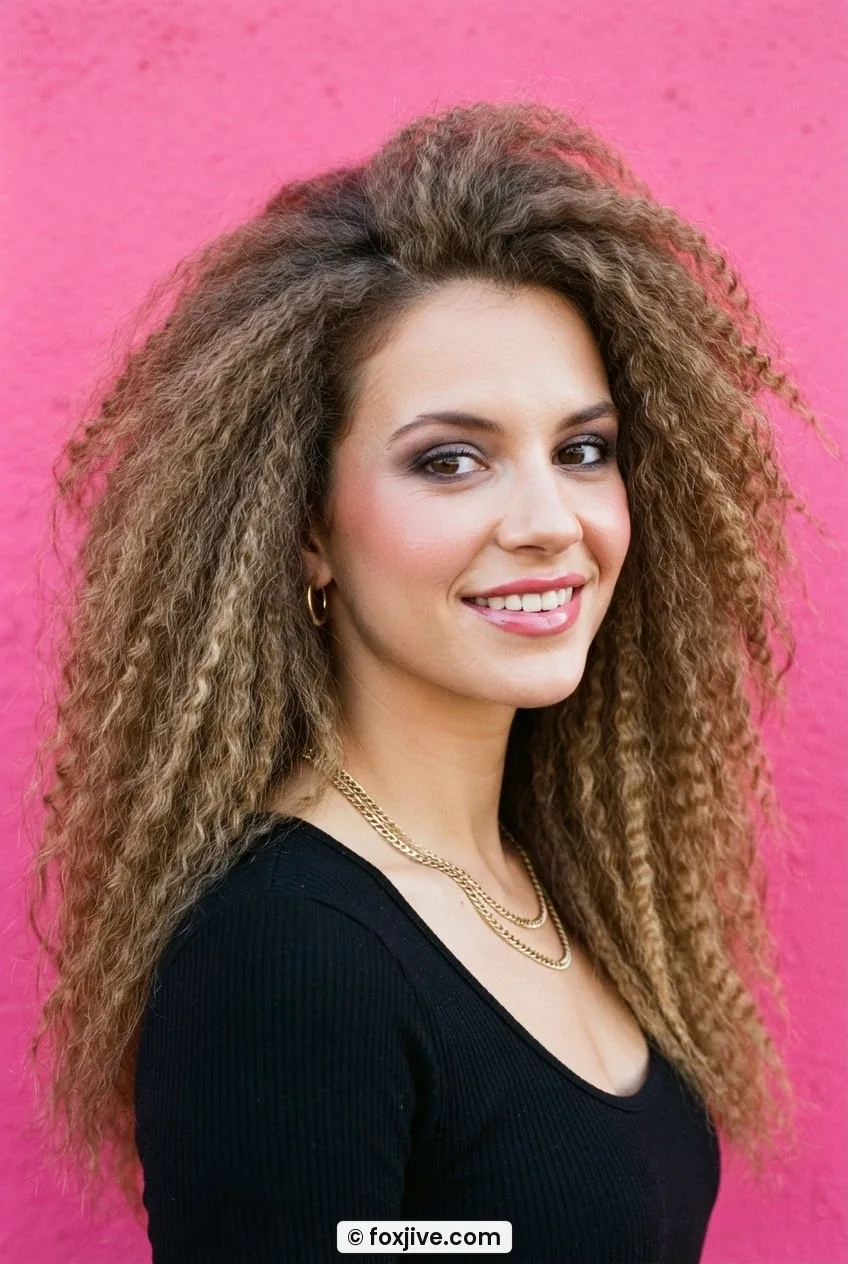
Look at her in that photo — that crimped texture fills the frame completely, every zigzag catching the light like a piece of fabric. In the eighties, crimping was done section by section, sometimes over an entire head of long hair, to create this dense, almost architectural wall of texture. It was extraordinary. It was also a lot.
The 2026 version borrows just the idea of texture. Crimp the underlayer only, or run the iron through a few face-framing pieces and leave the rest smooth. That contrast — zigzag underneath, sleek on top — is genuinely interesting and takes maybe ten minutes. You get the visual payoff without needing to commit your entire afternoon and half a can of product to it.
3. The Blowout Pyramid — and the version you can wear
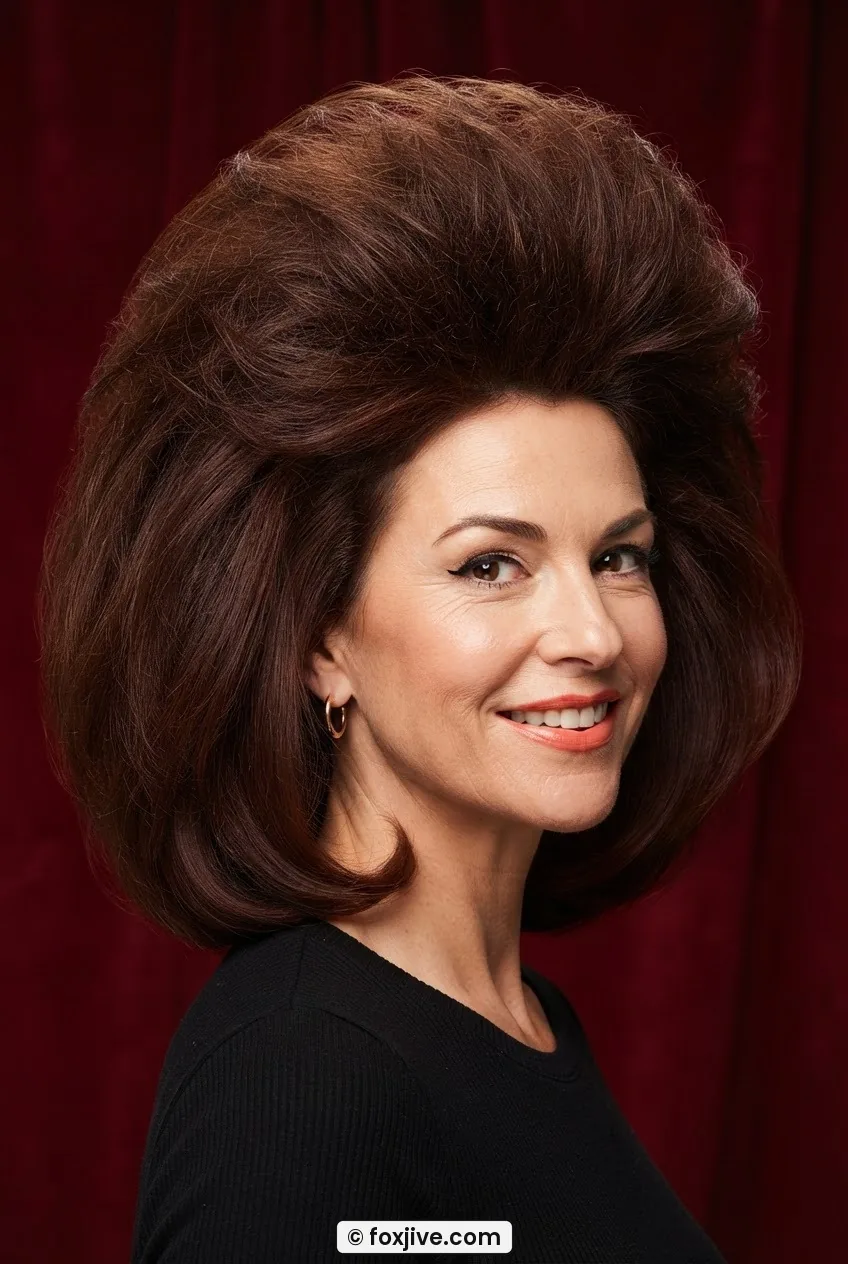
Widest at the top, narrow at the bottom. This was the defining silhouette of eighties hair — a perfect inverted triangle achieved through aggressive blow-drying, round brushes, and industrial-strength volumizing mousse. You could spot it from across a car park.
What survives is the idea of root lift. A good blow dry with a medium round brush still gives you beautiful volume at the crown without the pyramid geometry. Direct the airflow upward at the roots, let the ends fall naturally, and you have got that full, bouncy silhouette that photographs so well — just without the structural engineering degree required by the original. This is genuinely one of the easiest translations on the list.
4. Aquanet Helmet Hair — and the version you can wear
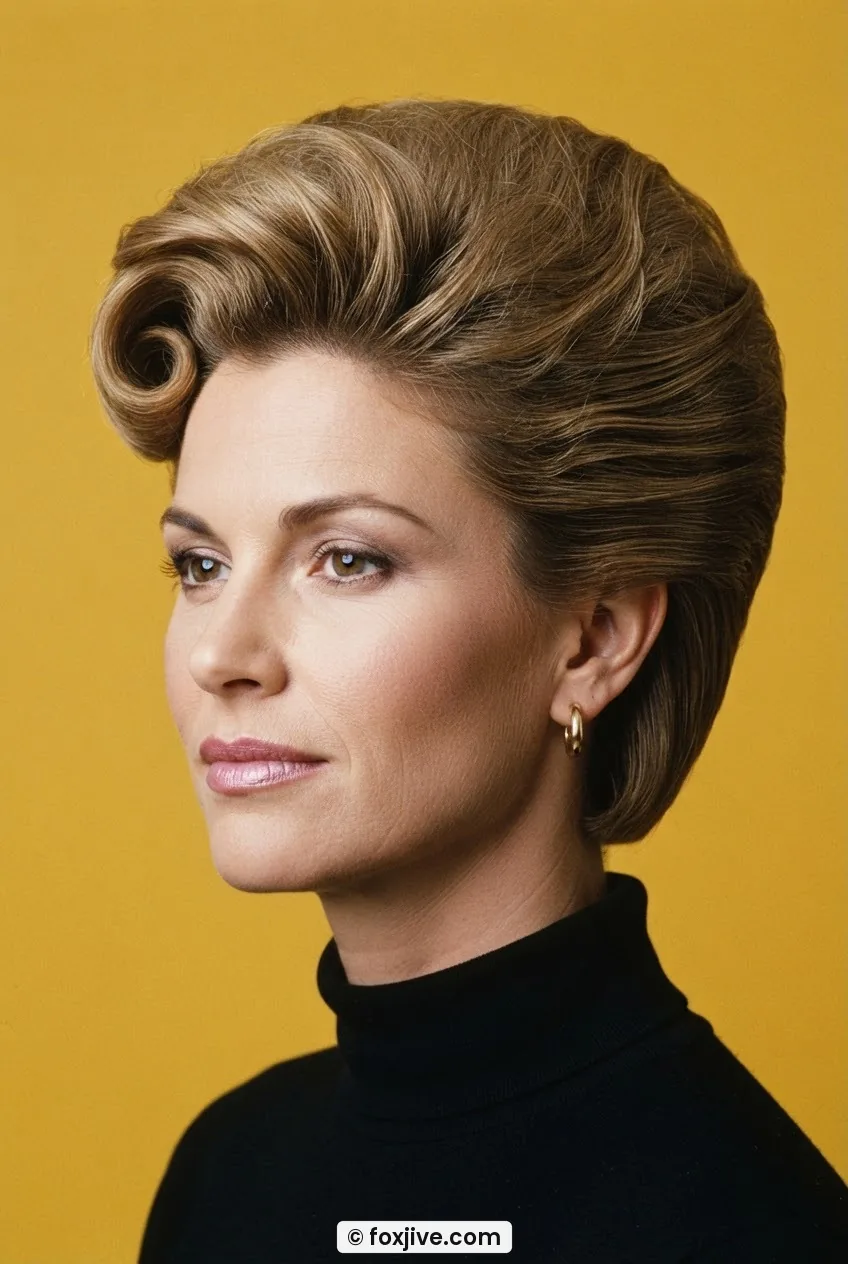
I say this with enormous affection: helmet hair was a phenomenon. Teased, sprayed, cemented. Hair that did not move during concerts, car rides, or in several documented cases, strong coastal winds. The hold was geological.
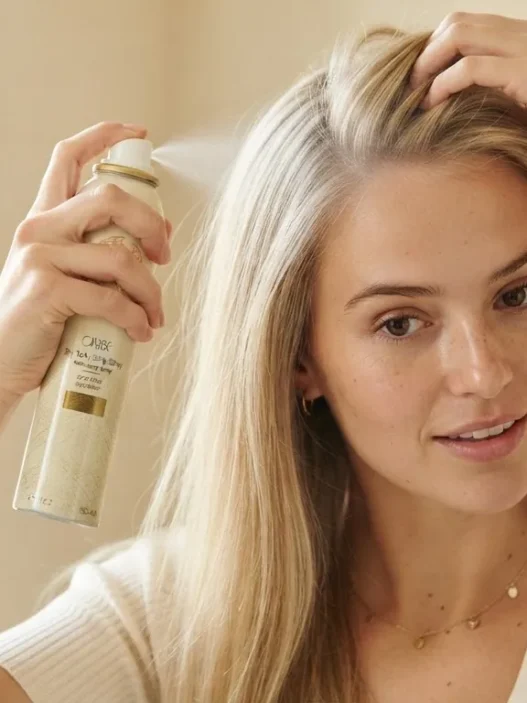
The wearable version is structured hair that still breathes. A flexible-hold spray after styling gives you shape without the crunch, and the hair can actually be touched by another human without shattering. The key is spraying from further away — about thirty centimetres — so you get mist, not lacquer. Same aesthetic intention, very different tactile outcome. Honestly this one is just a product swap more than anything else.

5. The Spiral Perm — and the version you can wear
This is my personal pick from the whole list. The spiral perm — done softly, without the eighties diameter — is genuinely one of the most flattering looks I have seen on women with any face shape. The ringlets elongate, the volume is vertical rather than horizontal, and it moves beautifully. I am honestly surprised it is not having a bigger moment right now.
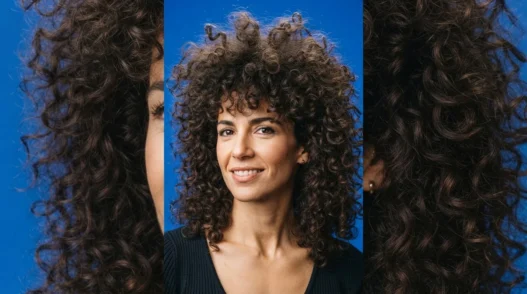
The original spiral perm used small rods and full saturation for tight, uniform corkscrews from root to tip. Beautiful chaos. The modern version uses larger rods and leaves some sections looser — so you get a mix of defined spirals and softer waves in the same head of hair. That mix is what makes it feel current rather than costume-y. You can read up on spiral perm hair types guide if you are not sure whether your texture is a good candidate.
A Perm Tutorial That Actually Changed My Mind
6. The Side Ponytail Explosion — and the version you can wear
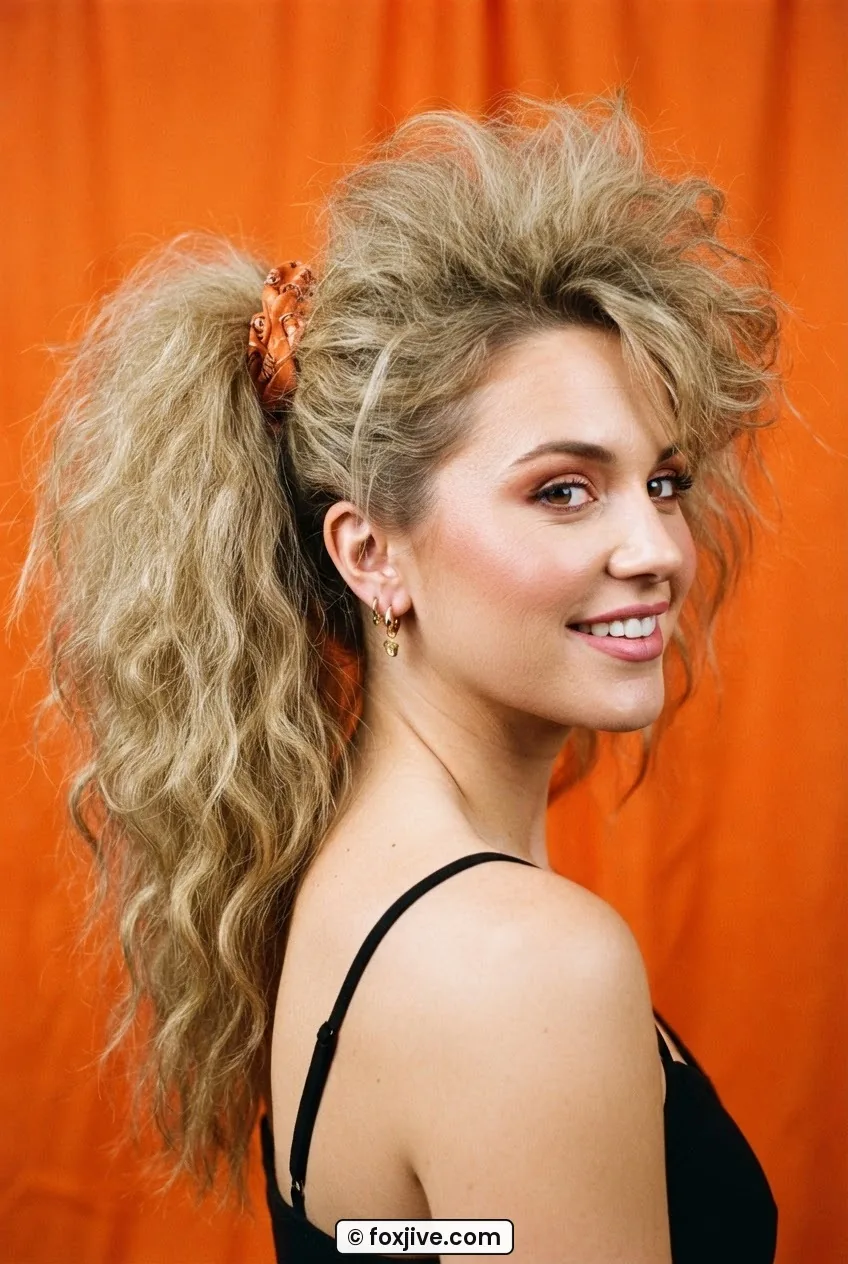
The eighties side ponytail was not a quiet choice. Hair teased to maximum height before being swept dramatically to one side, secured with a scrunchie the size of a small animal, and then left to cascade in an enormous wave. It announced your presence before you even entered a room.
Pull that volume back to maybe sixty percent and you have something genuinely charming. A low side ponytail with a little texture and a silk scrunchie reads as effortlessly stylish in 2026. The key change is losing the teased crown. Let the top sit naturally, gather everything loosely at the nape or just behind one ear, and it lands somewhere between retro and just-got-off-a-plane-and-somehow-look-great. That is the sweet spot.
7. The Teased Crown — and the version you can wear
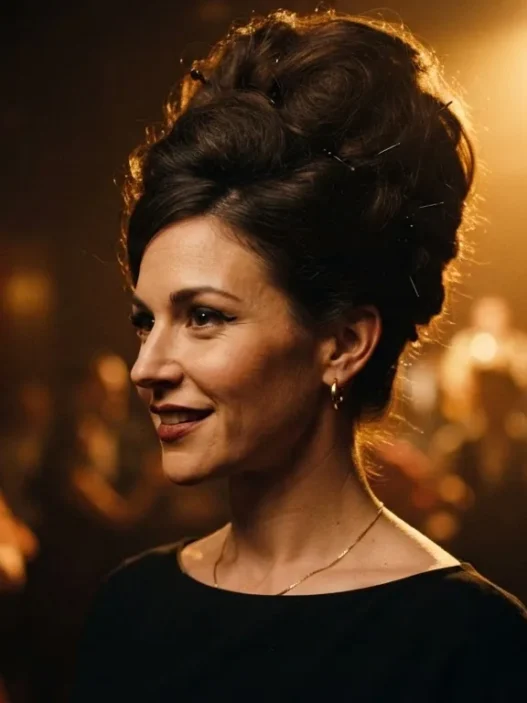
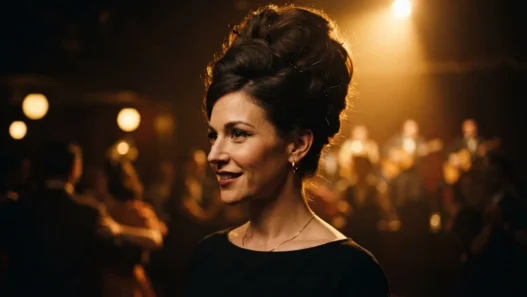
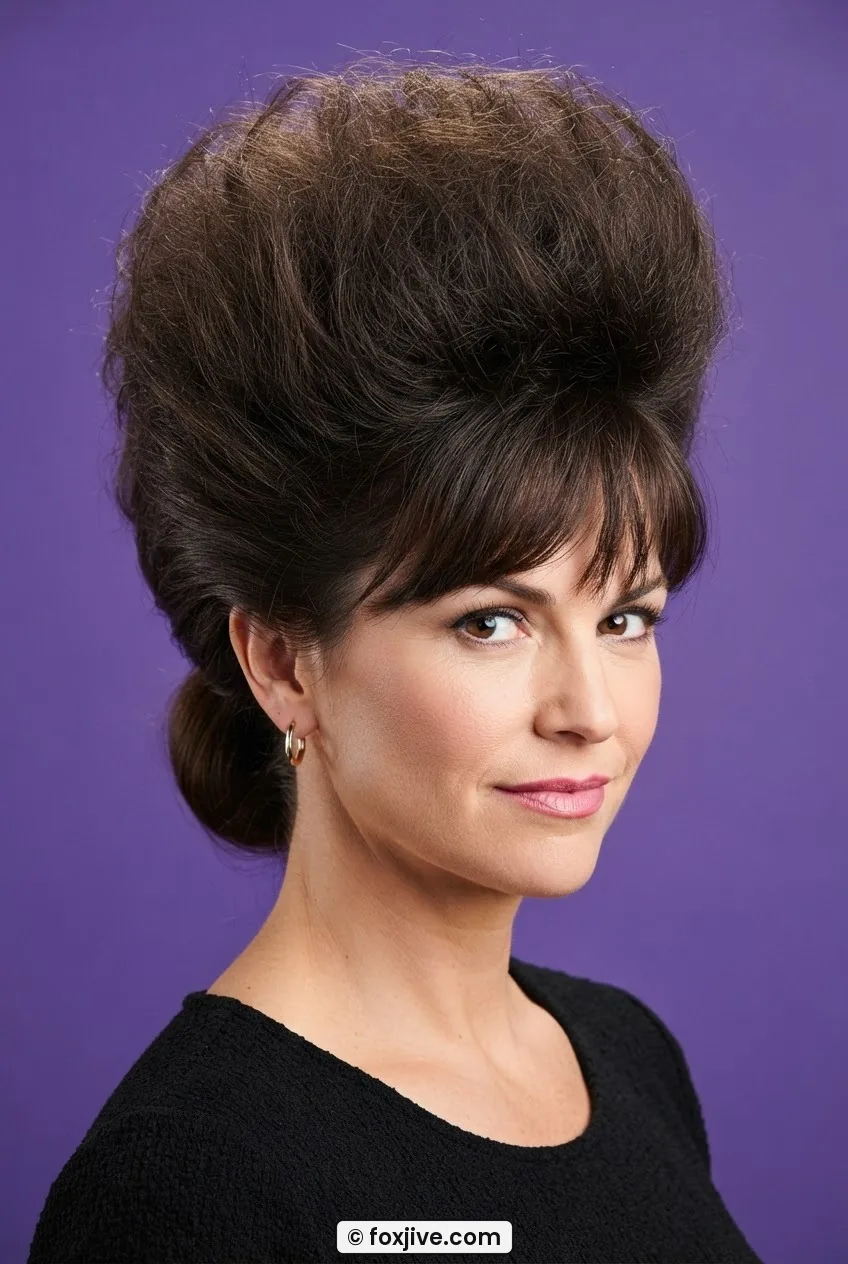
Teasing was practically a competitive sport in the eighties. The crown got back-combed until it stood several inches above the natural hairline, creating height that was visible even when the wearer was seated. Combined with the rest of the hair left smooth or curled, it had a very specific grandeur to it.
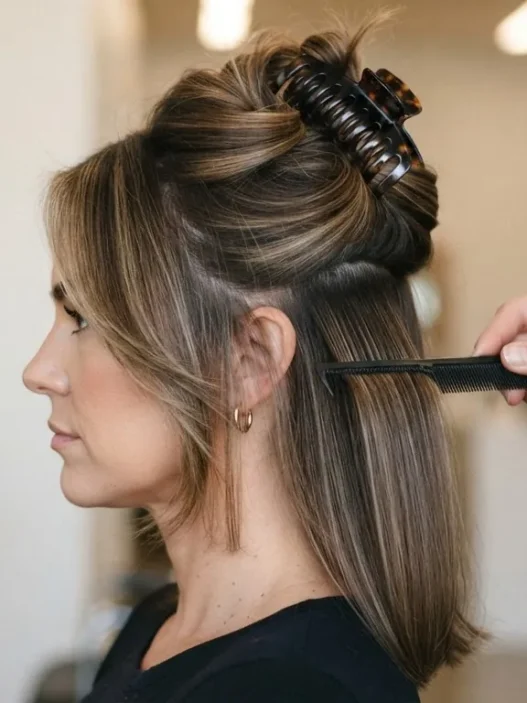
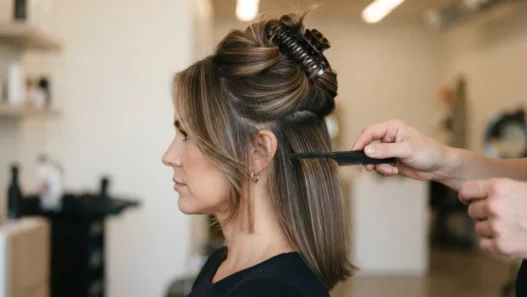
The soft version is subtle crown volume — a bit of back-combing just at the very root of the top section, smoothed gently over the top so it does not read as teased but simply as hair with good lift. No one clocks it as a technique. They just think you have excellent hair. It pairs beautifully with a sleek blowout or a relaxed wave, and it is the kind of thing that takes thirty seconds and makes a real difference in photos.
8. The Feathered Fringe — and the version you can wear
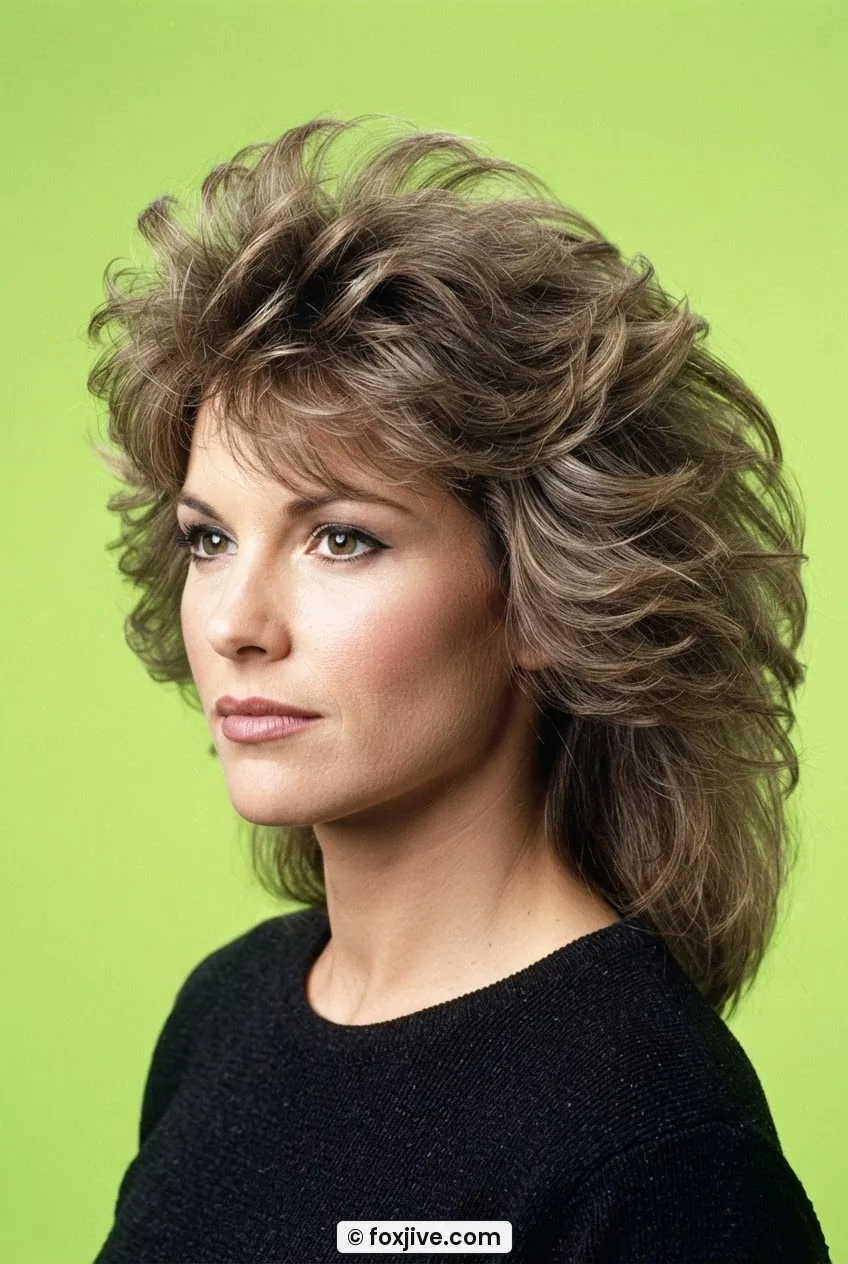
Feathered layers in the eighties were a direct inheritance from the seventies — think Farrah Flicks taken to their logical extreme, with the fringe blown back and to either side in two dramatic wings. By mid-decade, those wings had gotten wider, the feathering had gotten more intricate, and the whole thing had become its own art form. It was genuinely lovely in a maximalist way.
The wearable version keeps the layering but softens the wings. A curtain bang — done with a little heat to curve gently away from the face — captures everything that was flattering about the feathered fringe without the Aquanet architecture. You can blow it back slightly or let it sit forward depending on the day. It is almost suspiciously easy. The layered sections throughout the rest of the hair still give you that movement and volume that made feathered styles so popular to begin with. This one transitions very cleanly, which is why feathered layers keep reappearing — they work.
9. The Double-Crimped Bob — and the version you can wear
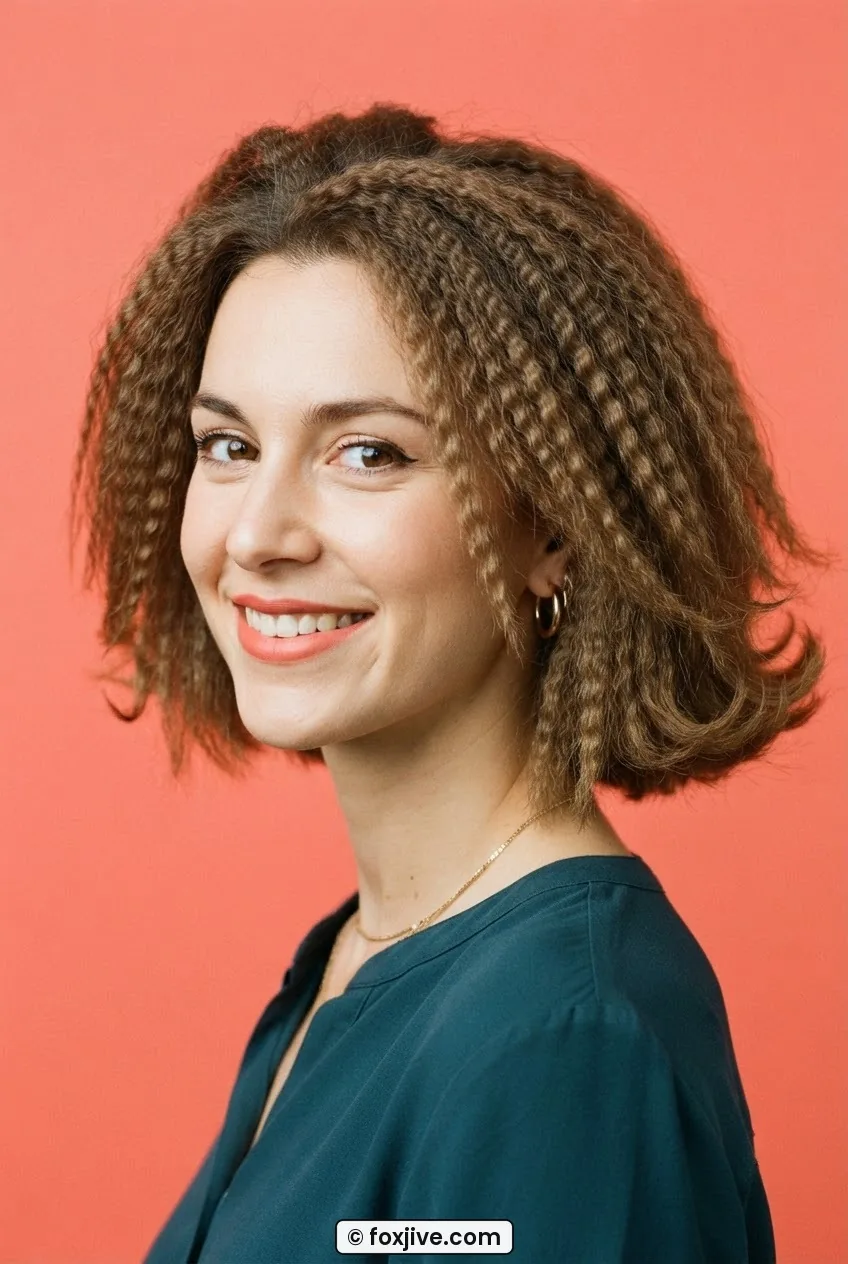
Short hair was not exempt from the volume mandate. A chin-length bob in 1986 might be crimped throughout, then the ends flicked out with a curling iron for double texture — crimped shaft, curled tips. Maximum surface area. It required a certain fearlessness that I genuinely respect.
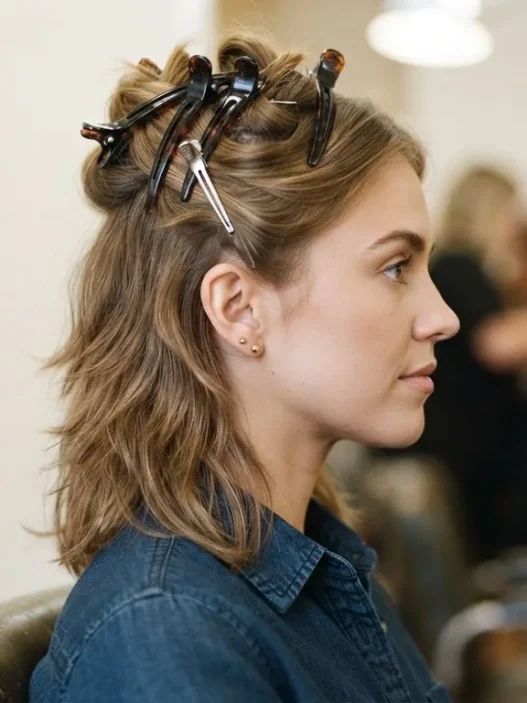
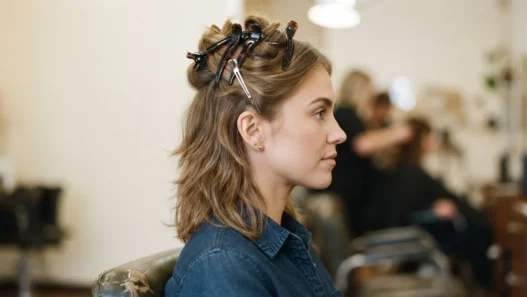
The modern version simplifies to one texture choice. A textured bob — either with a loose wave set or with just the ends turned under or out — has all the shape of the original without the layered processing. See how the woman in this photo carries that bob angle: the weight line sits just below her jaw, and the texture stops at the ends rather than running through the whole length. That restraint is exactly what makes it land as contemporary rather than retro. A sharp cut does most of the work.
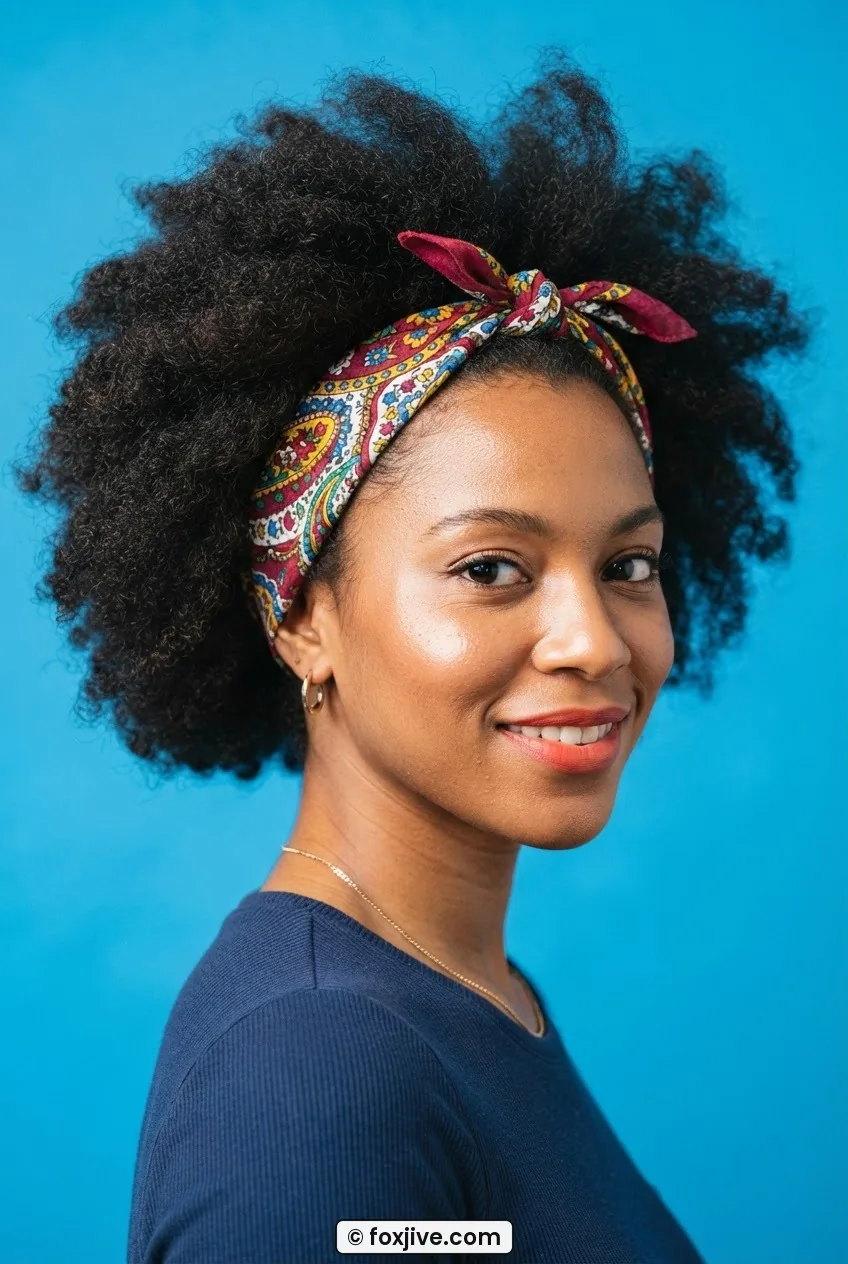
10. The Bandana Volume Look — and the version you can wear
Accessories were not used to restrain eighties hair. They were used to amplify it. A bandana tied over the top of an already enormous blowout added pattern, colour, and another few centimetres of visual height. It was maximalism applied to maximalism. Bold does not begin to cover it.
Here is where the translation is actually the most fun. A silk bandana or scarf tied loosely as a headband over hair that has a little root volume reads as completely current. You get the colour pop, you get the retro energy, and the hair underneath does not need to be enormous — just alive. It is a good reminder that a lot of what felt like excess in the eighties was actually just an accessories idea that needed a slightly quieter canvas. The silhouette on Foxjive.com covers this really well across multiple decades if you want to see how accessories evolved.
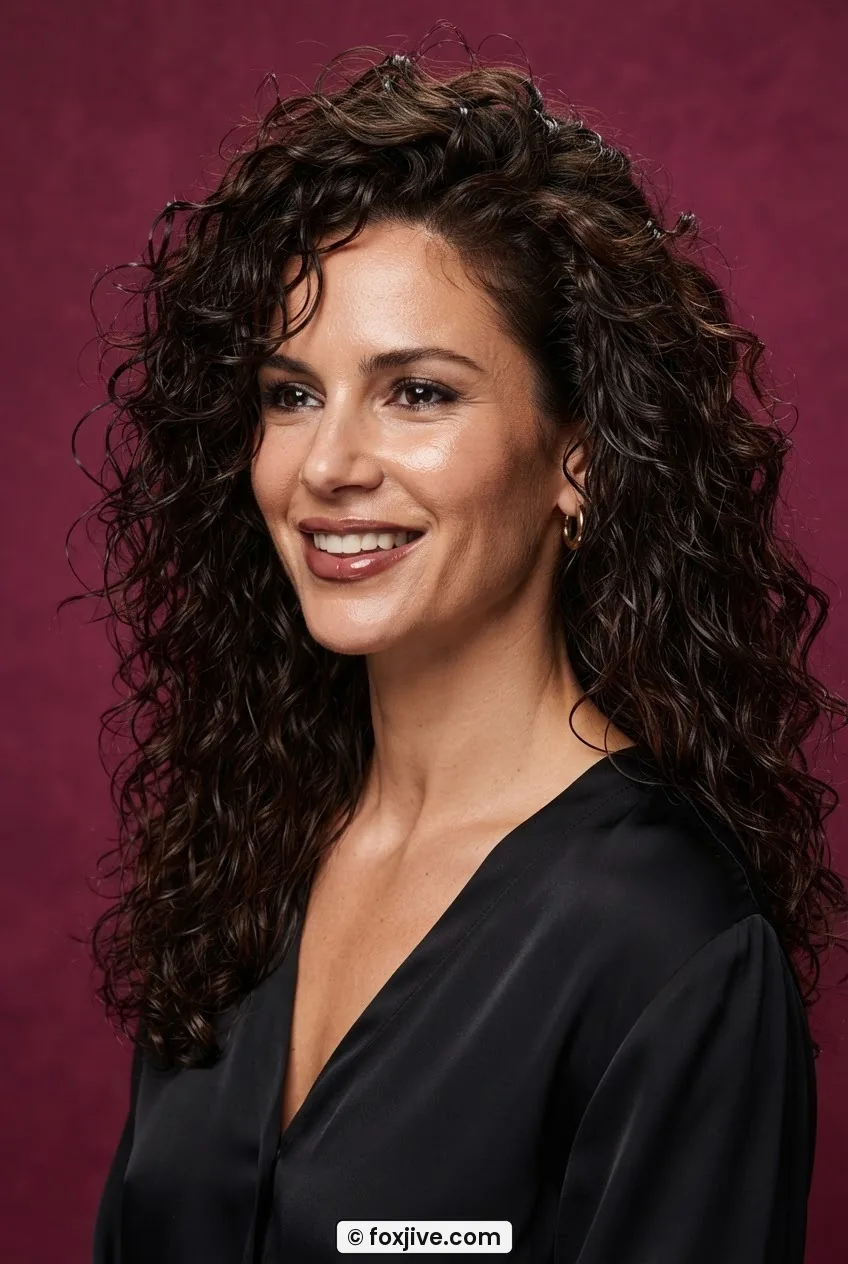
11. The Wet-Look Curl Set — and the version you can wear
Towards the end of the decade, a glossier version of big hair appeared — tight curls set with gel so they looked perpetually damp and defined. It was the eighties acknowledging that shine could coexist with volume, which felt almost restrained by the decade’s standards. Some of the most interesting hair of that era came from this period.
The 2026 version is the wet-look bun or half-up, where the roots and top section are slicked with a lightweight gel and the curls at the ends are left defined and bouncy. The contrast between sleek and textured is genuinely beautiful and photographs incredibly. It works on natural curl patterns especially well. If you are interested in how gel styling for natural curls interacts with different textures, that is a rabbit hole worth exploring before you buy anything.
A quick note on what does not survive translation
I want to be honest here. Some eighties looks genuinely do not have a 2026 version worth pursuing. The full mullet-perm — long corkscrew curls in the back, cropped and permed on top — requires so much commitment that the toned-down version just looks like a confused mullet, which is its own category of problem. (Though if you are curious about the mullet revival as a separate conversation, that is a different post entirely.) The super-bleached, over-processed perm that gave so many women that brittle halo of breakage around the hairline — that one stays in the archive. And anything involving crimping the full head plus the fringe plus a side ponytail simultaneously is a look that required a specific cultural moment that we are simply not going to recreate, and I say that lovingly.
The best eighties styles to revive are the ones with a strong underlying shape — where the volume is a feature of the cut, not a substitute for one. That is the consistent pattern across all eleven looks above. It is also, not coincidentally, exactly what makes the 9 victory roll ideas ranked by how long they take so interesting to revisit — the forties had the same tension between extreme styling and underlying structure, and the shapes that worked then still work now for the same reason. And if you love the structure of victory rolls as a concept, that same architectural logic applies directly to the best eighties looks too.
Questions I Get About Eighties Hair
Do I need a perm to get proper eighties volume?
Not at all — honestly most of the looks above work just as well with a good blow dry and a round brush. Perms add texture, but the volume silhouette is mostly about technique and product placement at the root. If you have naturally straight hair, a volumizing mousse applied before blow-drying gets you most of the way there without any chemical commitment.
Is crimped hair actually coming back in 2026?
Partial crimping is genuinely having a moment — underlayer texture and face-framing crimped pieces have been showing up on editorial shoots and festival looks for a couple of seasons now. A fully crimped head of hair is still very much a costume choice, but strategic crimping feels current rather than nostalgic when you apply it selectively.
What products work best for getting that retro volume without the crunch?
A lightweight volumizing mousse at the root, blow-dried upside down for the first two minutes, then finished with a flexible-hold spray from a distance. That combination gives you the lift and shape of eighties styling without any of the rigidity. Avoid anything labelled maximum hold for the final spray — medium or flexible hold is the sweet spot for volume that still moves.
Can these styles work on fine or thin hair?
Fine hair actually responds beautifully to root-lift techniques because it is lighter and easier to coax upward. The styles to prioritise are the blowout pyramid, the teased crown, and the feathered fringe — all of which rely on technique rather than natural density. The perm-based looks (spiral, body wave) also work well on fine hair since the texture adds the appearance of thickness. Just use a lighter hold product than you think you need.
Honestly, writing this list reminded me why I started obsessing over decade-by-decade hair in the first place. Every era has something worth salvaging — even the ones that seem the most extreme on the surface. The eighties just require a slightly heavier editorial hand than the others. Strip out the product, dial back the scale, keep the shape. That is the whole formula. If any of these pairs sparked something, I would love to know which one in the comments. And if you want to see more decade translations, the rest of the archive on this site goes deep into everything from the twenties through Y2K — there is a lot to explore.