






The sixties did something to hair that no other decade quite managed — it made geometry feel rebellious. Cuts went architectural. Volume went structural. And somehow, sixty years later, every shape the decade invented keeps cycling back onto the mood boards of people who weren’t even alive when Vidal Sassoon first picked up his scissors. I’ve been obsessed with sixties shapes for years, and the more I study them the more I realise they work because they’re designed, not just styled. These aren’t accidents. They’re solutions — and most of them solve the same problems we’re all still dealing with.
Your Guide to Every Shape in This Post
- 1. The Mod Pixie, Sharpened
- 2. The Bouffant, Brought Down to Earth
- 3. The Beehive, Stripped Back
- 4. The Flip, Rebalanced
- 5. The Geometric Bob, Still Radical
- 6. The Half-Up Twist, Loosened
- 7. The Sleek Centre Part
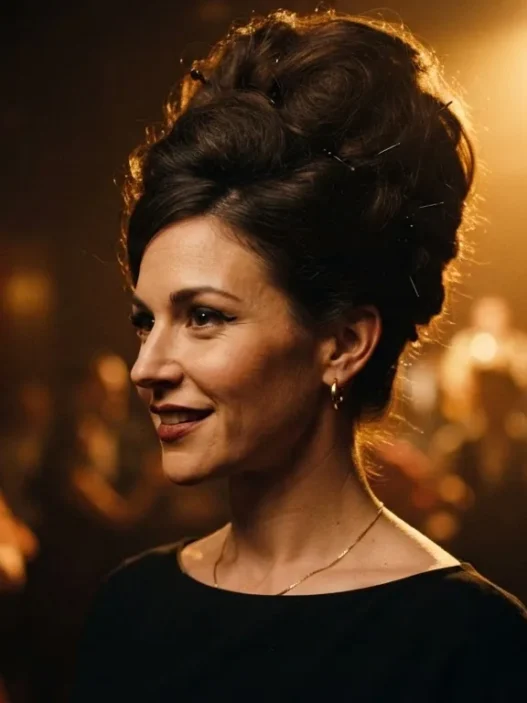
- 8. The Teased-Out Updo
- 9. The Layered Shag, 60s Edition
- 10. The 60s Wedding Chignon
- 11. The Short Crop, No Excuses
1. The Mod Pixie, Sharpened
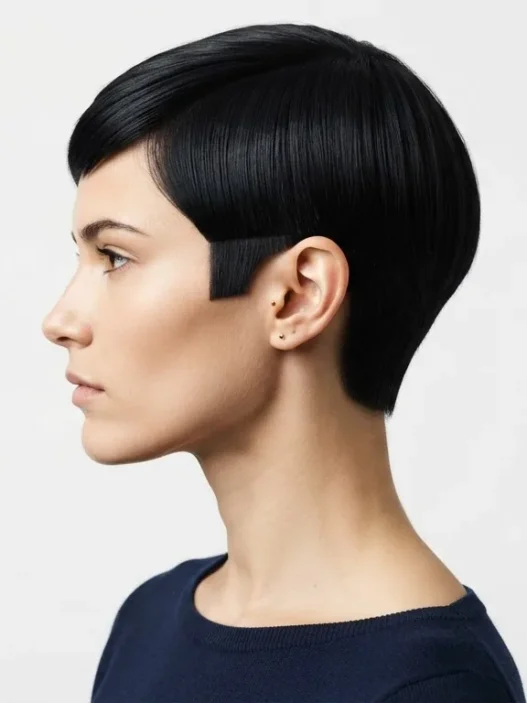
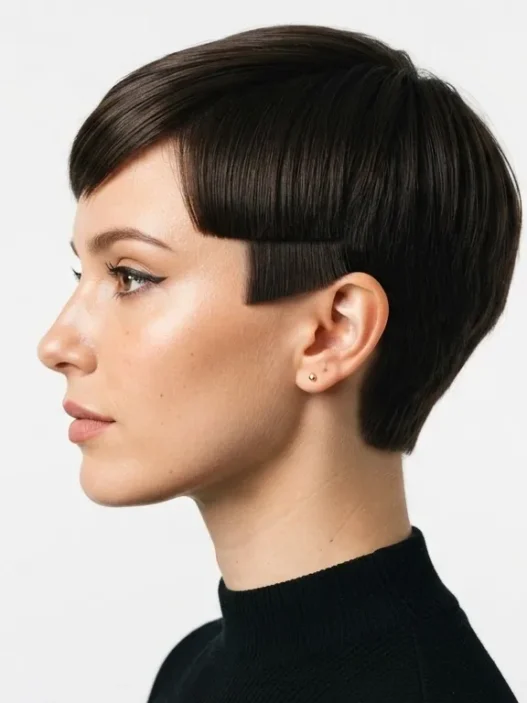
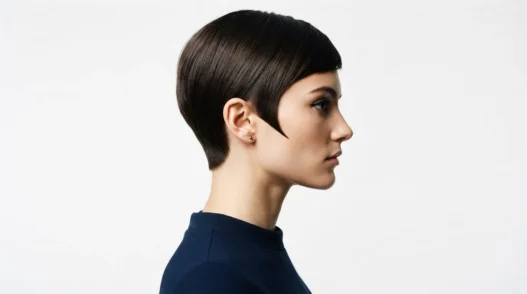
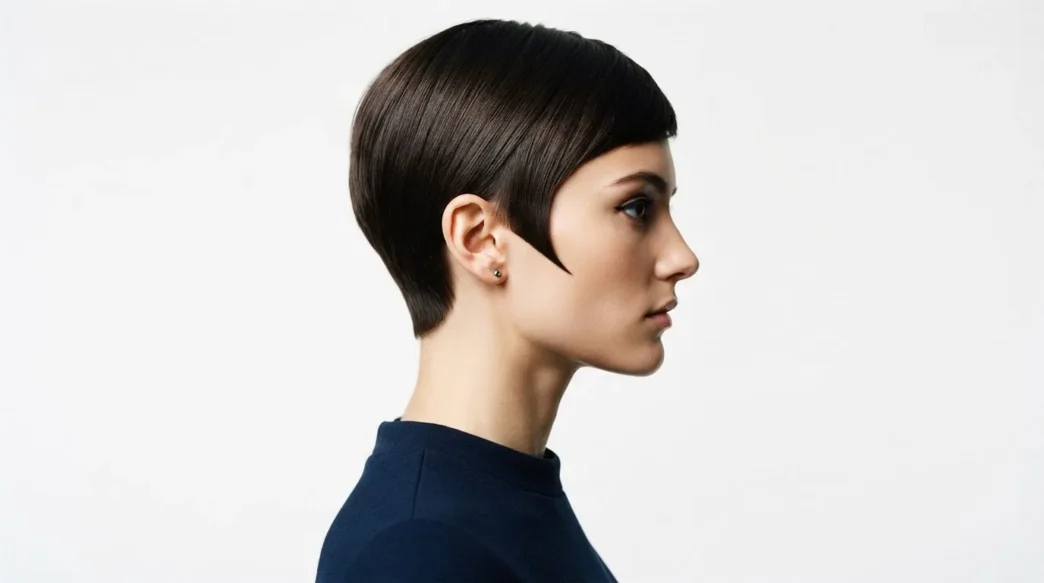
This is the shape I keep coming back to more than any other from the decade. The mod pixie isn’t your grandmother’s short crop — it has architecture. A razor-defined sideburn line. A nape that’s cut so clean it almost looks engineered. The top sits with just enough volume to read intentional rather than flat, and the whole thing frames the face the way a good portrait frame focuses your eye on the subject.
Look at her in the photo below — see the way the sideburn traces a deliberate line down toward the jaw? That isn’t accidental. That geometry is what separates a mod pixie from a generic short cut. It needs to be maintained, probably every four weeks, but it’s worth every appointment.
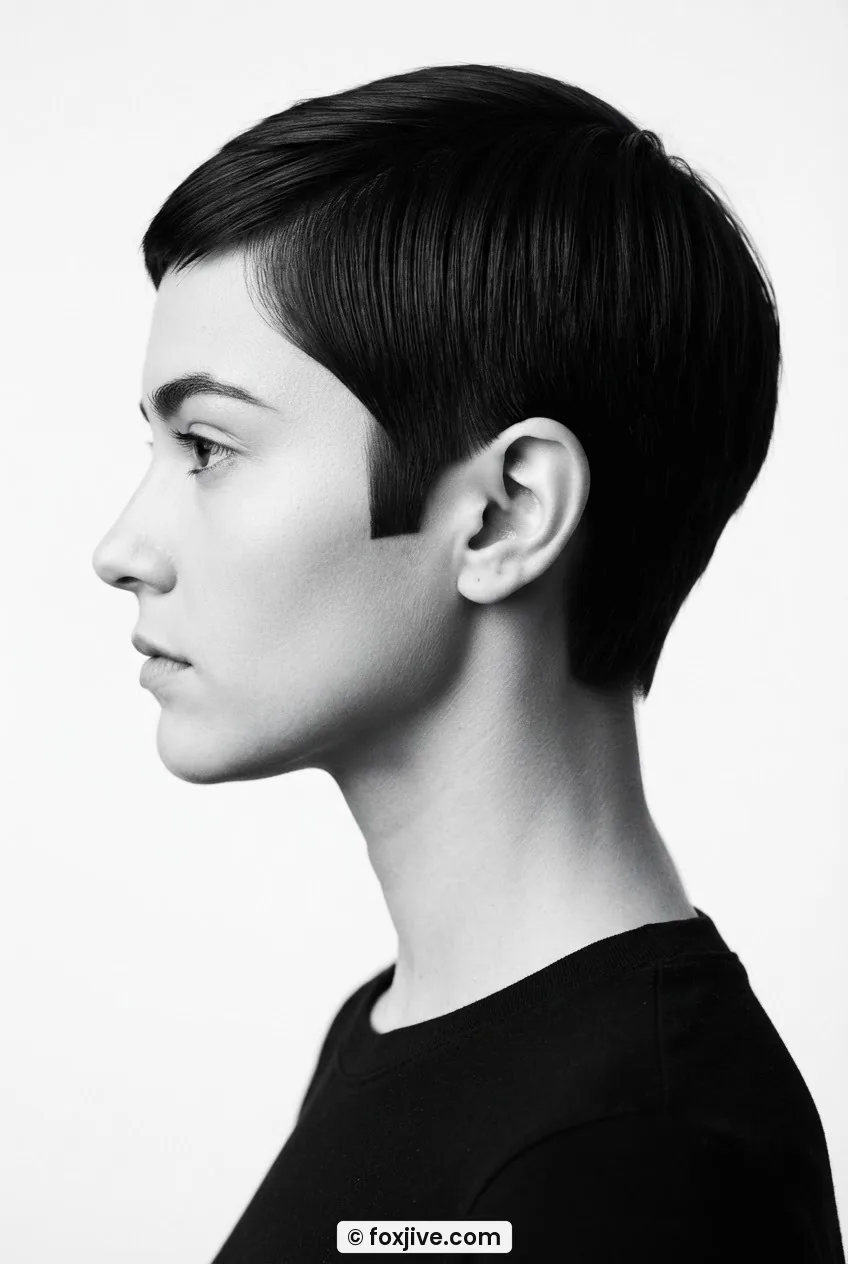
Wearing it today without looking costumed: skip the thick liquid liner. The cut reads contemporary on its own. You don’t need the whole Twiggy kit to make it land.
Needs short hair. There’s no long-hair adaptation. This one asks for commitment.
2. The Bouffant, Brought Down to Earth
The bouffant gets a bad reputation because people picture it at full 1962 pageant height — stiff, sprayed, almost aggressive in its roundness. But the silhouette underneath all that product is actually beautiful. It’s essentially a crown of volume sitting above a face that it lifts and opens. Reduce the height by about a third, let a few pieces fall softly at the sides, and you have something that works in 2026 without looking like you’ve just walked off a set.
This shape suits medium-length hair best — roughly chin to shoulder — because you need enough length to sweep up but not so much that the structure collapses under its own weight.
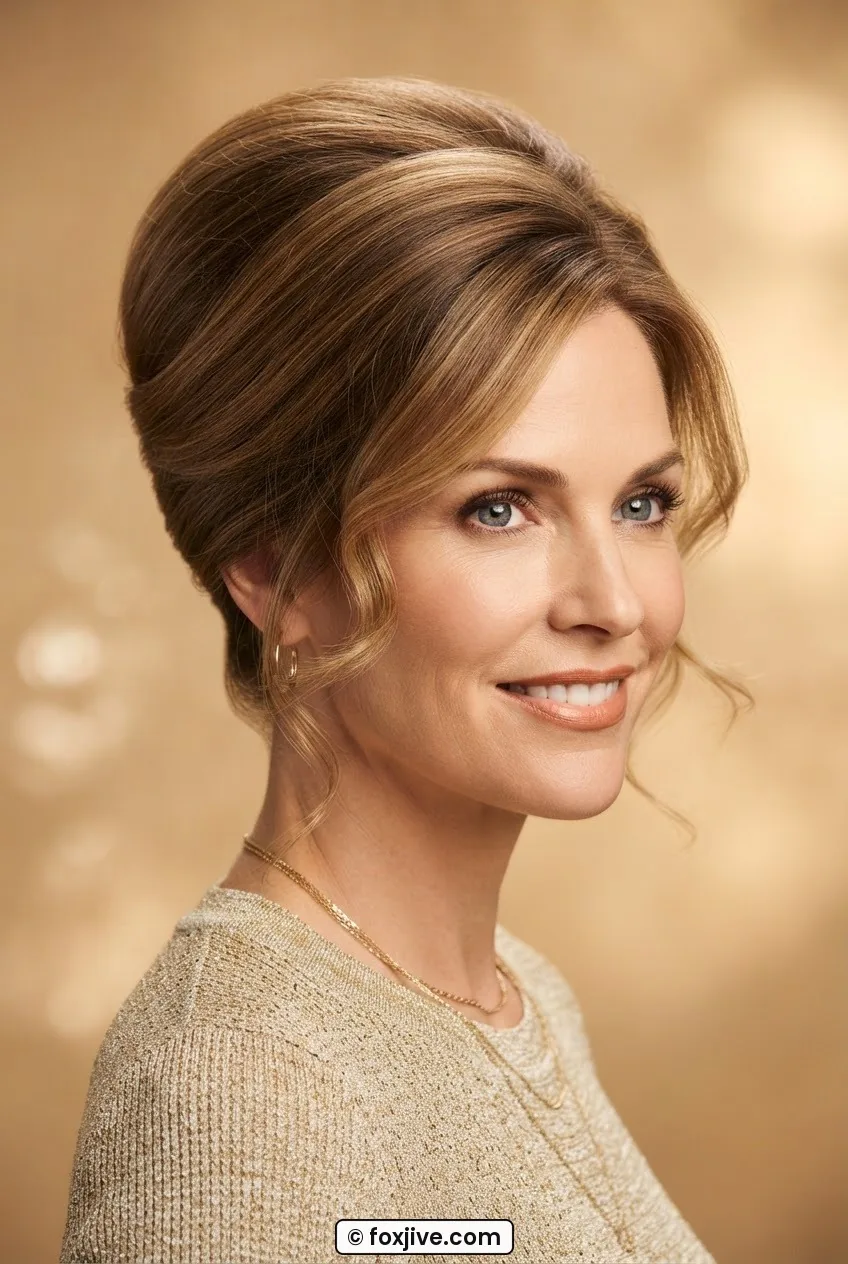
Does not need short hair. Mid-length is the sweet spot.
3. The Beehive, Stripped Back
I have a complicated relationship with the beehive. I love it conceptually — it’s a tower of deliberate intention, the most unapologetically theatrical shape the sixties produced. But in its full form it crosses a line from statement into costume, which is a problem if you’re not actually attending a themed event.
The stripped-back version keeps the tall crown but loses the excessive width. Think of it as the beehive edited by someone who actually has to commute in it. A smooth twist up the back, secured with invisible pins, with a clean line at the nape rather than the traditional backcombed base. You can find great inspiration for updos in this family over at the Victory Rolls section — the structural logic is the same even if the shapes differ.
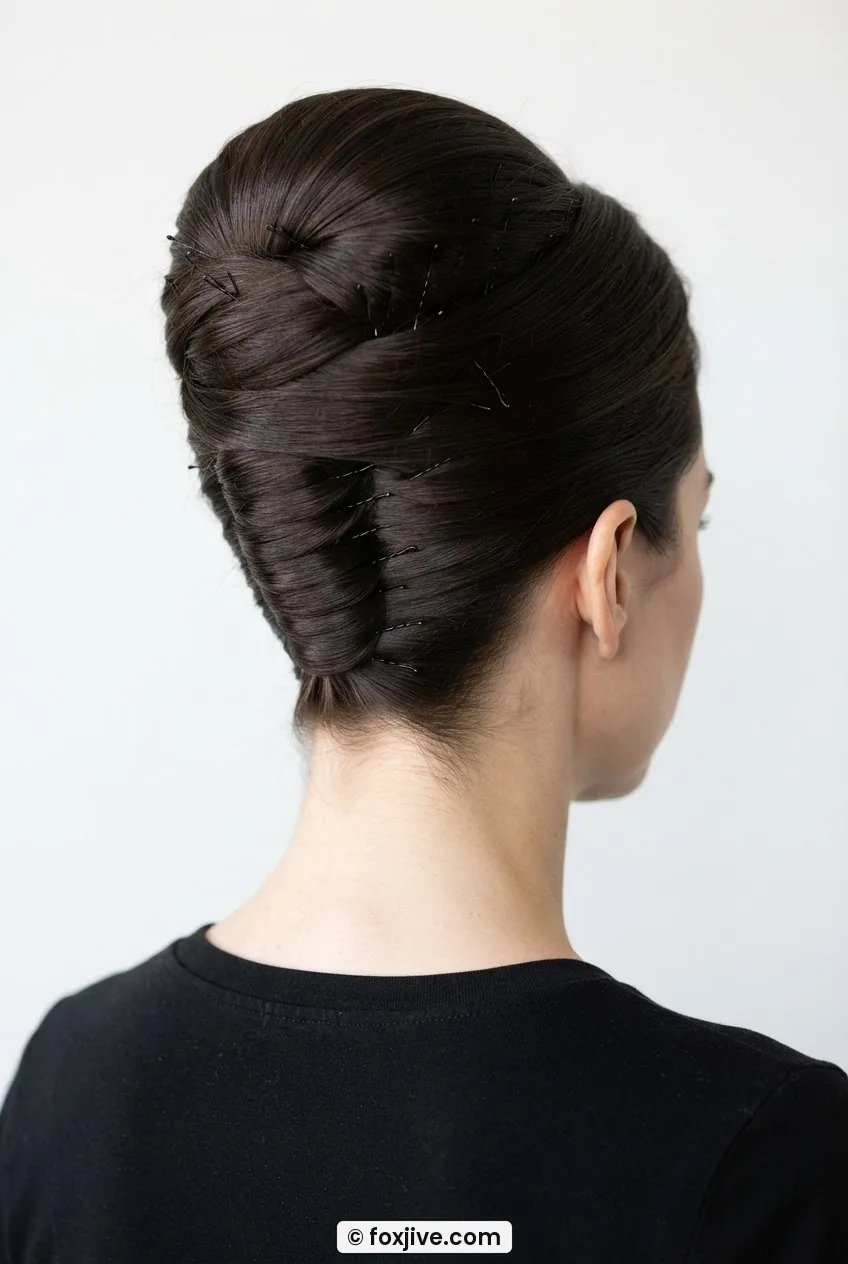
Does not need short hair. Actually requires length — at least shoulder-length to pull it off.
4. The Flip, Rebalanced
The flip was the shape that lived between the bouffant era and the straight-and-sleek revolution. It sits at the jaw or collarbone, curls outward at the ends, and has this perpetually optimistic energy — like the hair equivalent of a confident smile. Mary Tyler Moore made it look effortless. It still is, if you update it slightly.
The rebalanced version reduces the curl at the ends from a full outward wave to just a suggestion of one — a slight bend rather than a roll. It also sits better with a slightly off-centre parting instead of the strict middle part the original favoured. This is one of those shapes that reads as genuinely retro-inspired rather than costume, which is a rare quality.
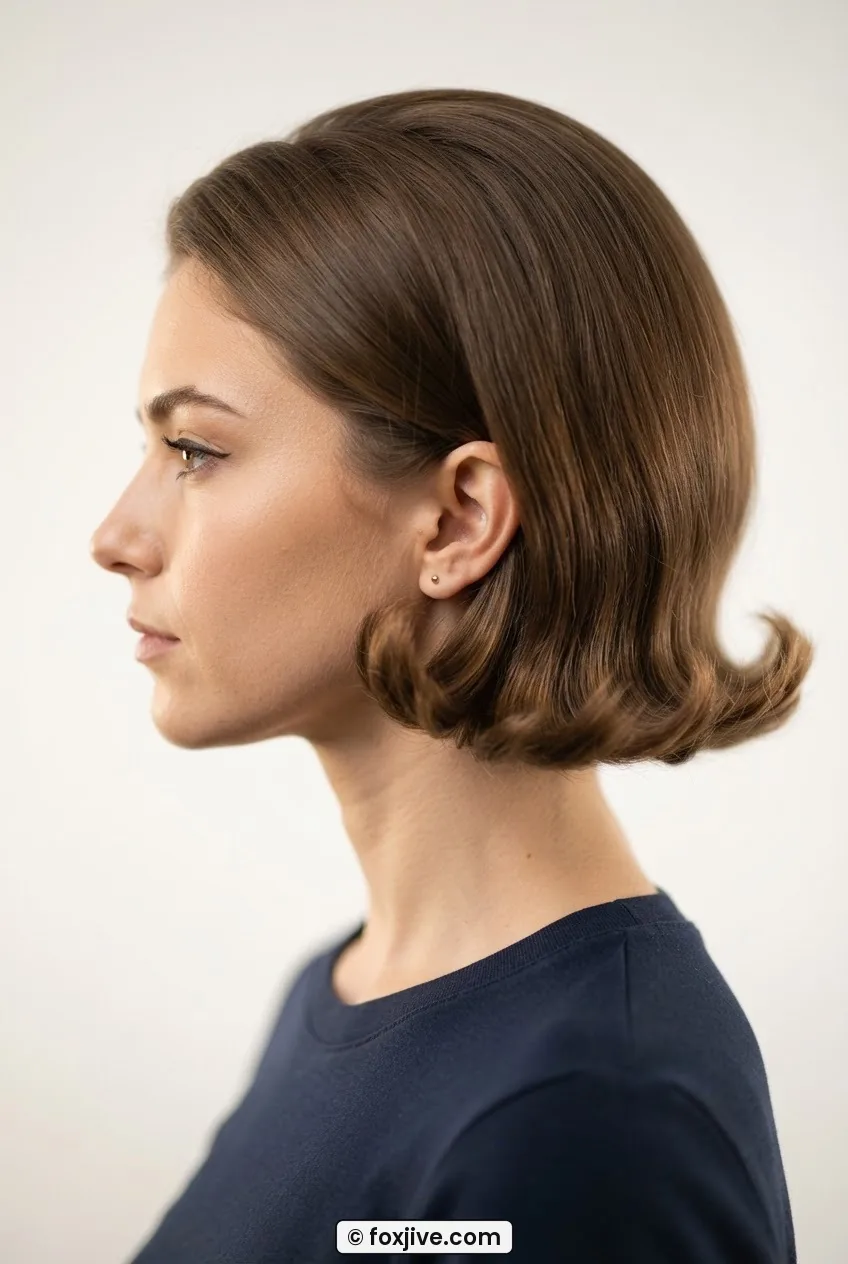
You can achieve the bend with a medium-barrel round brush on the last pass of a blow-dry, no curling iron required. And if you want to understand how to blow dry for a curl at the ends, a good technique guide makes a real difference here. Does not need short hair. Shoulder-length or just below.
5. The Geometric Bob, Still Radical
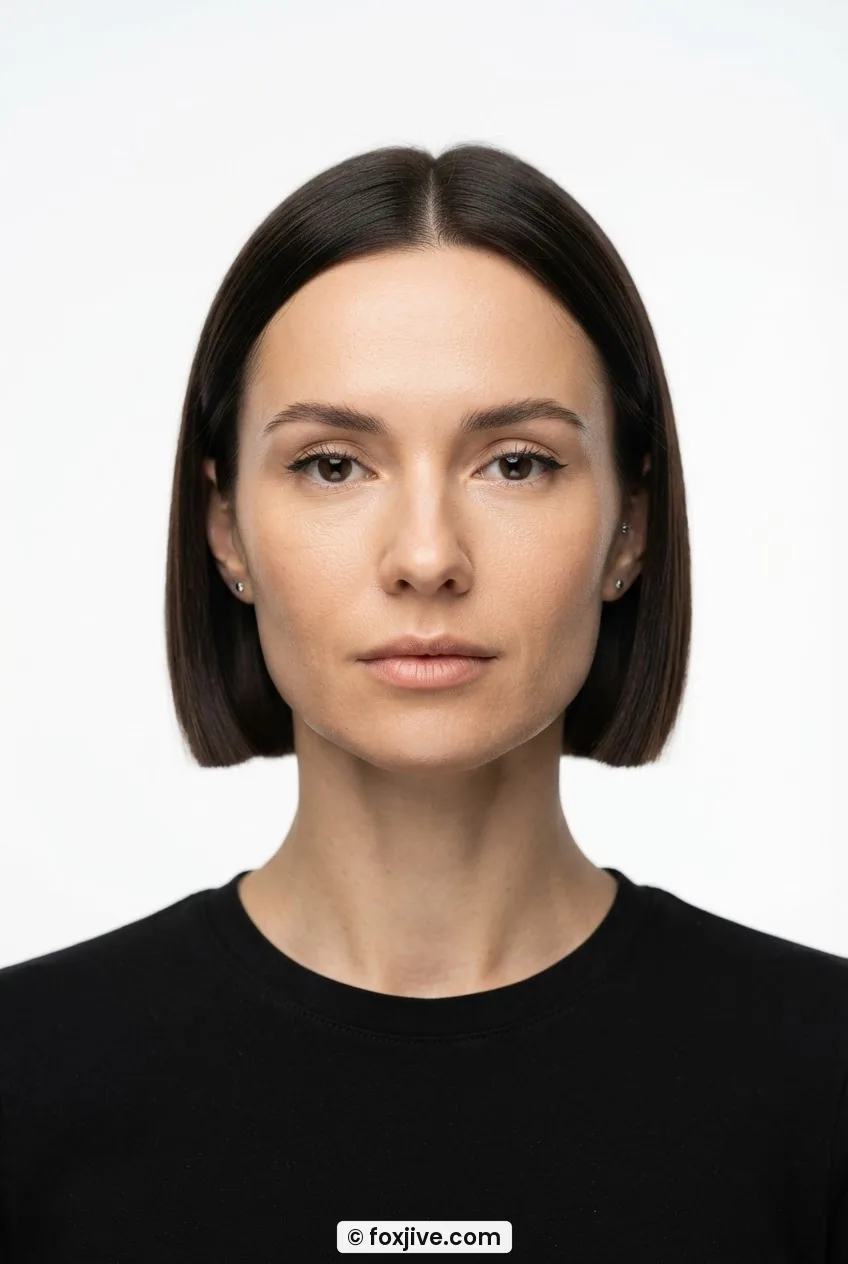
Vidal Sassoon’s five-point cut changed what a bob could be. Before him, bobs were soft, rounded, set into waves. After him, they were precision objects — the hair equivalent of a Le Corbusier chair. Blunt ends. Angles that relate to the jawline mathematically. No graduation, no softening layers, just clean lines that move as one solid piece.
This is my personal pick out of everything on this list. The geometric bob is the one sixties shape that has never actually needed updating — it arrived already modern, and it’s stayed that way. If I were walking into a salon tomorrow and starting from scratch, this is what I’d ask for. It works on thick hair, straight hair, even slightly wavy hair with the right cut weight. I’ve seen it on women in their twenties and women in their sixties and it flatters both equally, which almost nothing else manages.
The key is finding a stylist who actually knows how to cut with tension — this is a precision cut, not a rough-and-ready one. Ask about their experience with blunt cutting techniques before you sit down. It’s worth the extra research. Needs short-to-medium hair. Chin to jaw, not longer.
6. The Half-Up Twist, Loosened
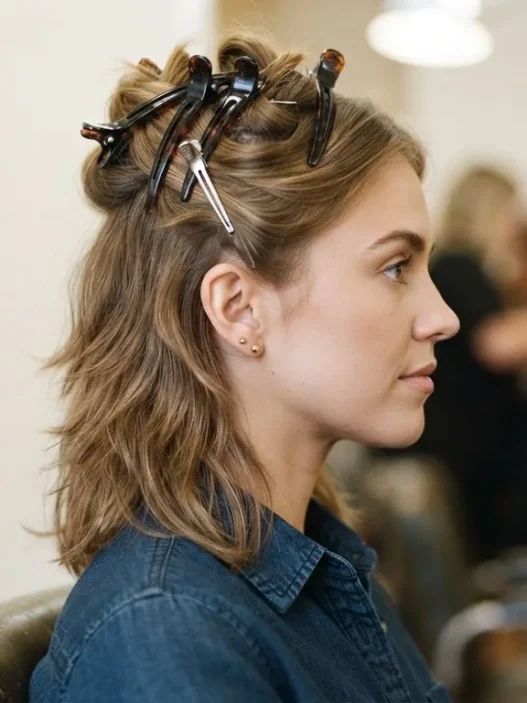
This is the shape that makes 60s hair accessible to people who don’t want to commit to a cut. The half-up styles of the sixties — twisted back sections, pinned crowns, small chignon clusters — are genuinely easy to translate to modern hair because they rely on technique rather than length or texture requirements.
The loosened version replaces the lacquered, immovable quality of the original with something that looks intentionally relaxed. The twist goes back, gets pinned, and then one or two pieces are deliberately pulled out at the temples. It reads as a 60s half-up reference without reading as a period piece. If you’re researching the family of pinned-up styles from this era, check out 9 victory roll ideas ranked by how long they take — several of them blend beautifully with this exact half-up structure.
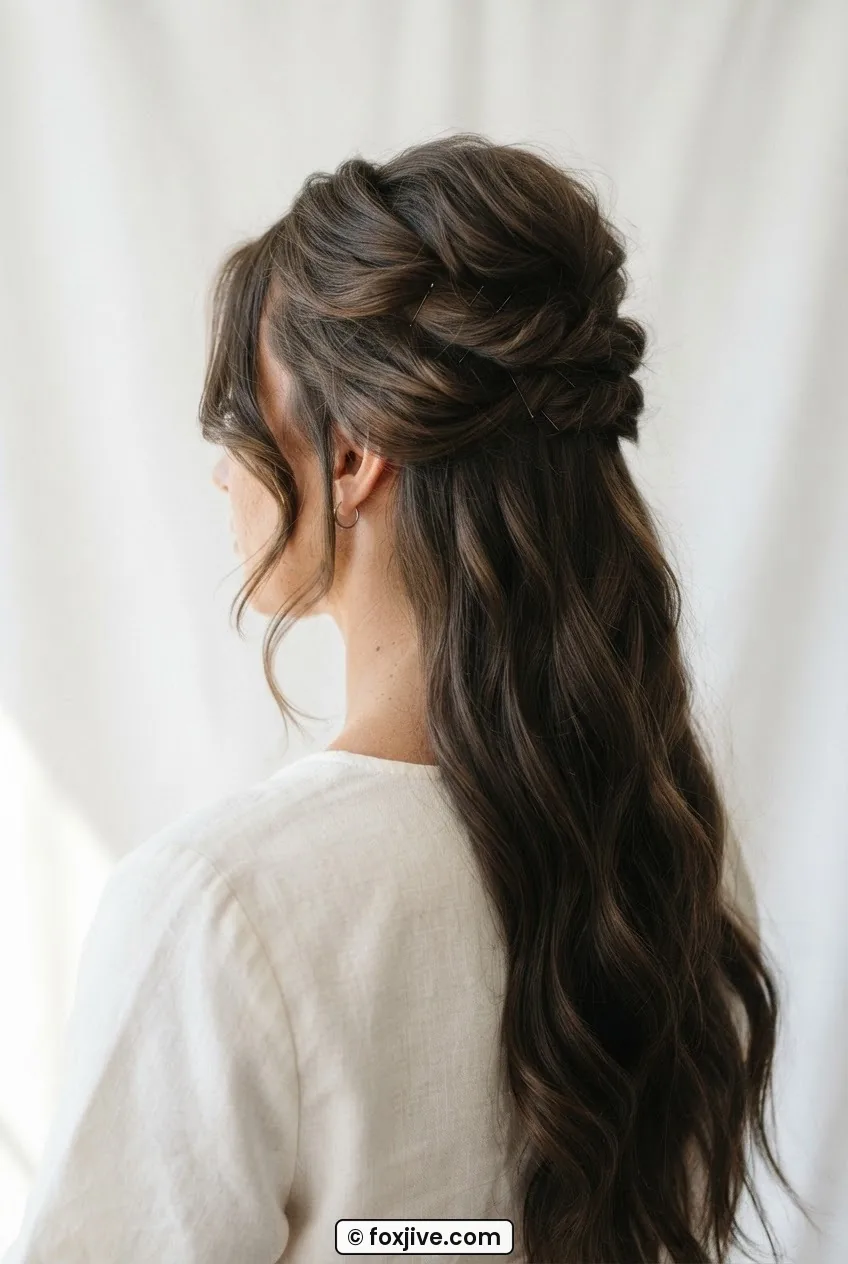
Does not need short hair. This one actually works better with medium-to-long hair.
7. The Sleek Centre Part
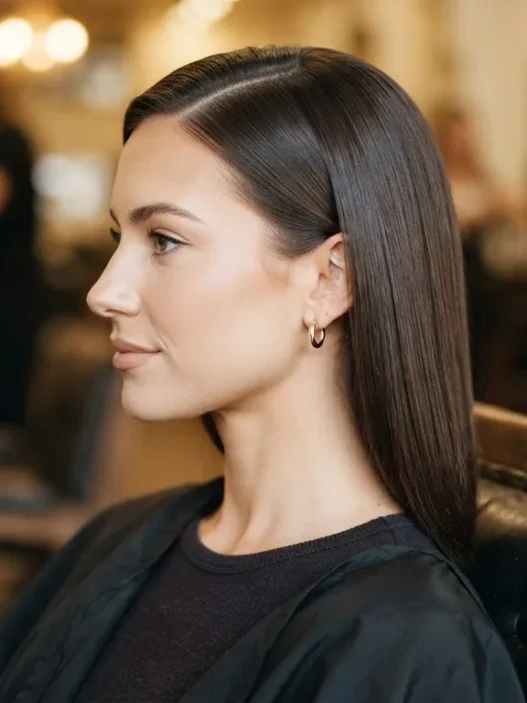
By the late sixties, the sculptural volume of the early decade had started to dissolve into something quieter and more celestial. Long, dead-straight hair parted exactly at the centre became a statement in itself — the anti-establishment antidote to the teased and pinned formality of the early sixties. Cher wore it. So did half of Laurel Canyon.
The shape needs length — at least collarbone, ideally longer — and it needs genuine smoothness. Not product-heavy smoothness. Actual well-cut, healthy hair that falls straight. The parting has to be truly centred, not approximately centred, or the whole thing loses its geometry. A fine-tooth comb and a strong light source while you part it are non-negotiable.
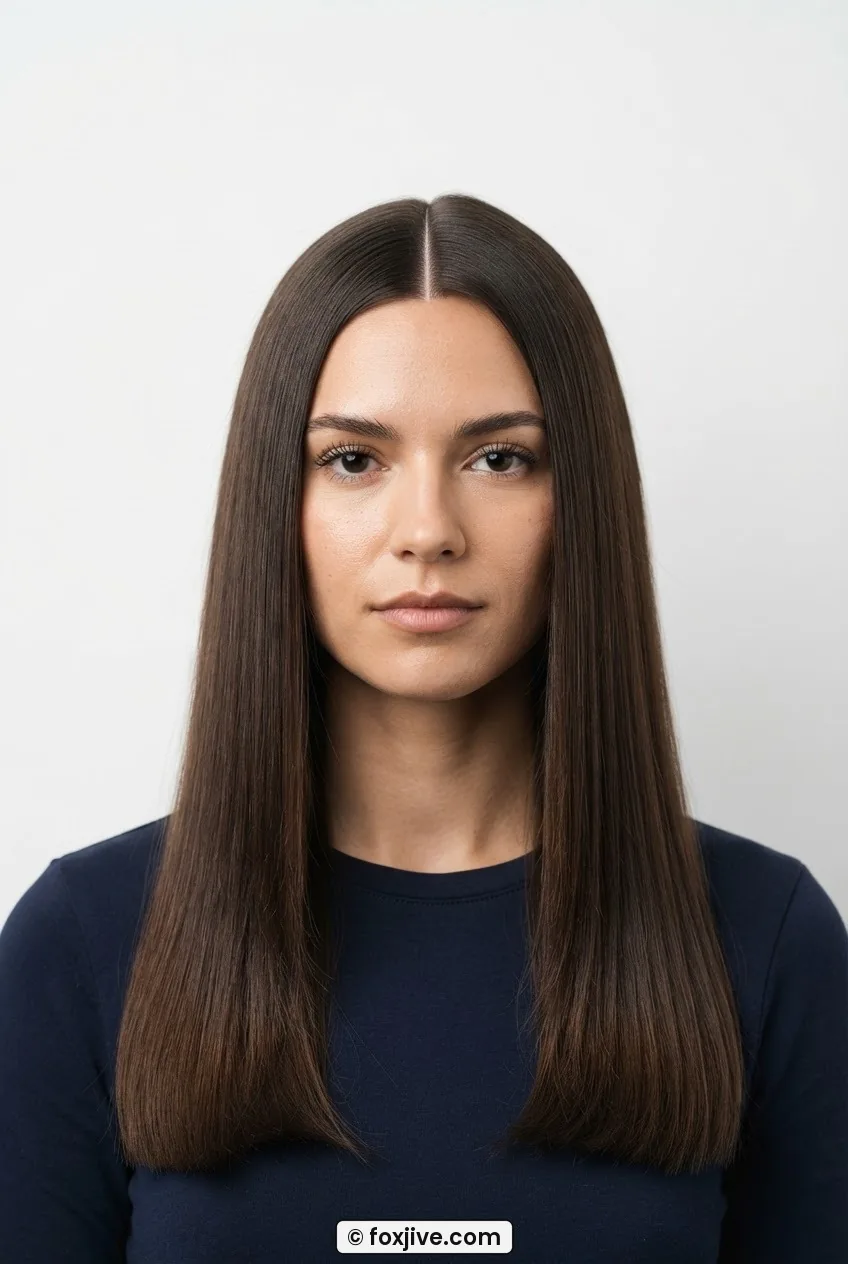
Wearing it today: the shape itself is current. Don’t over-accessorise it. A single thin ribbon or nothing at all. Does not need short hair. The opposite, actually.
8. The Teased-Out Updo
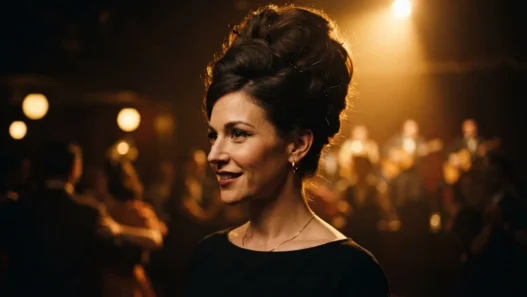
This is the sixties updo in its most editorial form — all teased crown, pinned sides, with that distinctive height that reads across a room. It’s a proper occasion hairstyle. You’re not wearing this to run errands. But for an event? It’s extraordinary.
The trick to keeping it from reading as pure costume is in where you stop the tease. If the crown height stays below the top of your ear when you stand straight, you’re in editorial territory. Above that, you’re heading into full period piece. The sides should be smooth — the contrast between smooth sides and teased crown is what gives the style its sophistication rather than its campness. For a comprehensive look at how elaborate vintage updos compare in structure, the Victory Rolls archive on this site shows exactly how height and structure were handled a decade earlier.
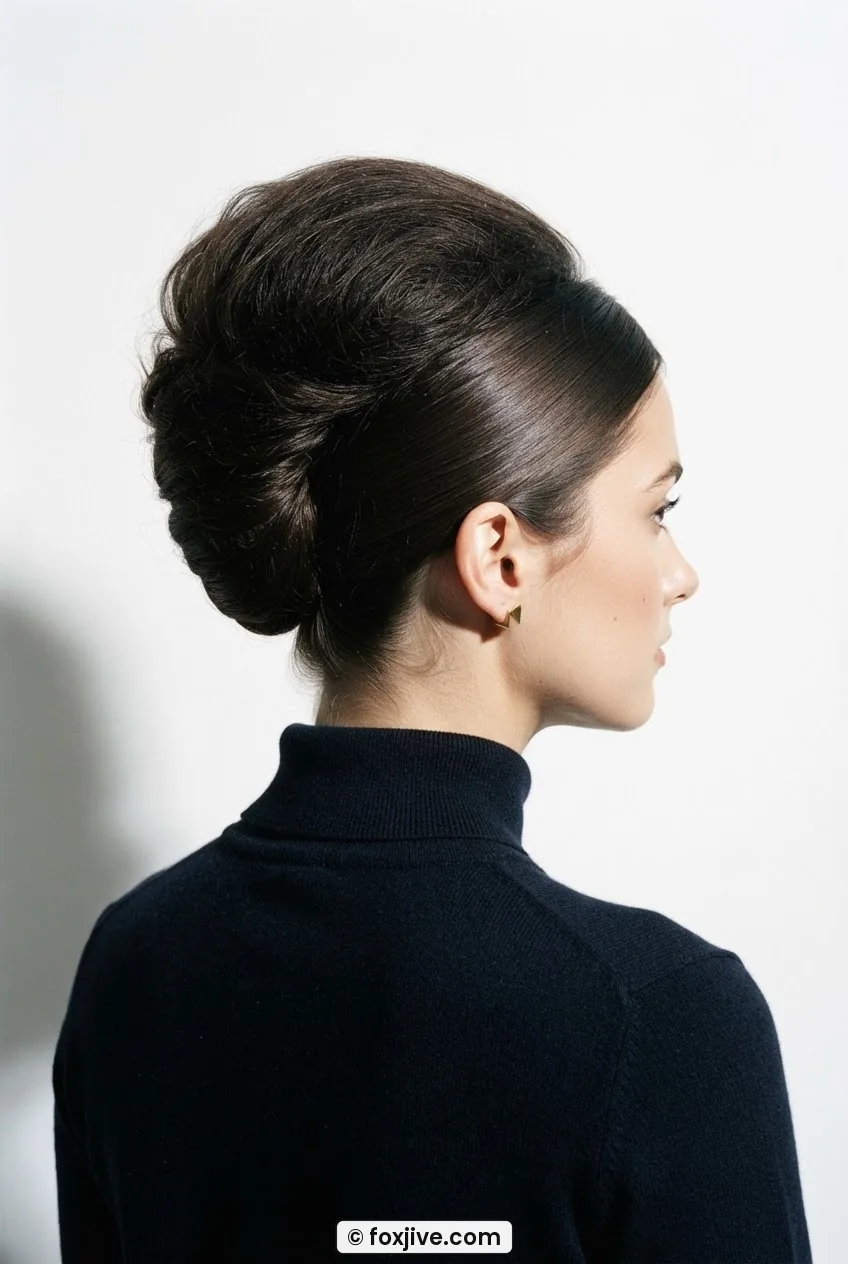
Does not need short hair. You need at least shoulder-length, and longer hair gives you more to work with.
9. The Layered Shag, 60s Edition
People tend to think of the shag as a seventies shape — and the full Stevie Nicks version is — but its origins are firmly in the late sixties. This is a softer, slightly shorter version: layers that start at the cheekbone, a curtain fringe that grazes the eyebrows, and a silhouette that moves rather than holds a fixed shape. It’s the anti-Sassoon — everything the geometric bob isn’t. Organic, textured, slightly undone.
What I love about this for modern wear is that it’s genuinely low-maintenance compared to most other shapes on this list. You can air-dry it with a bit of mousse and it looks deliberate. Or you can rough-dry it and it looks intentionally tousled. Either way, it works. It also suits a wider range of hair textures than the sleeker sixties shapes — wavy and lightly curly hair loves this cut.
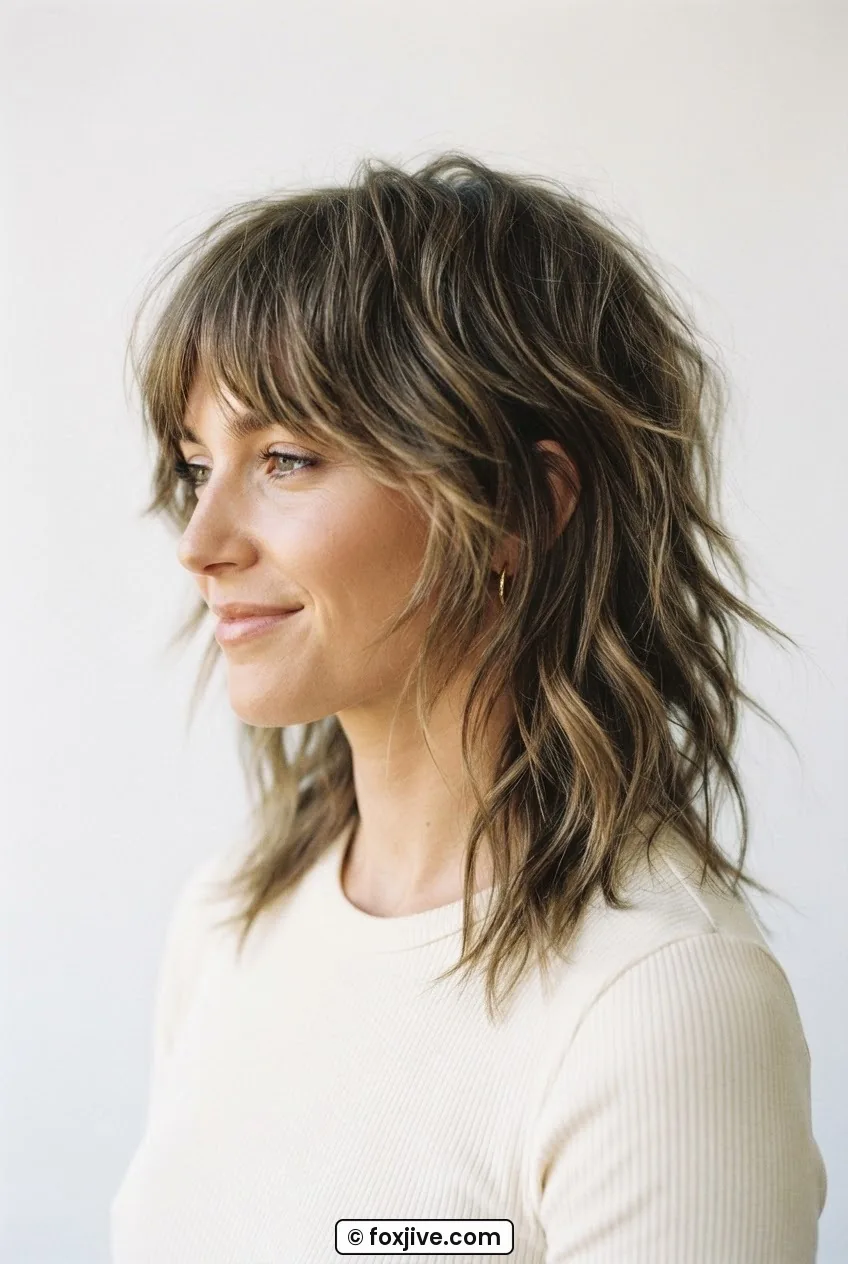
Does not need short hair. Mid-length to long works. Short works too but changes the feel significantly.
10. The 60s Wedding Chignon
The sixties wedding hairstyle existed in a specific tension: the decade was getting louder and more experimental, but weddings were still formal, still traditional. The result was a chignon with an edge — smooth but structured, pinned but not stiff, with just enough height at the crown to feel celebratory. It’s genuinely one of the most beautiful shapes the decade produced for formal occasions.
For brides specifically, the sixties chignon offers something that romantic loose waves can’t — longevity. It stays exactly where you put it. No flyaways by the reception, no curls dropping in the heat. You can read more about how vintage-inspired wedding hair works in practice over at about this site — the whole archive leans heavily into occasions as well as decades. The modern interpretation of this style is everywhere in 2026 bridal editorial, and it makes complete sense: clean, architectural, genuinely timeless.
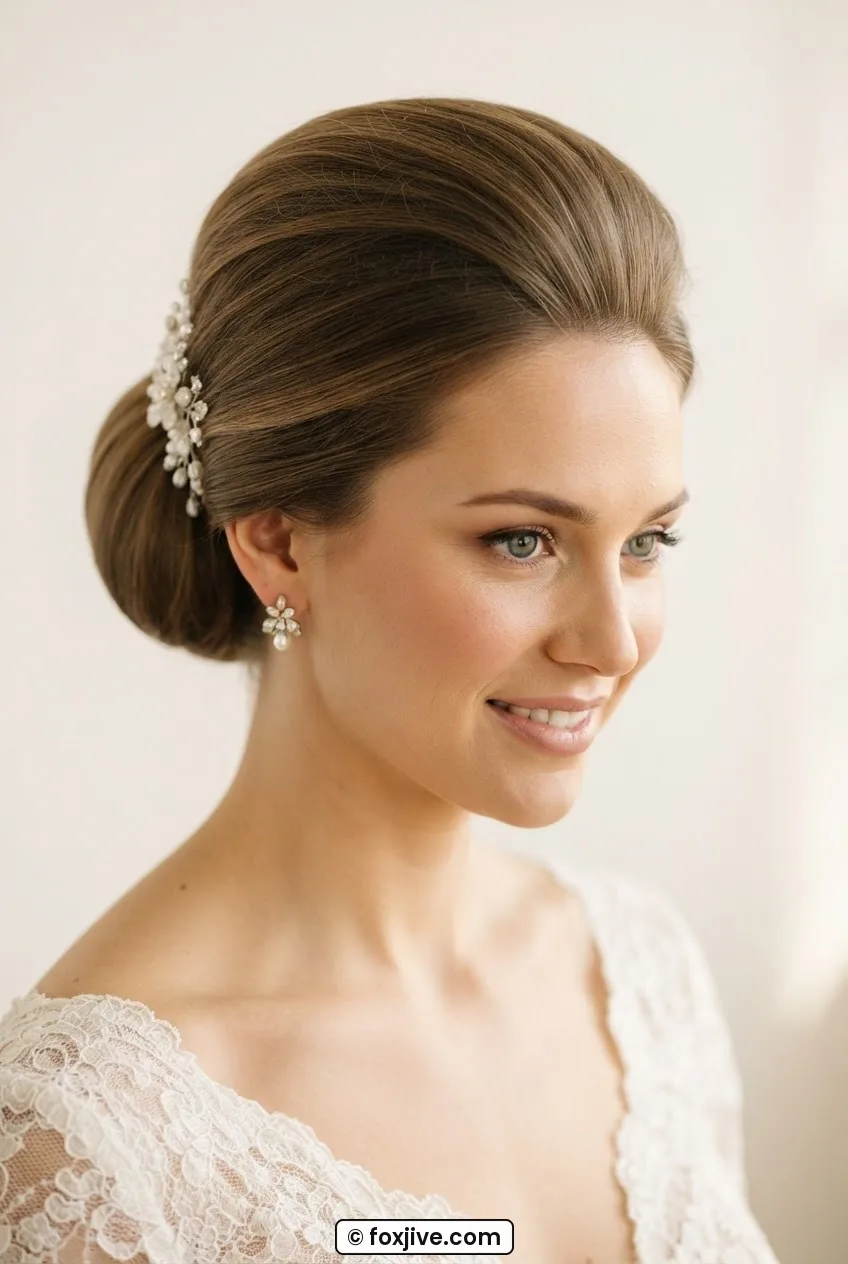
Does not need short hair. You want length for this one — at least collarbone.
11. The Short Crop, No Excuses
Not the pixie. Not the mod cut. Just: short. The plain, honest, close-cropped shape that sits at or above the ear and makes no apologies for itself. The sixties produced this quietly alongside all the more theatrical shapes, and it’s the one that gets referenced least but deserves more attention. It’s not trying to be geometric or architectural — it’s just extremely, efficiently short, with a natural texture allowed to do what it wants within a tight silhouette.
The no-excuses crop suits people who want low maintenance but not invisibility. You still have a shape. You still have presence. You’ve just decided that presence doesn’t require length. See how she’s wearing hers in the photo — the way it sits close at the sides but has just a centimetre or two of natural movement on top? That’s the distinction between this and a buzz cut. It’s still hair. Just not much of it. You can find similar logic in the how short natural cuts are styled world, though the textures differ.
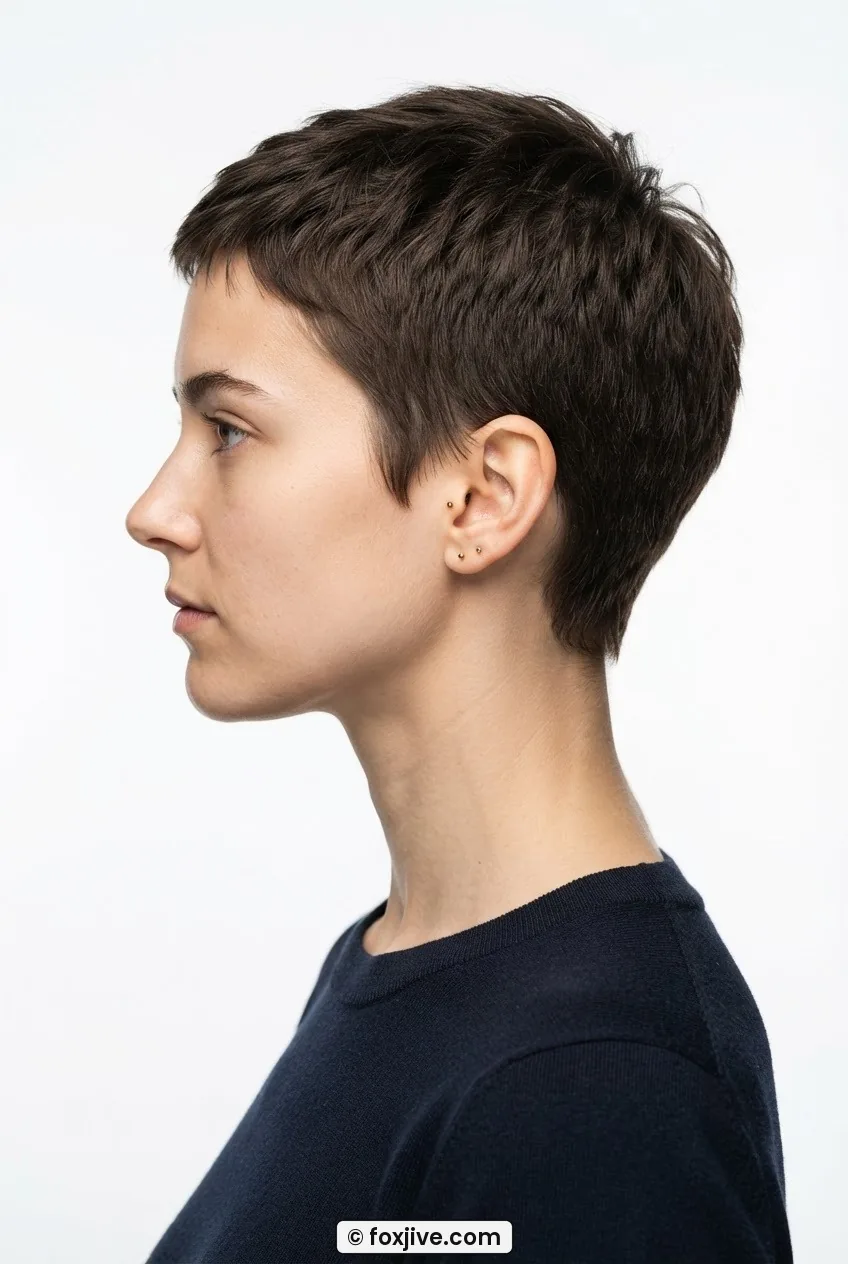
Needs short hair. Obviously. But if you’ve been thinking about going short, this is the sixties shape that requires the least explanation to your stylist.
Questions I Get About Sixties Hair
Can I get a 60s hairstyle if my hair is naturally curly?
Absolutely — the layered shag and the half-up twist both work beautifully with natural curl. The sleek geometric shapes do require straightening, but you’re not limited to those. Curly and wavy hair often takes to the 60s shag better than straight hair does because the texture fills the layers naturally without needing product to fake movement.
How do I tell a stylist I want a 60s cut without them going too theatrical?
Bring a reference image — always. And be specific about what part of the image you want them to replicate: the shape, not the styling. Say something like “I love the line of this cut but I’d wear it more simply than the photo shows.” Most stylists respond much better to “the cut, not the look” framing than to decade references alone.
Which 60s hair shape is genuinely the easiest for home maintenance?
The layered shag, without question. It’s the most forgiving of all the shapes listed here — slightly grown-out layers still look intentional, the fringe can be trimmed at home, and the texture can go air-dried or rough-dried without losing the shape. Everything else on this list punishes neglect more than the shag does.
Are 60s hairstyles actually trending in 2026 or is this nostalgia?
Both, honestly. The geometric bob has been on editorial pages continuously for decades — it never really left. The mod pixie and the sleek centre part are definitely having a 2026 moment, though. Whether that’s a trend cycle or just good design reasserting itself every generation is a debate I find genuinely interesting. I lean toward the latter.
If I had to pick the single shape worth trying first from this whole list, it’s the geometric bob — no competition. It’s the one sixties cut that arrived already modern, requires no era-specific styling to read contemporary, and suits a genuinely wide range of face shapes and hair types. But honestly? Every shape here has a version that works in real life without a costume. The sixties were too good at design for their shapes to ever fully date. Start wherever feels least frightening, and see where it takes you.