






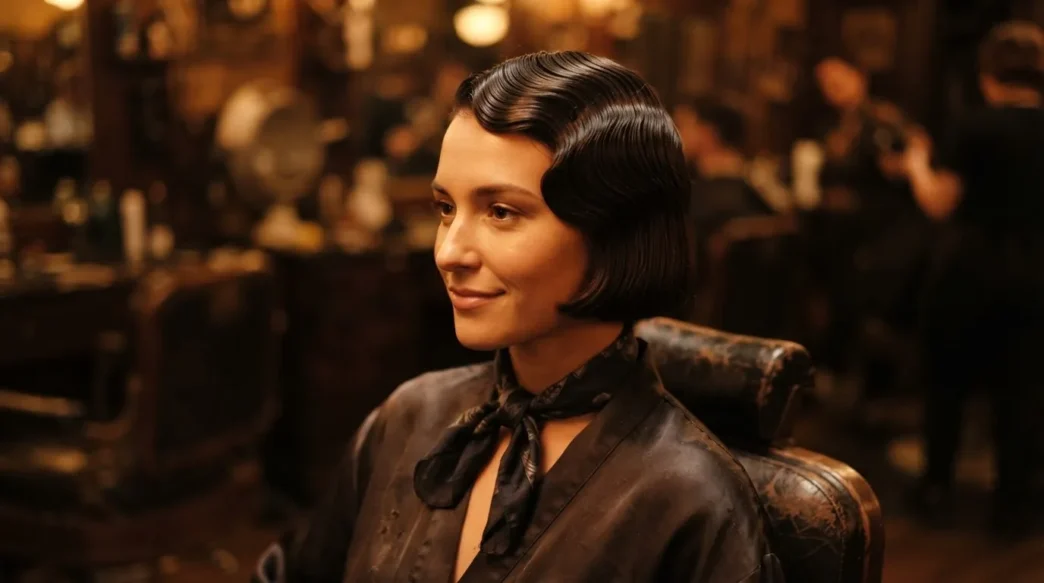
I used to think the bob just happened — like women woke up one morning in 1920 and collectively decided to cut everything off. It’s a fun image. It’s also almost entirely wrong. The real history of 1920s hair is messier, older, and honestly more interesting than any Great Gatsby costume board will tell you.
There are a few specific myths I want to pull apart here, because they’ve been repeated so many times they feel like facts. And once you know where these styles actually came from — the real women, the real year, the real reason — you’ll never look at a finger wave the same way again.
The Detail Everyone Gets Wrong
Here’s the thing most people get completely backwards: the bob was not invented in the 1920s. Not even close. It was invented — or at least formalized and named — by a Polish-born hairdresser named Antoine de Paris, who cut the actress Eve Lavallière’s hair into a short blunt shape in Paris around 1909. That’s eleven years before the decade we associate it with. Eleven years.
The dancer Irene Castle wore a version of it in 1915 after a bout of typhoid fever forced her to cut her long hair before surgery. She kept it. She performed in it. And because she was one of the most photographed women in America at the time, it spread — slowly, nervously — through fashion magazines and into the imaginations of women who were told, repeatedly, that short hair was unfeminine and possibly immoral.
So by the time 1920 actually arrived, the bob wasn’t new. It was just finally becoming acceptable. That distinction matters enormously when you’re trying to understand why it hit so hard when it did.
Before 1922: The Long Way Down
Women’s hair in the 1910s was in a slow, reluctant transition. The Edwardian pompadour — that enormous puffed-up structure requiring hairpieces, wire frames, and a minimum of forty-five minutes — was already collapsing under its own weight. World War One did the rest. Women who went to work in factories, offices, and hospitals simply couldn’t manage elaborate upswept arrangements under caps and headgear. Practicality won, as it usually does when survival is involved.
By 1918 and 1919, the silhouette was already dropping. You can see it in the photographs — hair pinned lower on the head, less volume on top, the whole structure becoming flatter and closer to the skull. This wasn’t yet a bob. It was a slow deflation. The long hair was still there; it was just exhausted.
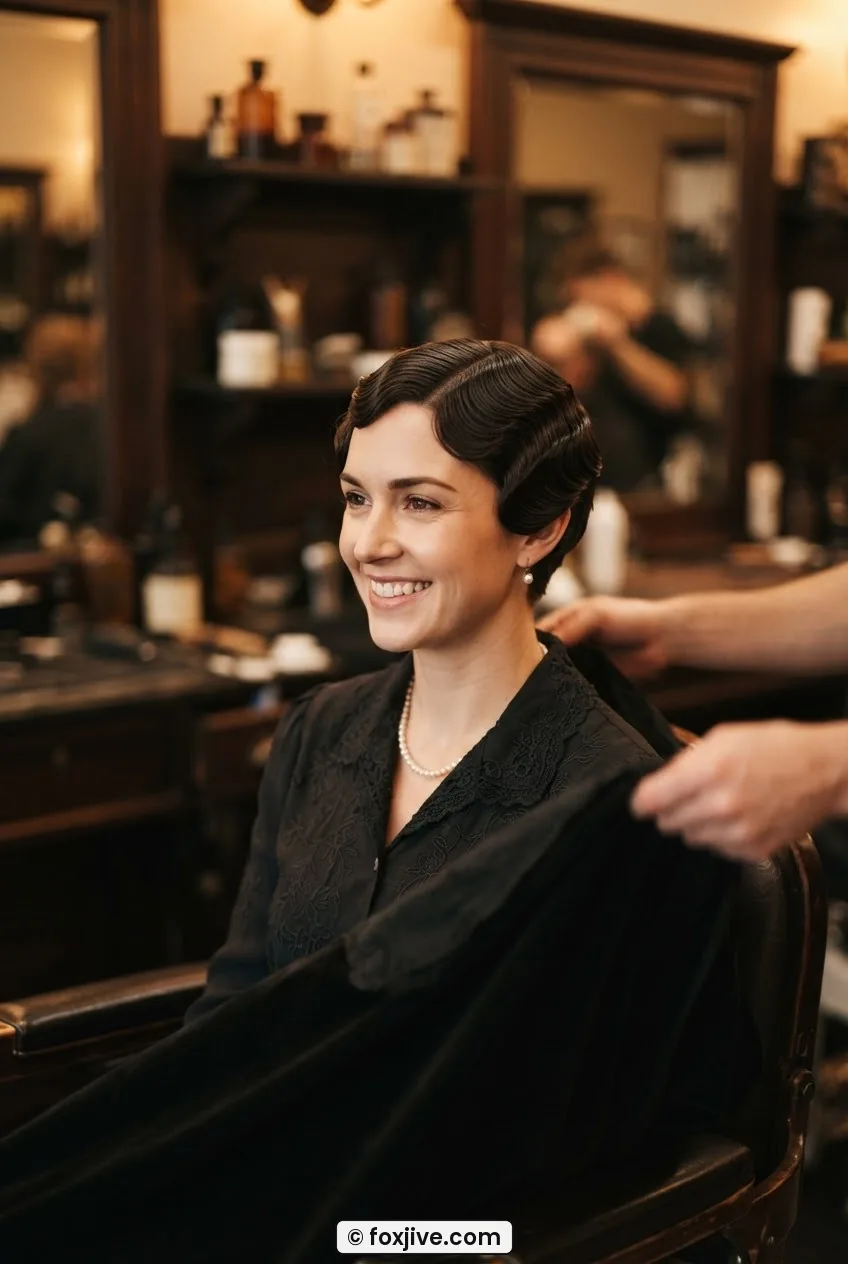
The shingled back — where hair was cut close and tapered at the nape — began appearing in Paris salons around 1920 and 1921. This is what laid the groundwork. It’s also where finger waves got their structural logic: pressed close, curved flat, meant to follow the shape of a skull rather than escape from it. You can read up on how finger waves developed as a styling technique to get a sense of how technically demanding this was even then — it required a specific product (wave set lotion), a specific comb, and a very specific angle of attack that most home stylists couldn’t replicate.
The Decade It Spread: 1922–1928
1922 is the year I’d actually date the explosion. That’s when two things happened simultaneously: Marcel Grateau’s wave iron (invented, confusingly, back in 1872) got a serious commercial reboot in salons across Europe and America, and the word “flapper” moved from slang into mainstream press. Those two facts are not unrelated.
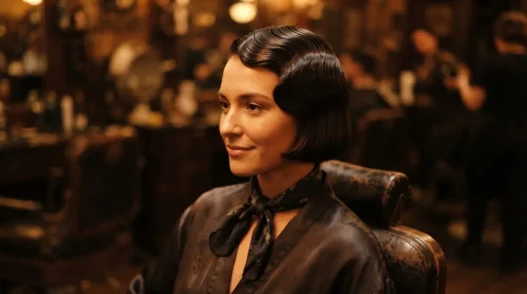
The flapper bob — blunt-cut at the jaw, sometimes with a slight curl under at the ends — became the look because it was specifically, deliberately incompatible with the previous generation’s aesthetic. You couldn’t pin it up into a Gibson Girl. You couldn’t style it into an Edwardian pompadour. It resisted the past on a purely structural level. I find that quietly brilliant.
By 1924 and 1925, salons in New York, London, and Chicago were so overwhelmed with women requesting bobs that many reportedly turned clients away. The shingle cut — even shorter than the standard bob, tapering to almost nothing at the neck — peaked around 1926. And then came the Eton crop: cut close all the way up, sometimes slicked flat with brilliantine, worn by women who wanted something even more aggressively modern. Clara Bow. Louise Brooks. These weren’t women following trends. They were the trend, and they knew it.
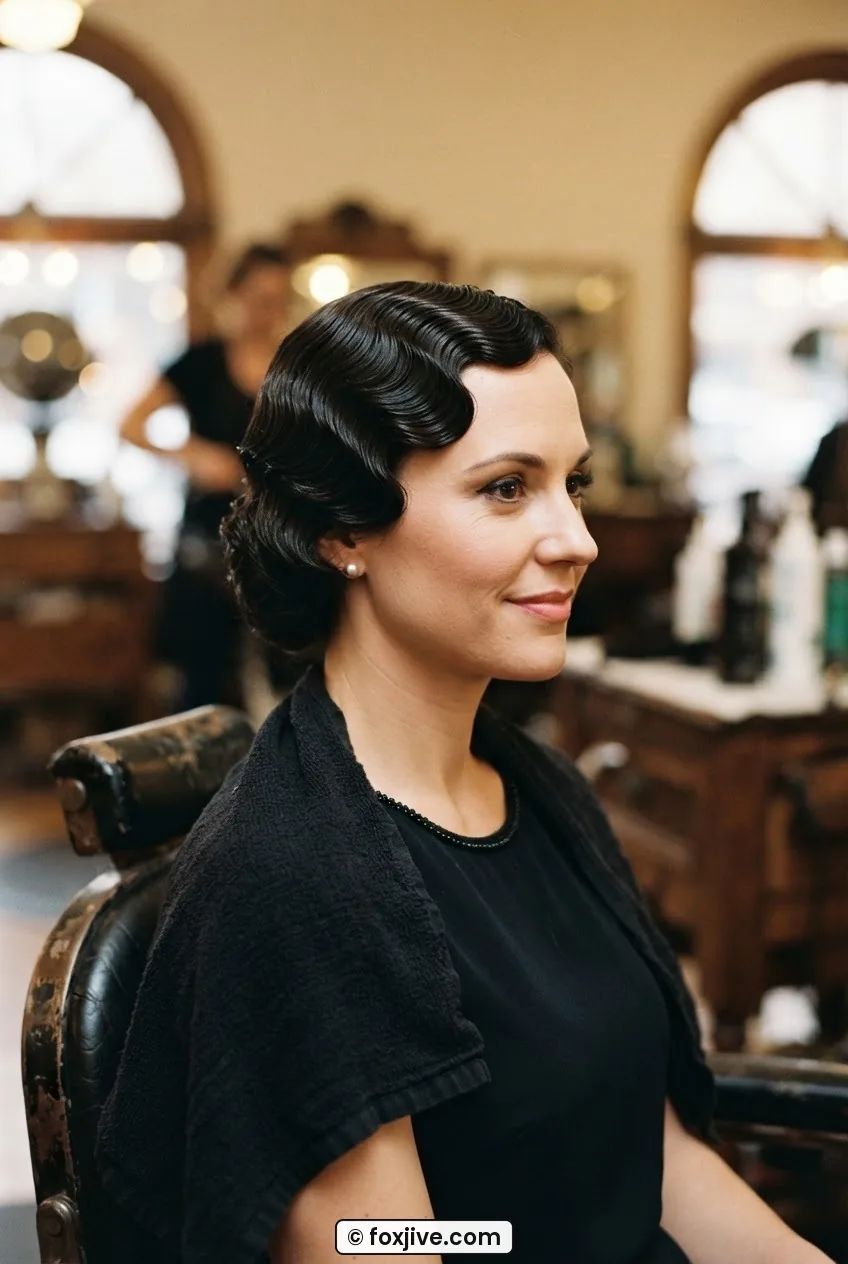
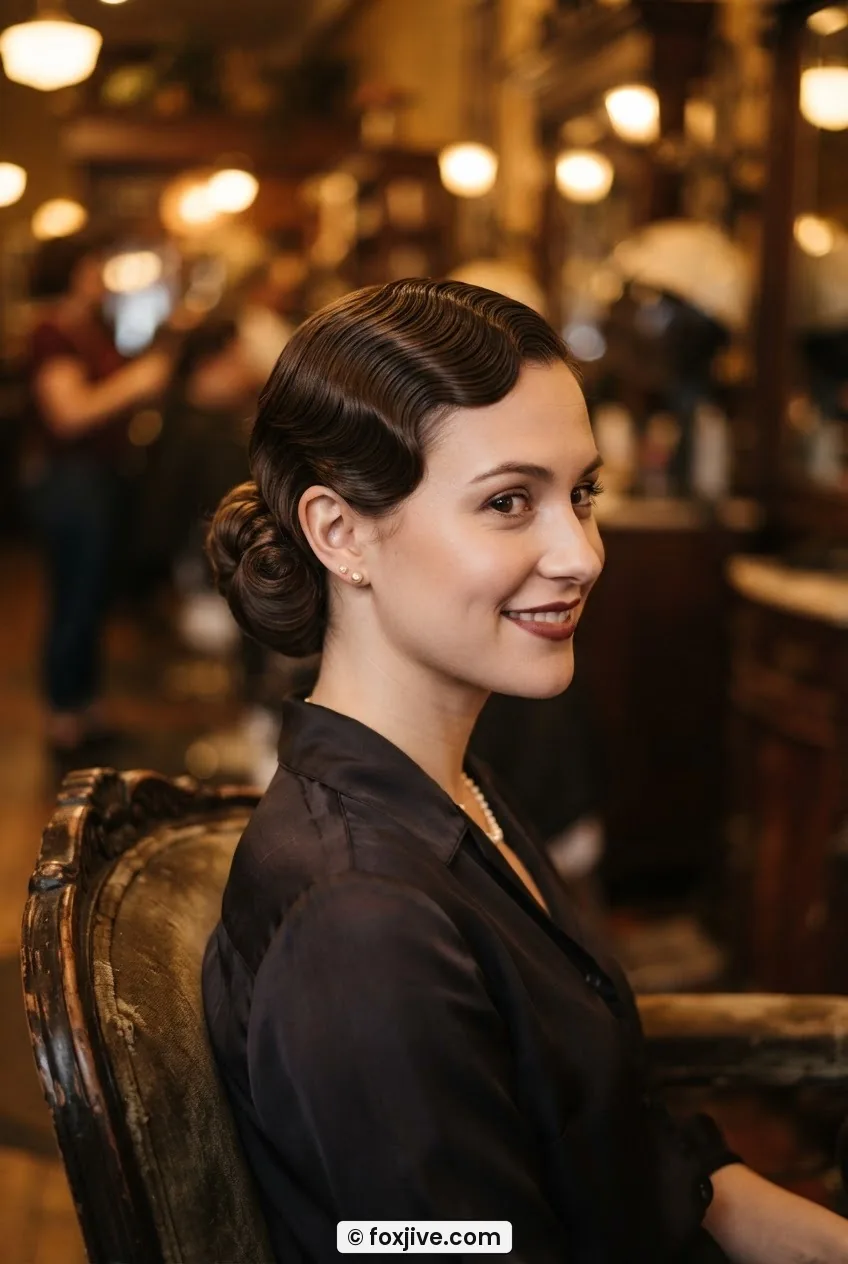
What’s fascinating is how long hair fit into all this. Women with genuinely long hair who weren’t ready to cut didn’t get left behind — they adapted. They pinned long hair into low, close coils at the nape that mimicked the shingled silhouette from the front. It’s the same instinct you see in modern versions of 1920s long hair styles: the braid tucked under, the twist pinned flat, the illusion of short from certain angles. The era was cleverer than it gets credit for.
A Tutorial That Shows the Real Technique
Who Actually Wore It — and Who Didn’t
Here’s my slightly controversial take: the flapper bob was, for most of the decade, a class signifier more than a generational one. Middle-class and working-class women in rural areas — which was most of America — were not running to get bobs in 1922. They were reading about them in magazines, looking at photographs of actresses, and deciding whether it was worth the potential scandal in their specific community.
Some churches preached against it. Some husbands refused to allow it. Some employers — particularly for domestic service — required long hair. The bob was radical precisely because it was visible, and visibility carried real social risk depending on where you lived and who you answered to. The women we think of when we picture 1920s hair are largely city women, often working in entertainment, fashion, or the arts. That’s a small slice of the population.
Black women’s hair history in this era is particularly underwritten in mainstream vintage hair accounts, and that frustrates me. The Harlem Renaissance produced its own beauty culture — pressing combs, Marcel waves worn differently, an entirely parallel aesthetic conversation happening simultaneously — that rarely gets mentioned when people talk about the decade’s iconic looks. Research into Black hair history in the 1920s opens up a much richer picture of what was actually happening stylistically across the decade.
What Killed the Look by 1930
The stock market crash in October 1929 is the easy answer, and it’s not wrong exactly — it’s just incomplete. The truth is that the silhouette was already starting to soften before the economy collapsed. By 1928, fashion had begun its slow lean toward a longer, more feminine line. Hemlines were dropping. Waists were reappearing. The flat-chested, straight-hipped flapper shape was giving way to something with more curve.
Hair followed. The severe shingle started growing out into the softer, waved bobs of 1929 and 1930 — longer at the sides, with more deliberate curl rather than the pressed-flat wave of the mid-twenties. Then came the proper finger-waved longer styles of the early 1930s, and Old Hollywood glamour started to take over. The bob didn’t die — it just grew up and got softer. Which, honestly, is what a lot of interesting things do.
The Depression also changed what women could afford to maintain. Regular salon visits for Marcel waving or shingling became a luxury, and home permanents — crude, damaging things that frequently fried hair to a crisp — started filling the gap. The precision look of 1925 was simply not achievable at home. So it faded by necessity as much as by taste.
It’s worth noting that the 1940s brought its own dramatic hair chapter — a decade I find endlessly fascinating, especially where victory rolls are concerned. The structural roll and the pinned volume of that era feel like a direct overcorrection from the twenties’ flatness. If you’re curious about where they sit on the effort spectrum, the breakdown of 9 victory roll ideas ranked by how long they take is genuinely useful.
What Survived Into Now
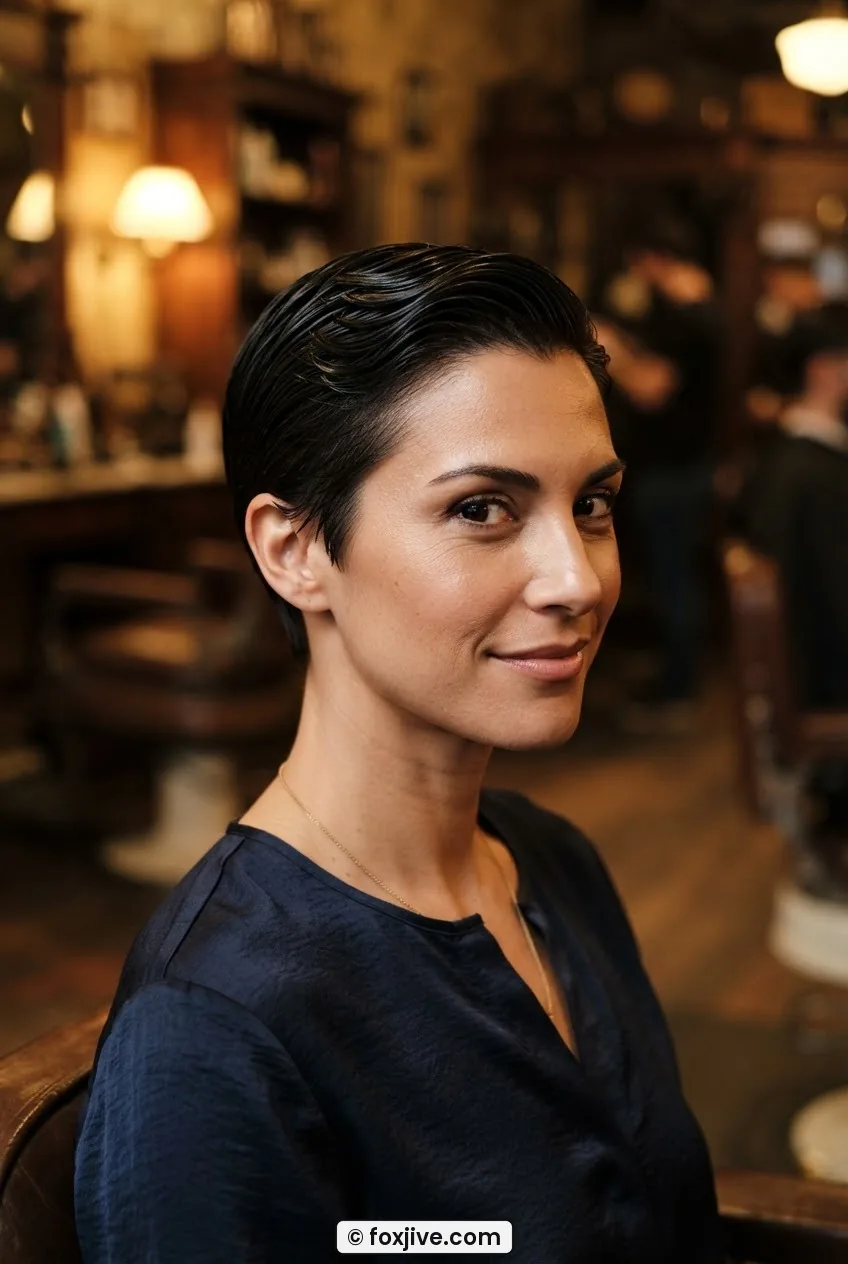
More than people realize. The blunt bob — arguably the most recurring cut in fashion history — traces a direct line back to 1920s hair. Every time it comes back (and it comes back roughly every decade), it carries the same charge it always did: clean, decisive, a little confrontational. The women I see wearing proper blunt bobs in 2026 are continuing something that Irene Castle started in 1915 and Louise Brooks perfected in 1927. That’s a long thread.
Finger waves have had a slower revival, partly because they require real skill and real time. But they appear reliably on red carpets, at vintage events, and in editorial shoots whenever a stylist wants to reference genuine twenties glamour rather than a costume-shop approximation of it. The technique itself — pressing the wave into damp hair with a comb and clips — hasn’t changed in a hundred years. There’s something almost stubborn about that. I respect it.
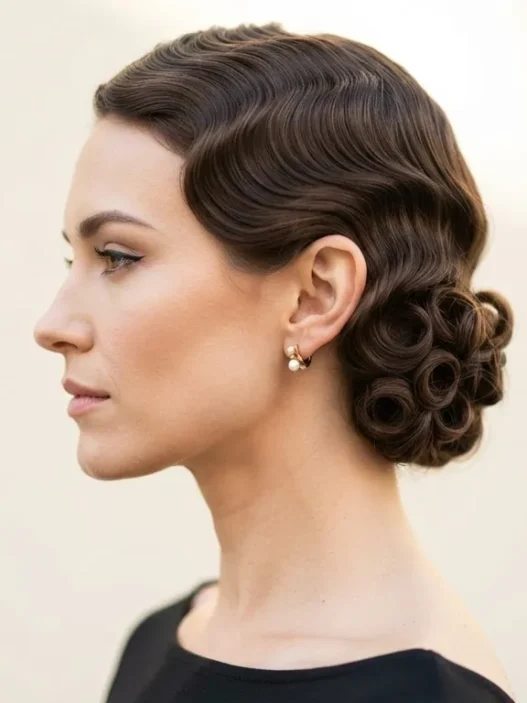
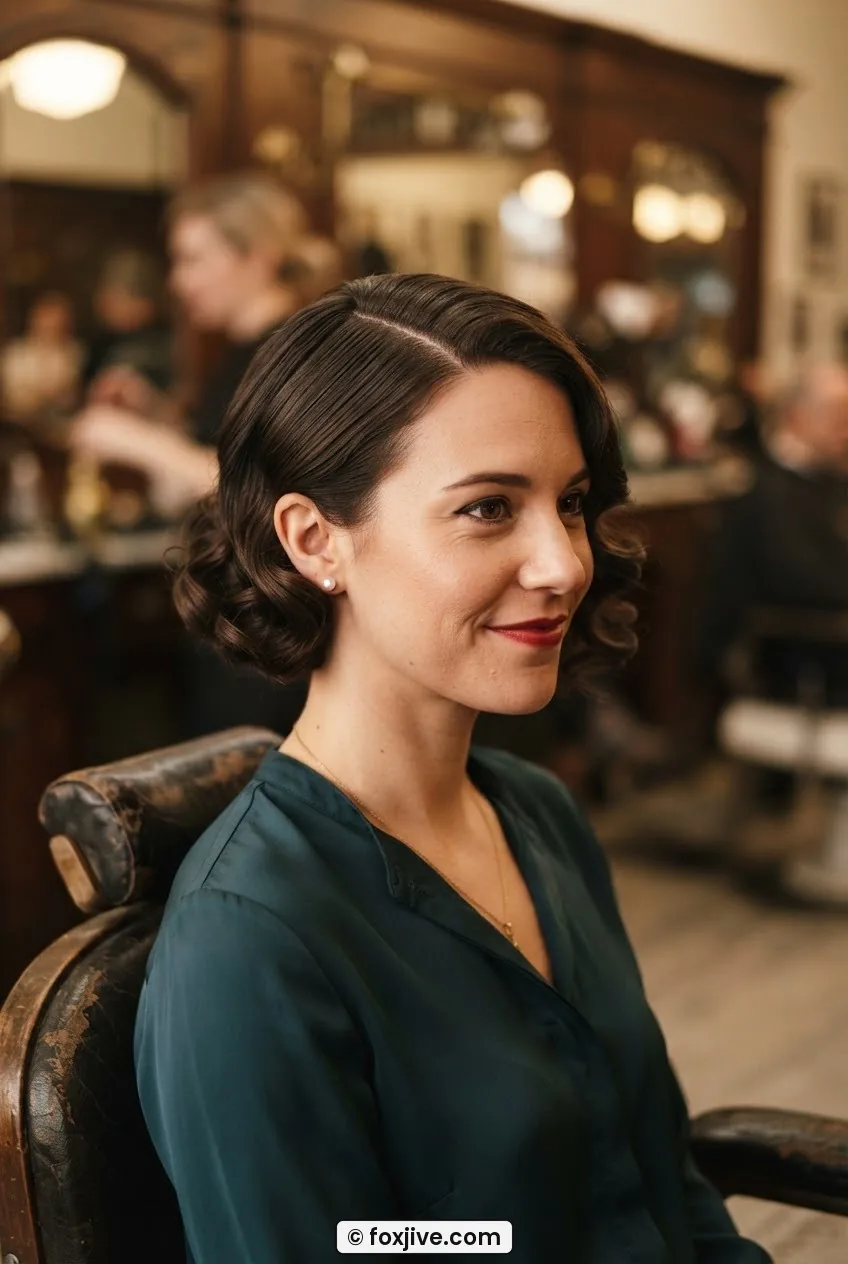
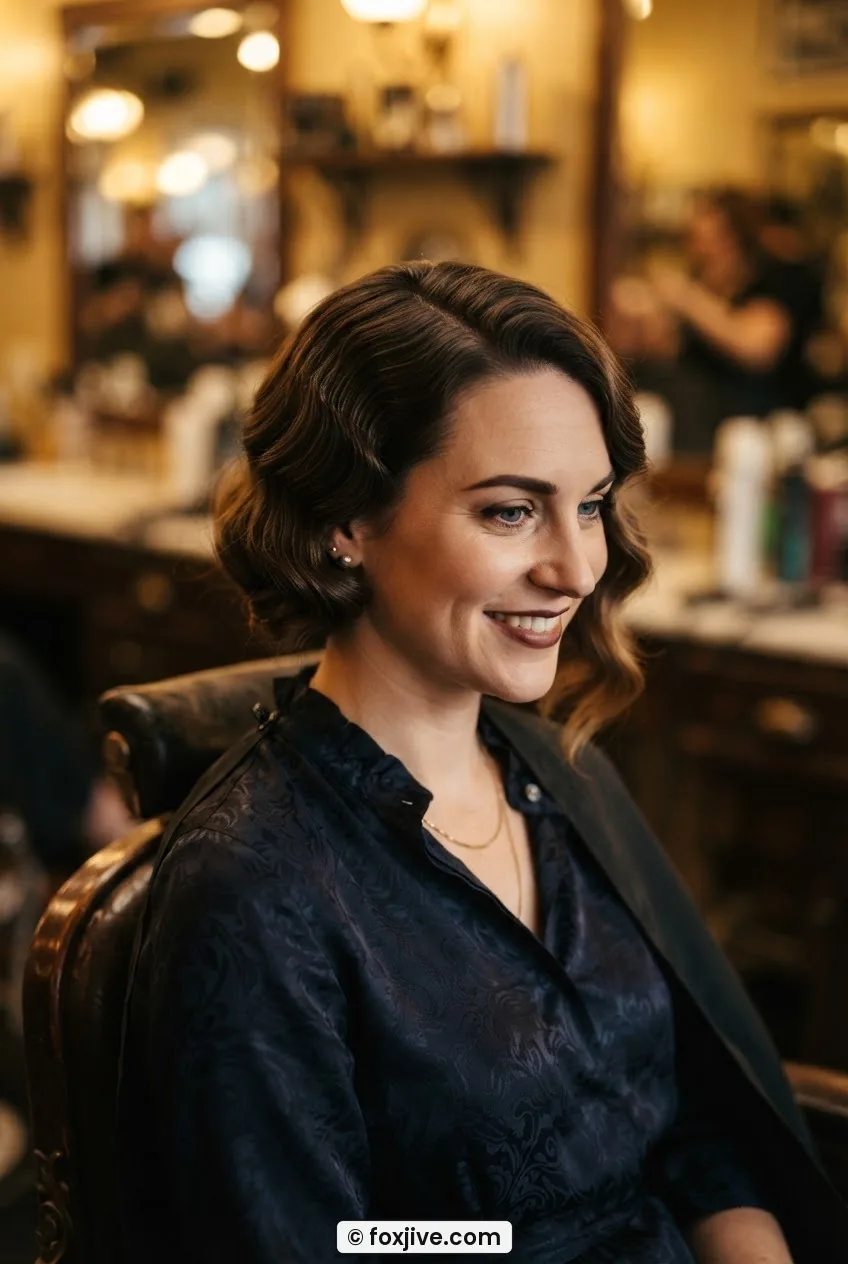
Look at her in this photo — the set is barely off and the waves are already holding their shape exactly the way a proper 1920s finish should. That’s the thing about this technique: when it works, it really works.
The broader lesson, I think, is that hairstyles this durable don’t survive on nostalgia alone. They survive because they solve something — a proportion problem, a texture problem, a desire to look modern without being trendy. The 1920s bob solved all three at once. No wonder it keeps coming back. If you want to explore more of this kind of decade-by-decade tracing, Foxjive is where I do most of my deep dives — it’s the whole reason this kind of research exists in one place.
You can also explore modern finger wave styling if you want to actually try it, not just read about it. Because knowing the history is one thing. Having the waves hold until midnight is another thing entirely.
Questions I Get About This
Was the 1920s bob really considered scandalous at the time?
Genuinely, yes — though the level of scandal depended heavily on where you lived and who your community was. In cities it was bold but increasingly common by the mid-twenties. In rural and more conservative communities, women were sometimes disowned, fired, or refused service for cutting their hair short. It reads as dramatic now, but hair was explicitly tied to ideas about femininity and moral character in ways we’ve largely moved past.
Can people with long hair actually recreate 1920s styles without cutting?
Yes, and women were doing exactly this during the decade itself. Long hair was tucked, pinned, and coiled at the nape to simulate the shingled silhouette from the front. Modern versions of this — braids pinned flat, twisted and tucked rolls — work well for events or themed occasions without requiring any permanent change. The front sections are what do the most visual work.
What’s the difference between a finger wave and a Marcel wave?
A Marcel wave uses a heated curling iron (specifically a Marcel iron with a barrel and groove) to press waves directly into the hair — it’s fast, and the result has a slightly more defined, almost ridged quality. Finger waves are set cold, using wave lotion, a fine-tooth comb, and your literal fingers to guide the shape, then secured with clips until dry. Finger waves tend to look softer and last longer when the technique is solid.
Is there a 1920s style that works on naturally curly or textured hair?
Absolutely — and frankly, the decade’s beauty culture was broader than the mainstream history suggests. Women with naturally wavy or curly hair worked with their texture rather than fighting it. The close-to-the-head silhouette of the twenties actually suits curly hair beautifully when it’s managed with a good curl cream and pinned strategically. The goal is flatness at the crown and definition at the cheekline — texture gets you there faster than straight hair does.
If any of this sparked questions or you’ve got your own research rabbit holes on this era, drop me a note — I genuinely love talking about where these looks actually come from. History is always stranger and more interesting than the Pinterest board version of it.