






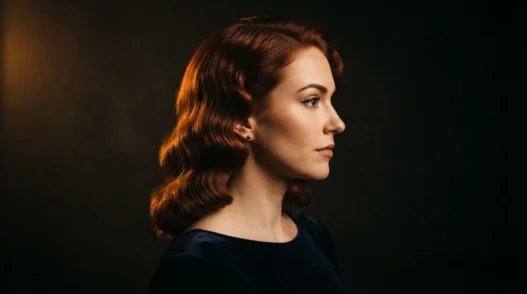
I noticed it first at a coffee shop in November. A woman walked past the window and I actually put my cup down. Her hair was that specific shade — not orange, not burgundy, not the flat chemical red of a box dye — but that deep, warm, slightly cinematic copper-auburn that I associate with old Hollywood close-ups and 1940s Technicolor. And she looked completely current. That was the thing that got me. She didn’t look like she was wearing a costume. She looked like the rest of us were missing something.
That was my sighting. And once I had it, I saw it everywhere.
Why This Trend Came Back — and What Changed
The Sighting That Started This For Me
Trend revivals always have a personal entry point — a moment when the abstract becomes specific. For me and vintage red hair, it was that woman at the coffee shop window. But the honest version of the story is that she wasn’t alone. Within a week I had counted four more: one at a gallery opening, one in a YouTube thumbnail a friend sent me, one on a woman I follow who usually posts about ceramics and suddenly appeared with this jaw-dropping copper tone, and one in the background of a street photograph someone shared on a style forum I lurk on. Five in a week. That’s not coincidence. That’s a wave.
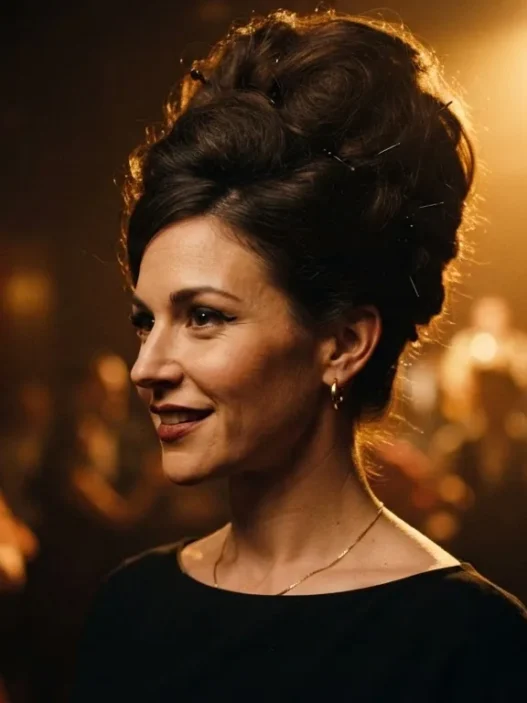
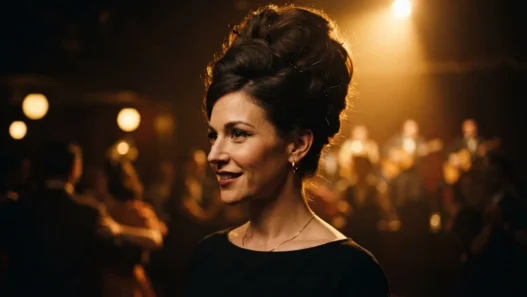
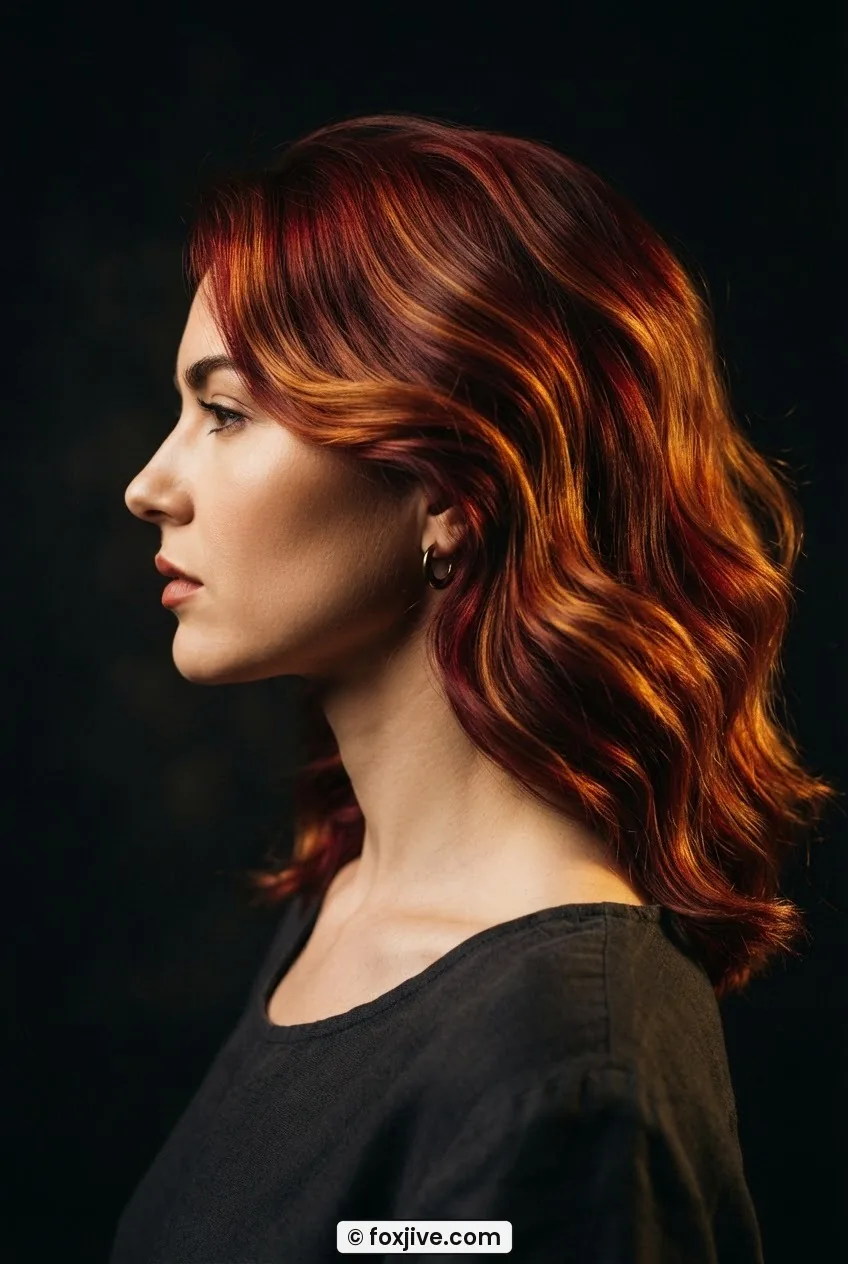
Look at the way she’s wearing hers in the photo below — that particular warmth against a deep background does something the camera loves. You can actually see each layer of tone, the almost amber tips pulling away from the richer mid-shaft. That’s not a single-process colour. That’s someone who thought carefully about what kind of red they wanted to bring back.
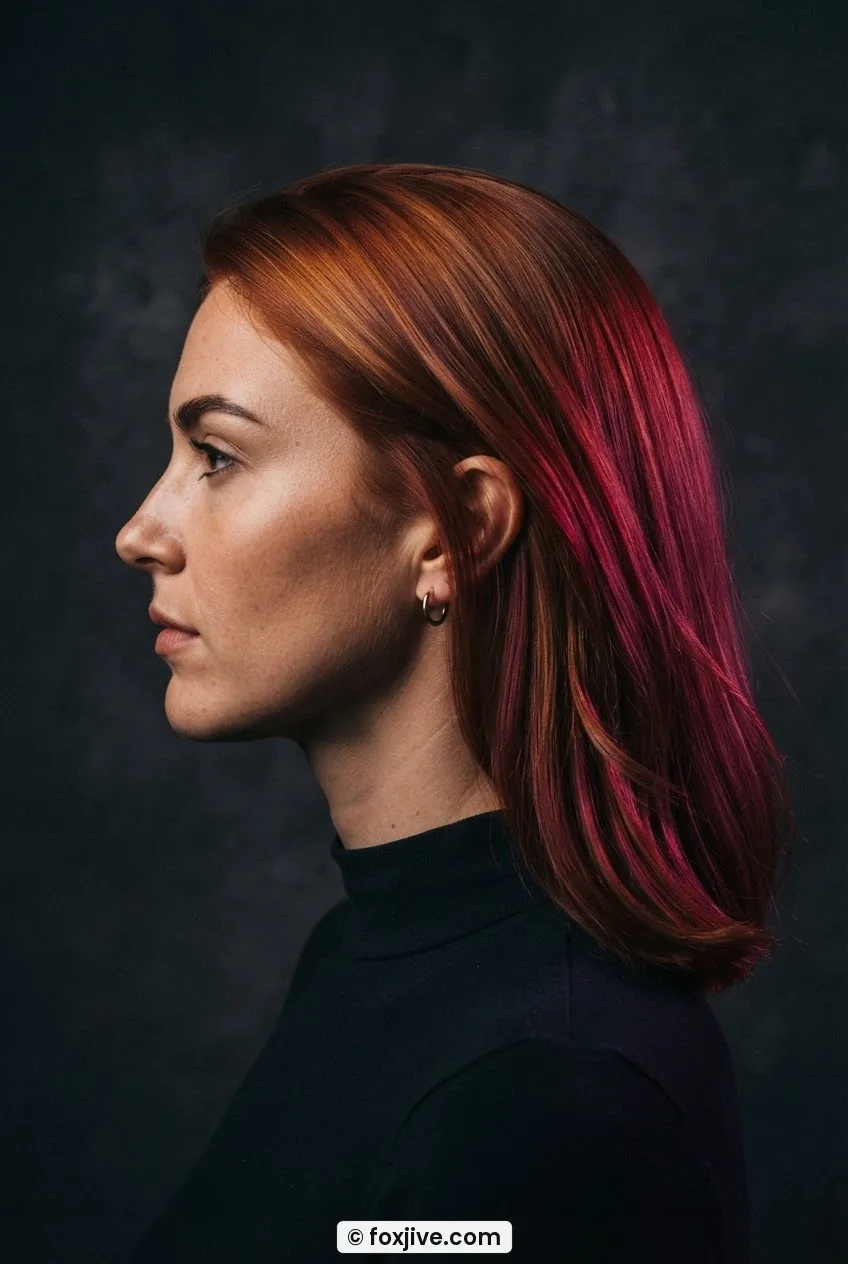
I started paying closer attention to which version of red was coming back. It wasn’t the fire-engine punk red of the early 2000s. It wasn’t the flat, slightly garish crimson that reads as “Halloween costume” in photographs. It was something older than both of those — something that felt like it came from an era when colour had weight and intention. That distinction matters, and I’ll come back to it.
The Twenty-Year Rule
Fashion cycles get talked about as if they’re mysterious — as if no one can explain why the thing that was embarrassing five years ago is suddenly everywhere again. But it’s genuinely not mysterious. The twenty-year rule is real. It’s not a precise formula, but the broad arc holds: a trend fades, the people who lived through it get old enough to feel nostalgic rather than over it, and a younger generation discovers it with fresh eyes unclouded by the original overexposure. Add roughly two decades, carry the aesthetic.
For red hair specifically, think about where we are. The early 2000s — which produced a particular kind of red, the hyper-saturated, slightly aggressive one — are now squarely in the cultural rearview at the twenty-plus-year mark. But here’s the twist with this particular revival: the red that’s coming back isn’t the 2000s version. It’s jumping over that generation entirely and reaching further back, to the 1940s and early 1950s. That’s less “twenty-year rule” and more “sixty-year rule with a skip.” And that skip is exactly why it feels fresh rather than nostalgic in the sad, backward-looking sense. You can read more about the broader mechanics of how retro colour trends cycle through cultural moments if you want the full picture — it maps surprisingly well onto what’s happening right now.
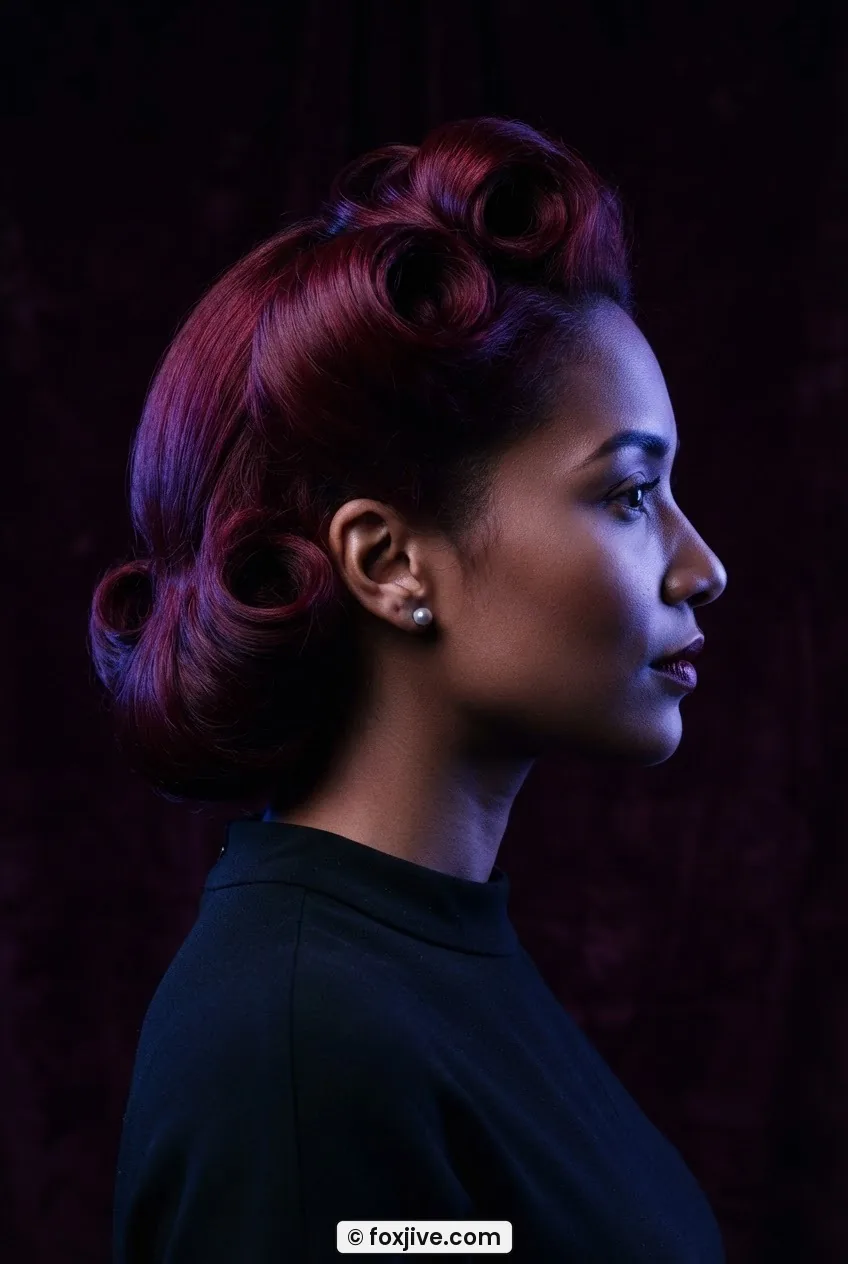
The women who find this shade now aren’t remembering it from childhood. They’re discovering it almost archaeologically — through film stills, through old magazine archives, through the particular quality of Technicolor photography where red didn’t just sit on the hair, it glowed out of it. That’s a very different emotional relationship to a trend than nostalgia. It’s closer to research. And research-led revivals tend to be more nuanced, more careful, and — honestly — better executed than pure nostalgia revivals.
What Television Did
I’m going to be direct about this: television is the engine. Specifically the wave of prestige period drama that has been running for about a decade and shows no sign of stopping. When a beautifully shot show set in the 1940s or 1950s puts its lead actress in a deep copper-auburn for eight episodes, that colour enters the cultural imagination in a way that no trend report, no Pinterest board, and no fashion week can replicate. People watch for hours. They become familiar with the shade in a way that feels personal. They start associating it with a kind of effortless, confident femininity that the show’s costume and hair departments have worked extremely hard to construct.
There’s also something worth noting about the texture that accompanies these looks on screen. The hair is rarely just red in the flat sense. It has movement — pin curls, set waves, the kind of structured volume you see in victory roll ideas ranked by time investment that take real planning. And collectively, all of that — the colour, the structure, the deliberate femininity — is landing at exactly the moment when a lot of women are exhausted by a decade of “effortless” that took tremendous effort to fake. The contrast is striking enough that I’d argue television didn’t just accelerate this trend. It created the conditions for it.
The other thing television did — and this is less discussed — is place vintage red hair on characters who are smart, complicated, and unambiguously compelling. The tired trope of the bombshell redhead who exists purely for visual impact has been replaced, at least in the shows getting the most attention, with characters who carry the colour into scenes of moral complexity, dry wit, or genuine emotional stakes. That matters for how the shade is perceived. Colour carries context, and right now the context is good.
The Colour Work That Made Me Understand This
The Version We Kept
Here’s where I’ll say something that might be slightly controversial: I think the revival version of vintage red hair is actually better than the original. And I mean that in a way that has nothing to do with “modern techniques” or any other obvious caveat. I mean it aesthetically.
The 1940s red — the one we’re drawing from — was constrained by the chemistry available at the time. It was often heavy, uniform, and tended to read as either very orange or very dark with little between. What we’re producing now with that vintage aesthetic as the reference point is a red that has genuine depth variation. There’s a warmth at the root that cools slightly at the ends, or an amber softness at the surface with richer ruby tones underneath. The vintage auburn balayage technique that creates that multi-tonal effect is something colorists have quietly perfected over the last five years, and it’s what makes the 2026 version of this shade feel dimensional rather than flat.
The structure of the styles that accompany it has also evolved. On this site I’ve written a lot about the architecture of Victory Rolls and how the geometry of that style interacts with the face, but what I’m seeing now is women pairing the vintage colour with a looser, more modern silhouette. Not the rigid set wave of a period-correct recreation, but something that borrows the idea of structure — a slight curl, a defined part, some height at the crown — without committing to the full pinup aesthetic. The colour does the historical work. The cut remains contemporary. It’s an interesting division of labour, and I think it’s why the look reads as wearable rather than theatrical.
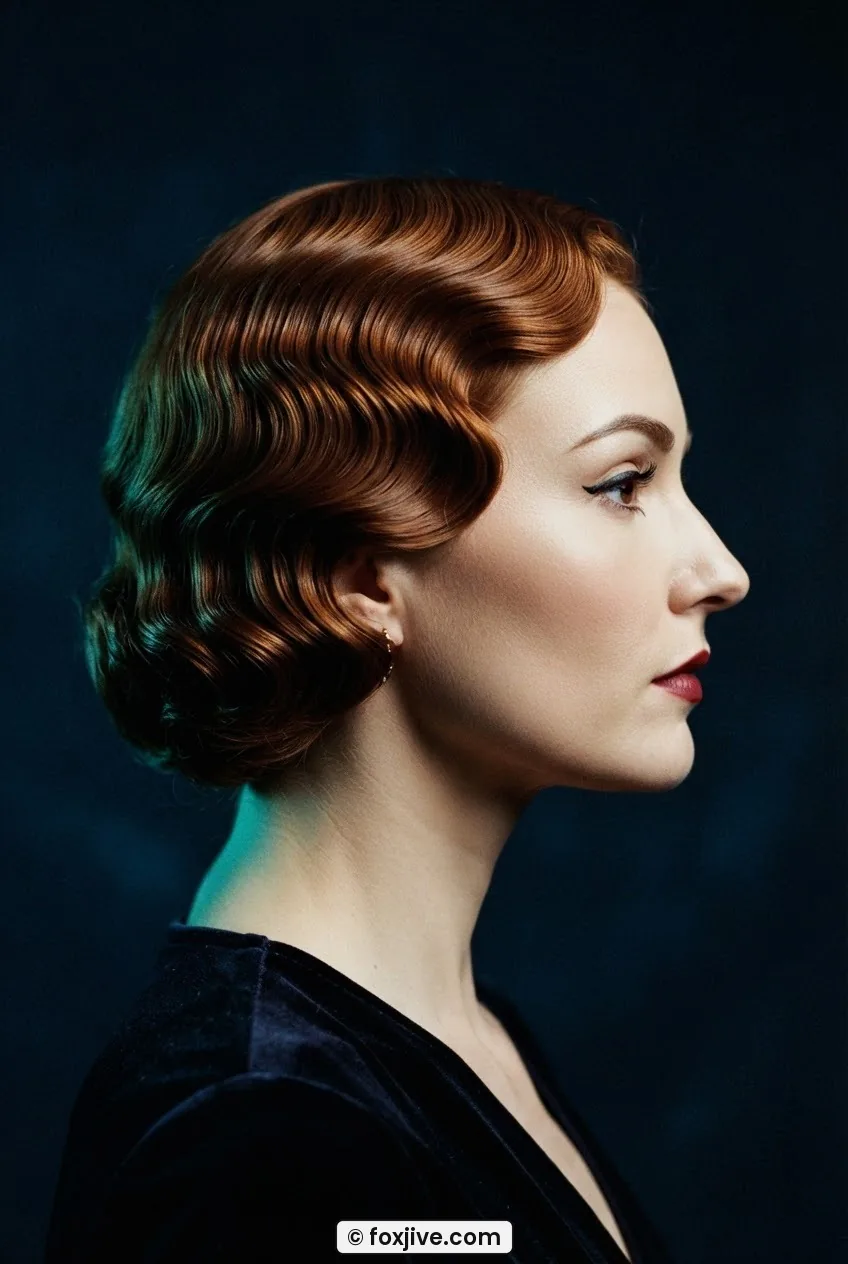
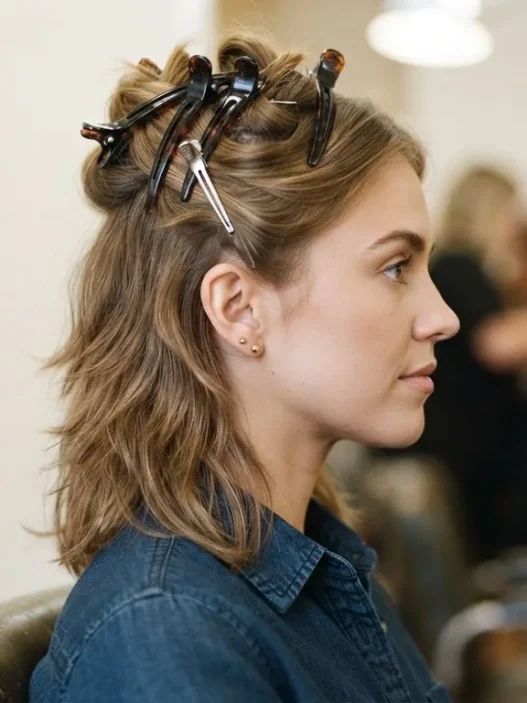
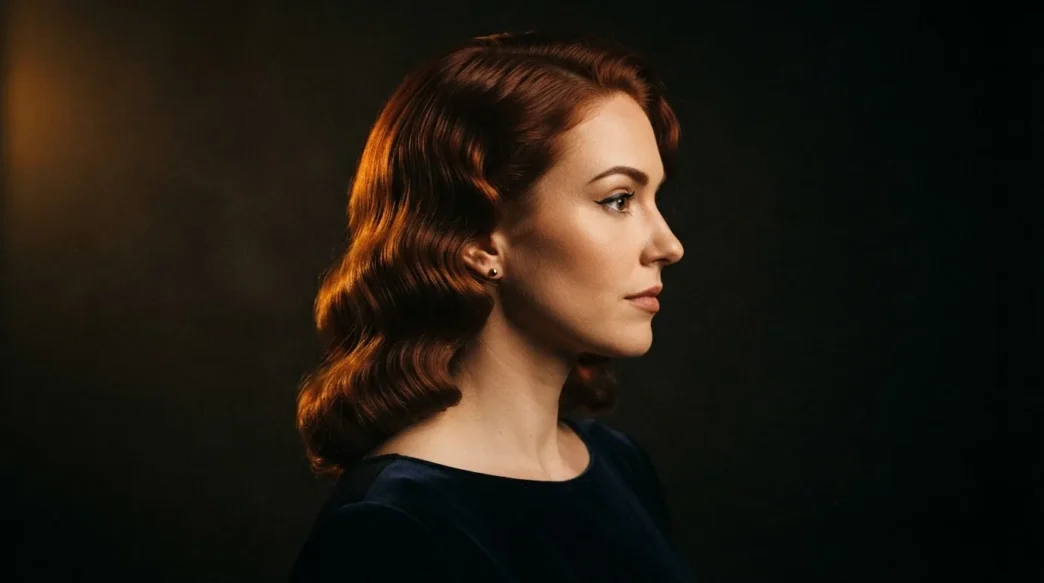
See how her hair in this image moves — there’s real texture visible in the way the light catches each wave. That’s not product weight. That’s intentional structure built into the set. The colour, that deep copper-auburn, is doing something specific too: it pools darker in the hollows of the waves and flares warmer along the crests. That’s the dimensional effect I mean. You’d never get that from a single-process dye, and you’d never get it from a purely modern colour formula with no vintage reference in the brief.
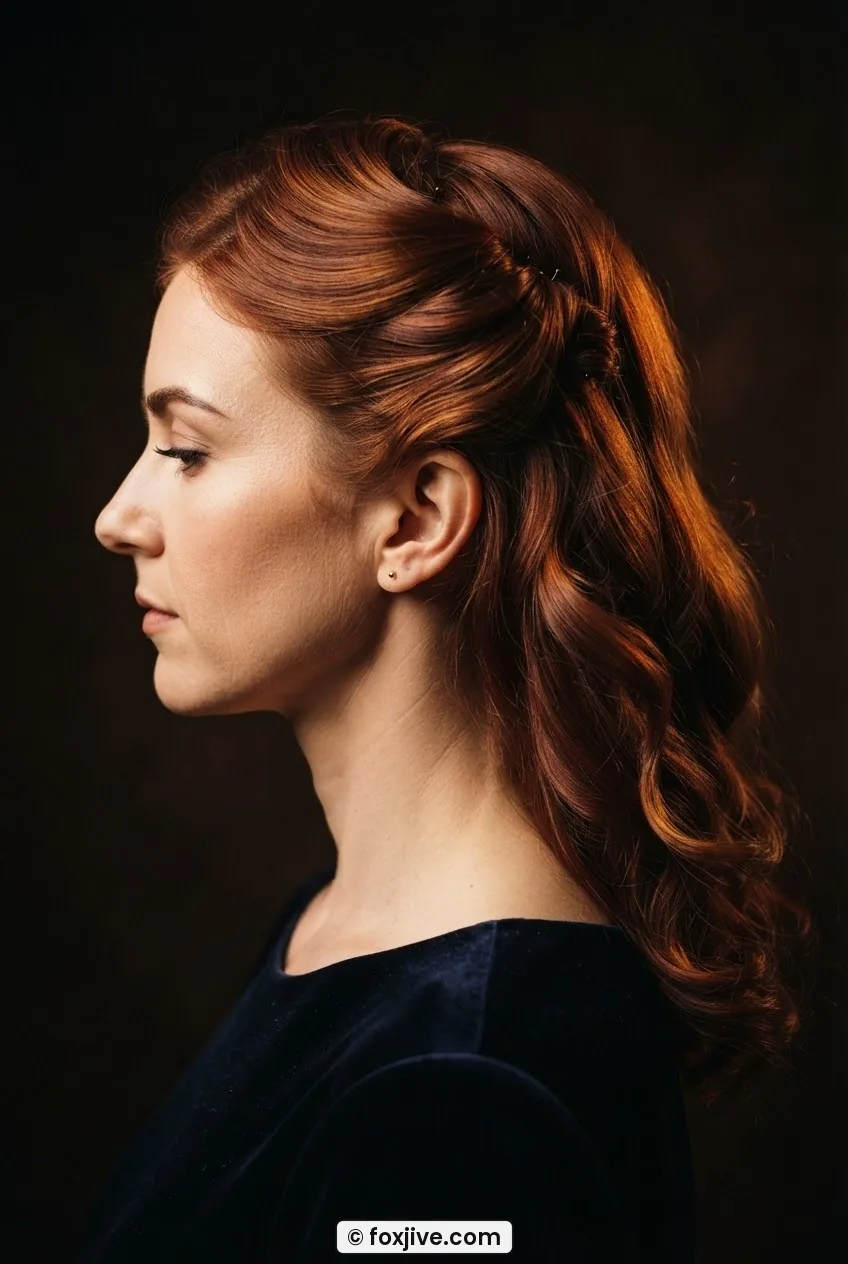
One more thing about the version we kept: the commitment level has changed. I’ve spoken to people — friends, and women I’ve met at events connected to this corner of the internet — who describe approaching this colour as a genuine lifestyle decision rather than a seasonal experiment. They research the shade. They factor in their natural undertones carefully. They learn, often from resources about maintaining red hair colour, how to keep the tone from fading into the brassy territory that undermines the whole effect. That’s a different relationship to colour than “I’ll try this for summer.” And it’s part of why the revival feels stable rather than fleeting.
How Long Will It Last — My Real Guess
People always want a timeline. I usually resist giving one because trend prediction is more art than science and I’d rather be honest about that. But the post structure asked me to make a real guess, so here it is: I think this specific version of vintage red hair has five to seven years of genuine cultural relevance ahead of it. That’s long by trend standards. Most things cycle through visible peak and decline in eighteen months to three years. This one, I think, is different.
Here’s why. The reasons it came back are structural, not random. It’s connected to the ongoing, broad cultural appetite for considered aesthetics over disposable ones — the same current that’s driving interest in vintage furniture, in slow fashion, in craft techniques, in the kind of detail that takes time. Red hair that requires real commitment and real maintenance fits that current perfectly. It’s not a fast trend. The women choosing it aren’t choosing it for a season. And that longevity at the individual level translates to longevity at the cultural level.
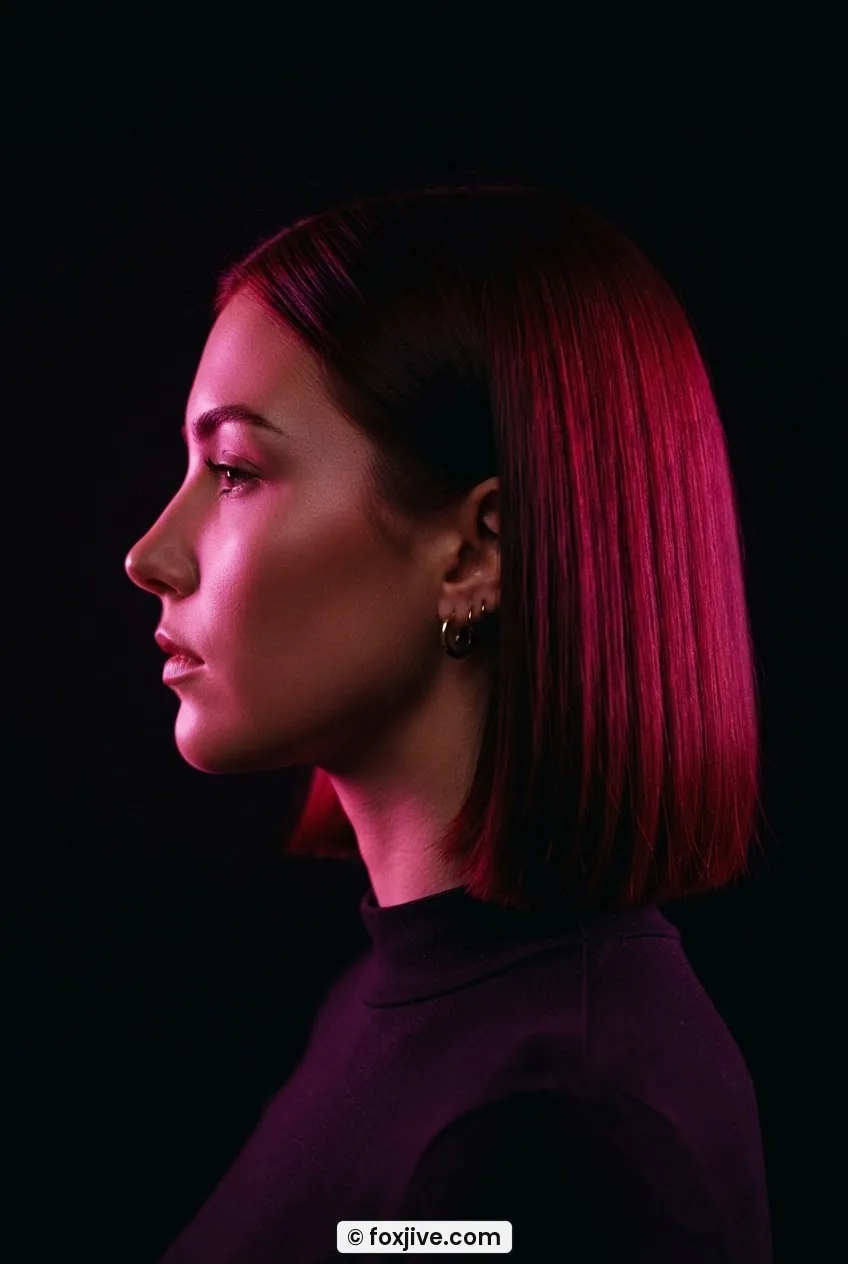
The one thing that would shorten the runway is overexposure — if a mass-market brand attaches the exact same shade to a massive advertising campaign and it floods every social feed simultaneously, the specificity that makes it feel distinctive will erode. That’s what happened to balayage, to millennial pink, to about a dozen other things that were genuinely beautiful before they became wallpaper. For now, vintage red hair is still specific enough that wearing it feels like a statement rather than a default. If you’re thinking about it, I’d say you have at least two or three good years before that changes.
You can find a lot more on how vintage colour fits into the broader world of retro styling over at Foxjive — it’s the corner of the internet I keep coming back to when I want thinking that goes past the surface level of trend reporting. If you want to talk colour, cuts, or anything else you’ve been mulling over, the contact page is always open.
Questions I Get About This
Is vintage red hair the same as auburn?
Close, but not quite interchangeable. Auburn typically describes a natural-looking reddish-brown that leans dark. Vintage red — at least in the sense I’m using here — is warmer and more copper-forward, with a brightness that reads as intentionally coloured rather than naturally occurring. Think Technicolor warmth rather than autumn leaves.
Does vintage red hair work on darker natural hair colours?
It does, but the process is more involved and the result will sit differently. On darker bases the red tends to read as a warm gloss rather than a vivid copper, which can actually be incredibly beautiful — richer and more complex than the lighter version. You’ll likely need a colourist who has genuine experience with warm tones on dark bases rather than someone working from a standard formula.
How quickly does this shade fade?
Red is the fastest-fading colour family — the molecules are larger and exit the hair shaft more quickly than other tones. A well-maintained vintage red typically needs refreshing every four to six weeks if you want to keep the warmth from sliding into brassiness. Using a colour-preserving shampoo and washing in cooler water makes a significant difference to how long each refresh holds.
Can I achieve this look without going to a salon?
For the multi-tonal, dimensional version — honestly, not easily. The depth variation that makes vintage red look like an old Technicolor still rather than a flat dye job requires blending technique that’s genuinely difficult to do alone on the back of your own head. You can absolutely maintain the colour at home between appointments, but I’d strongly recommend the initial colour is done professionally, at least the first time.
That woman at the coffee shop window never knew she started something for me. She was just walking past with her copper-auburn hair catching the November light. But that’s always how it goes with the best trends — they don’t announce themselves. They just make you put your cup down.