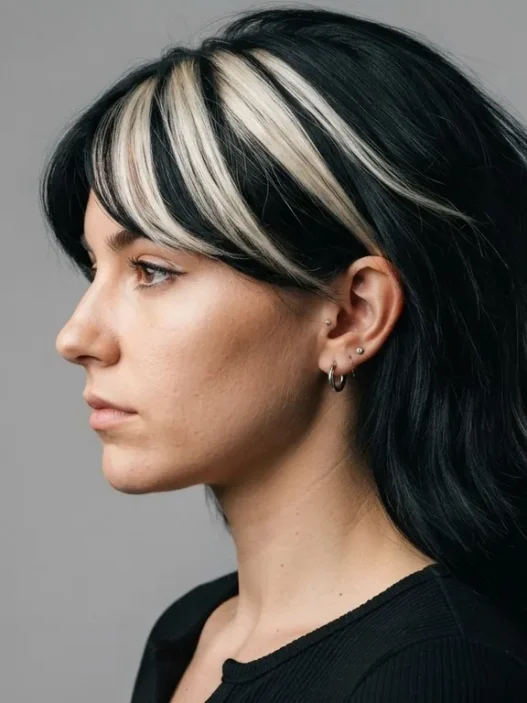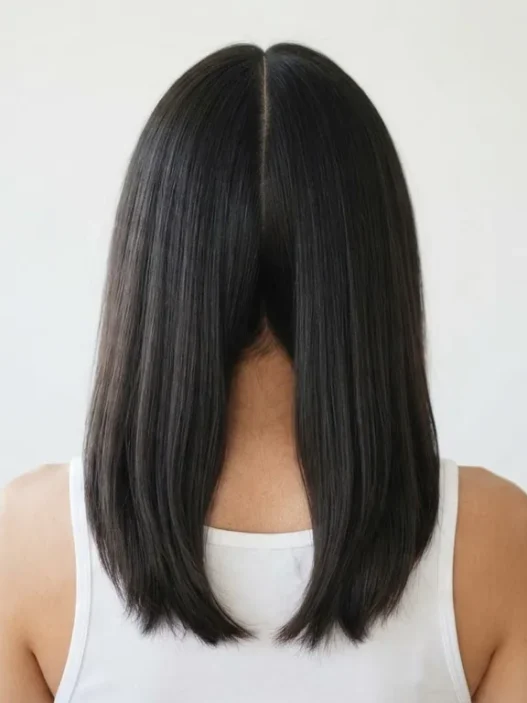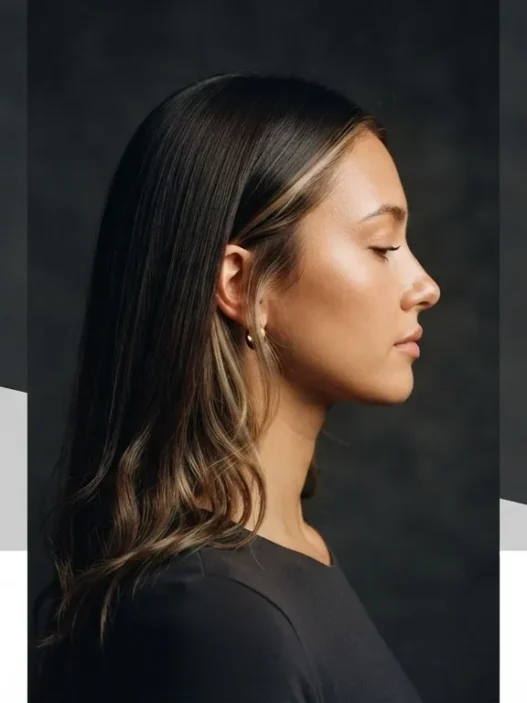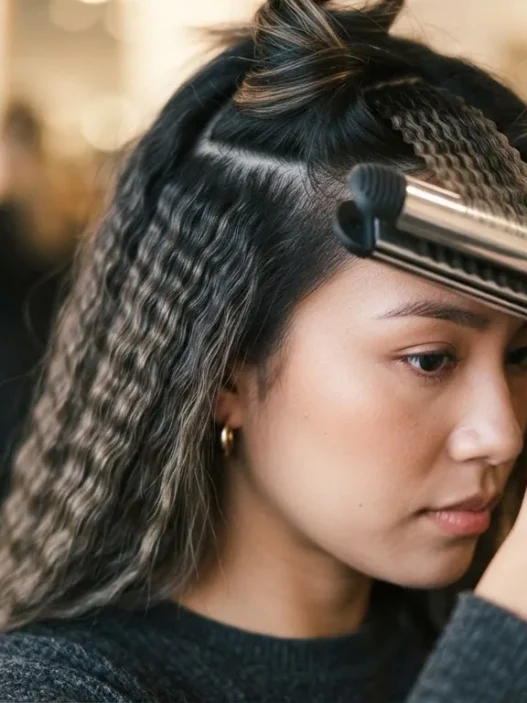







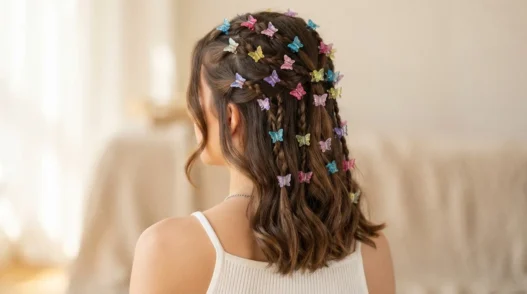
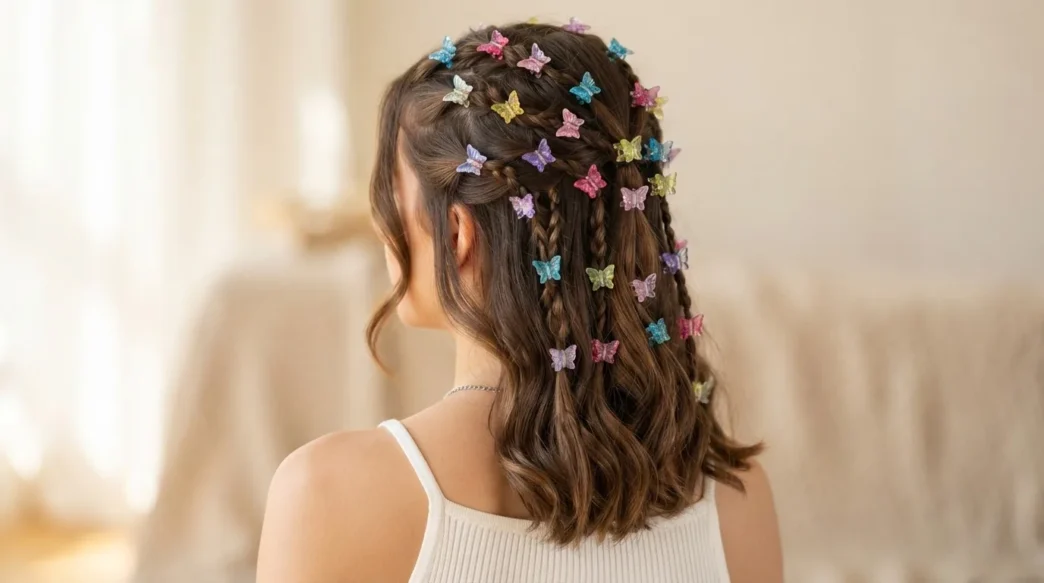
I went through a very serious butterfly clip phase circa 2001. We’re talking every color, both the tiny claw-looking ones and the larger iridescent ones that caught the light in the school hallway. Then I put them away in a shoebox for twenty years. When they came back around in 2026, I pulled that shoebox out — genuinely — and started experimenting to figure out which of these looks is a revival and which is just a costume. Turns out the difference is almost always one small adjustment.
Your Quick Map Through the Clips
- The Half-Up Twist, Placed Lower
- Mini Clips Scattered Through Loose Waves
- The Pinned-Back Section, Not the Whole Head
- Double Clips on a Low Ponytail
- The Zigzag Part with One Clip
- Clips Along a Side Braid
- The Diagonal Swoosh
- Space Buns — But Smaller and Lower
- The Crown Clip, Repositioned
- Clips on a French Twist That’s Actually Relaxed
- The Single Statement Clip, Used Like a Barrette
1. The Half-Up Twist, Placed Lower
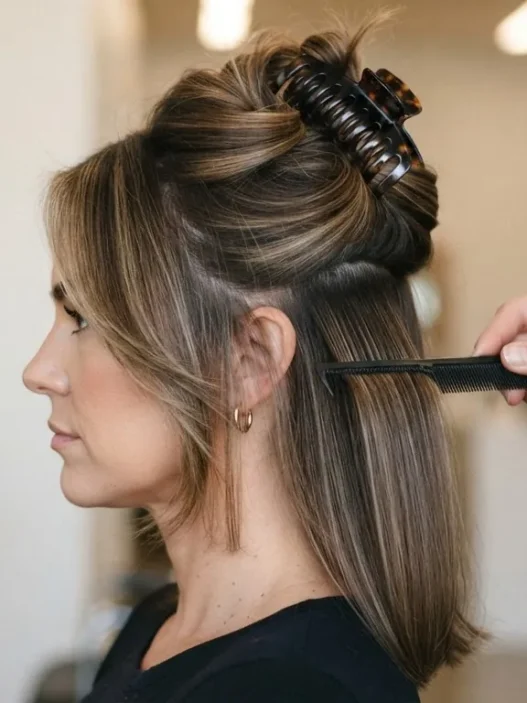
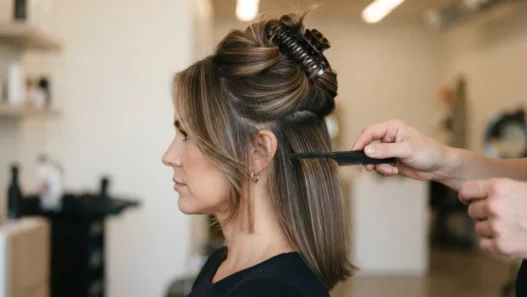
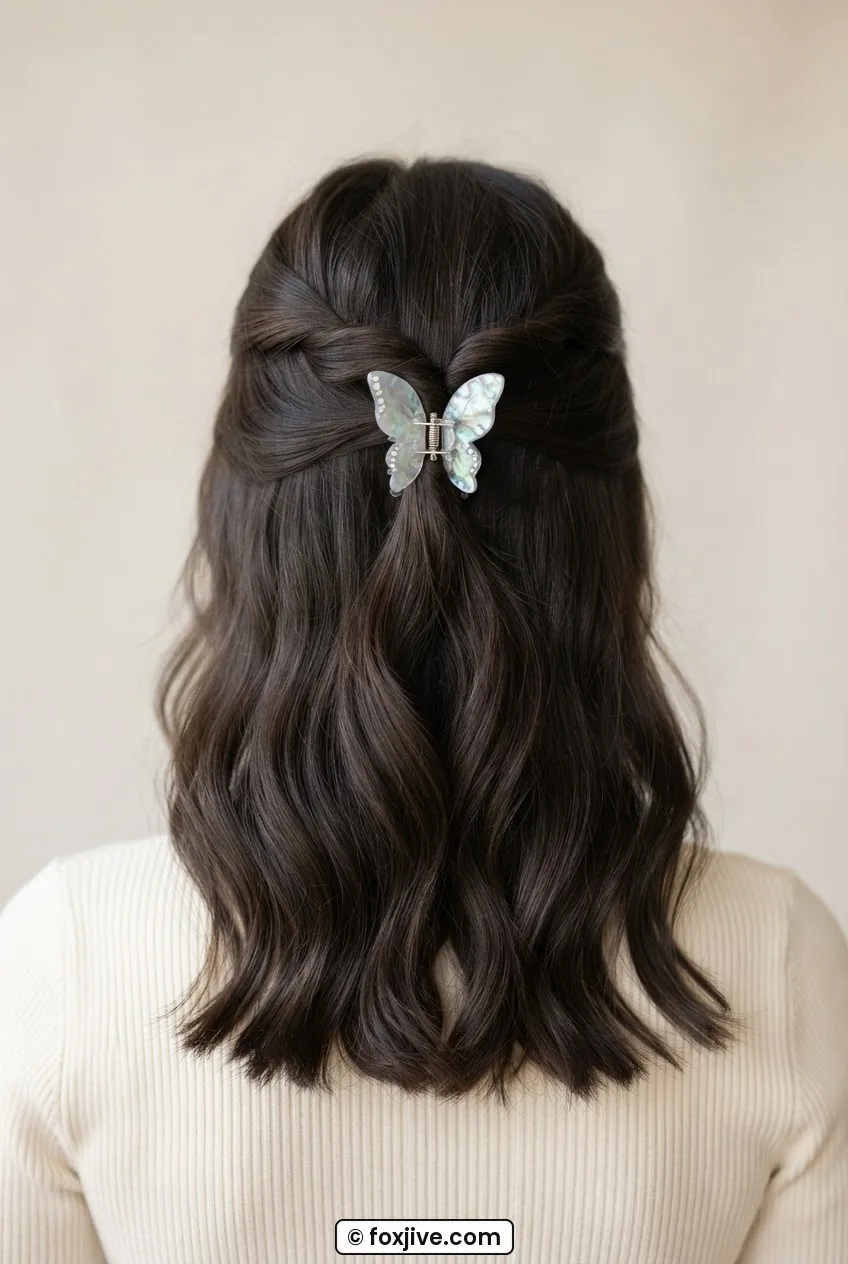
The original version of this look sat right at the crown — a big gathered twist held by one oversized butterfly clip, very much “I have a school photo today.” The adjustment that makes it wearable now is dead simple: take the same gathered section and move it down about two inches. Suddenly it’s not a kid thing anymore. It reads as intentional, a little French, and oddly chic.
Use a medium-sized clip — not the enormous ones from the original era, not the micro ones either. Something in the 5–6cm range holds the twist properly without overwhelming the hair. Works best on hair that’s at least shoulder length.
2. Mini Clips Scattered Through Loose Waves
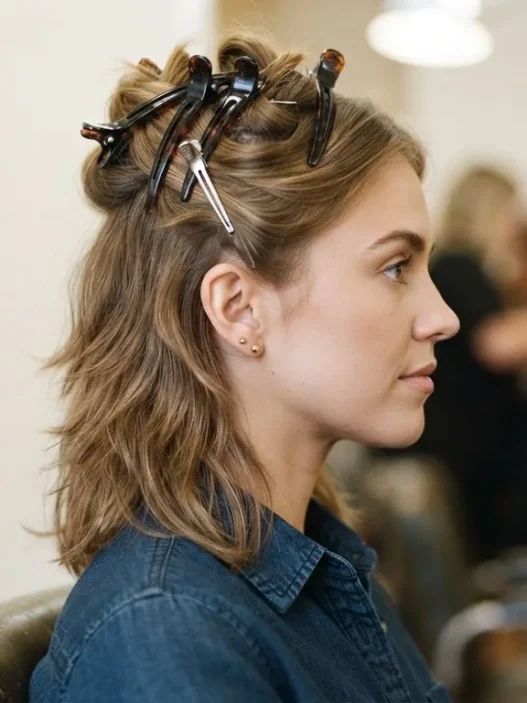
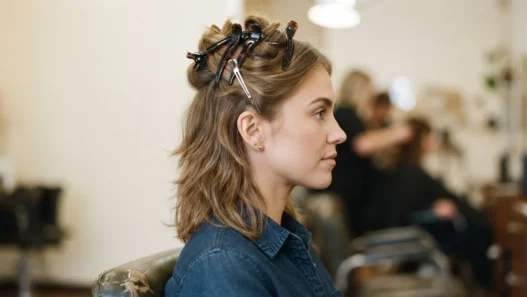
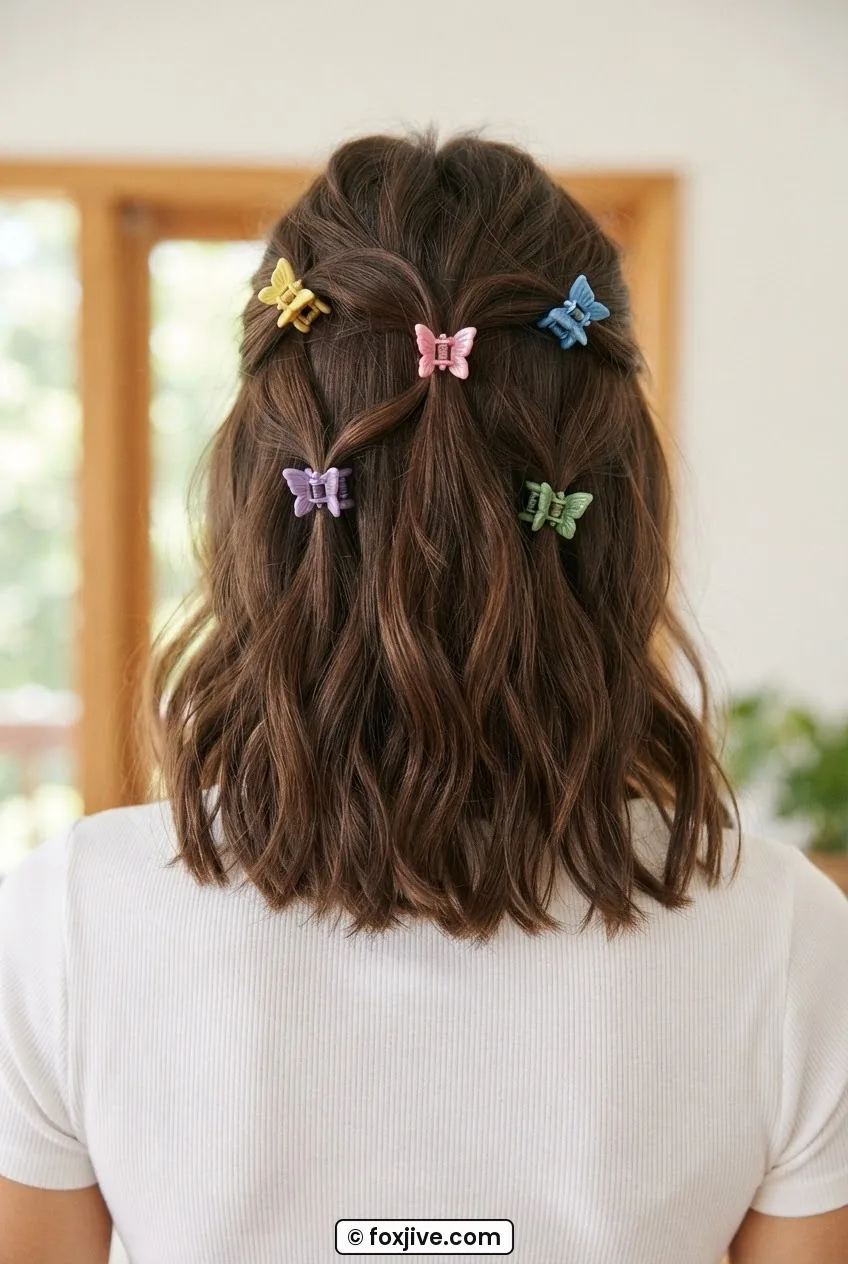
This is honestly my favorite way to wear butterfly clips hairstyles right now. The original Y2K approach was to cluster tiny clips in tight little rows across the top of the head — very synchronized swimmer, very Lizzie McGuire. The grown-up version: scatter four or five mini clips through a half-up section or across loose waves, almost randomly. Not symmetrical. Not matching colors necessarily.
She’s doing exactly this in the photo below — see how the clips are dotted through the wave rather than lined up? That asymmetry is everything. It looks like a deliberate choice rather than a childhood throwback. This approach also works on shorter hair, where even two or three clips can make a real statement.
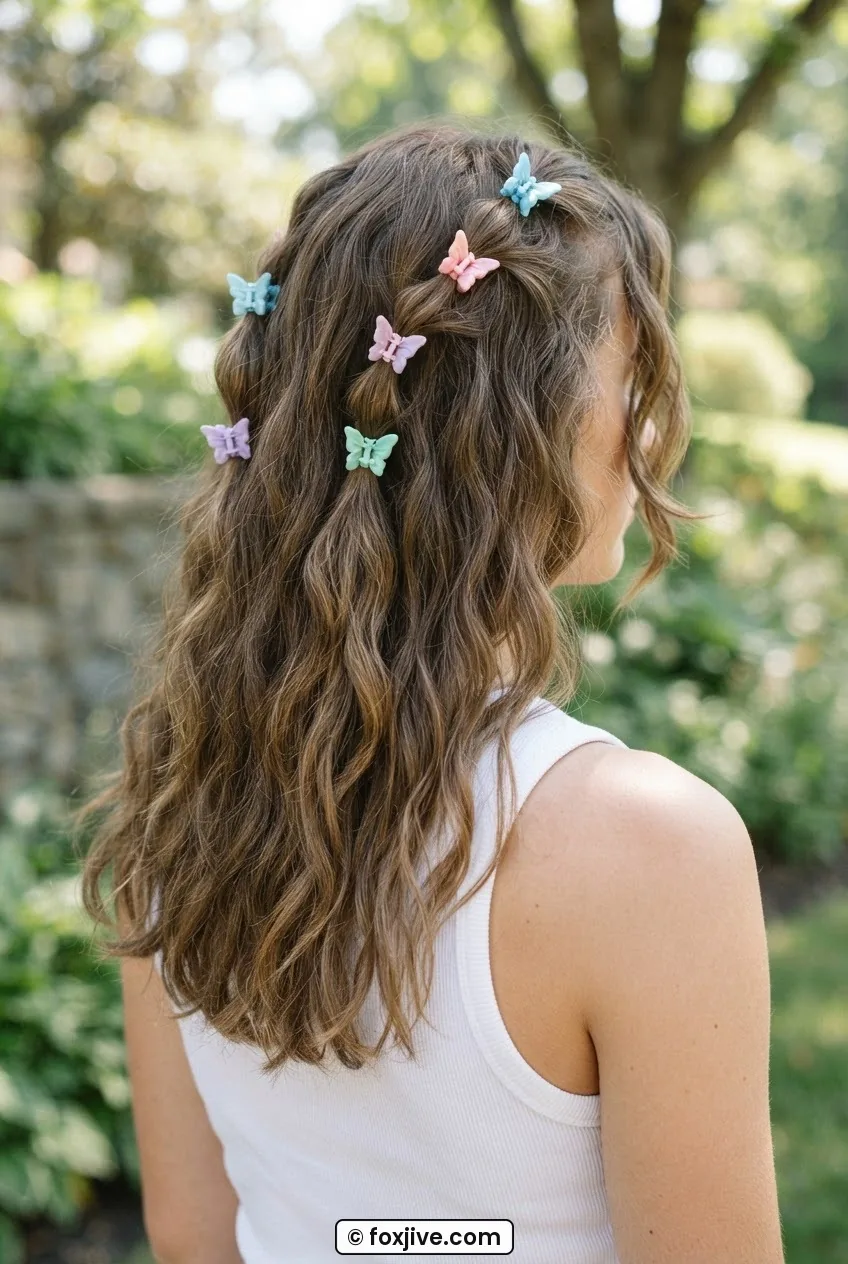
My personal pick for everyday wear is four mini butterfly clips scattered through a loose half-up section — it takes three minutes, holds all day, and gets at least two compliments a week. The adjustment is resisting the urge to make them symmetrical.
3. The Pinned-Back Section, Not the Whole Head
Back in the day, butterfly clips lived across the entire head — the more the better. The single adjustment that updates this: use clips to pin back just one section. A face-framing piece on one side, held back with a single clip near the temple. Or a thick side section swept away from the face. One clip. One section. The rest of the hair down and loose.
It has that early-2000s energy without reading as costume. The restraint is the whole point.
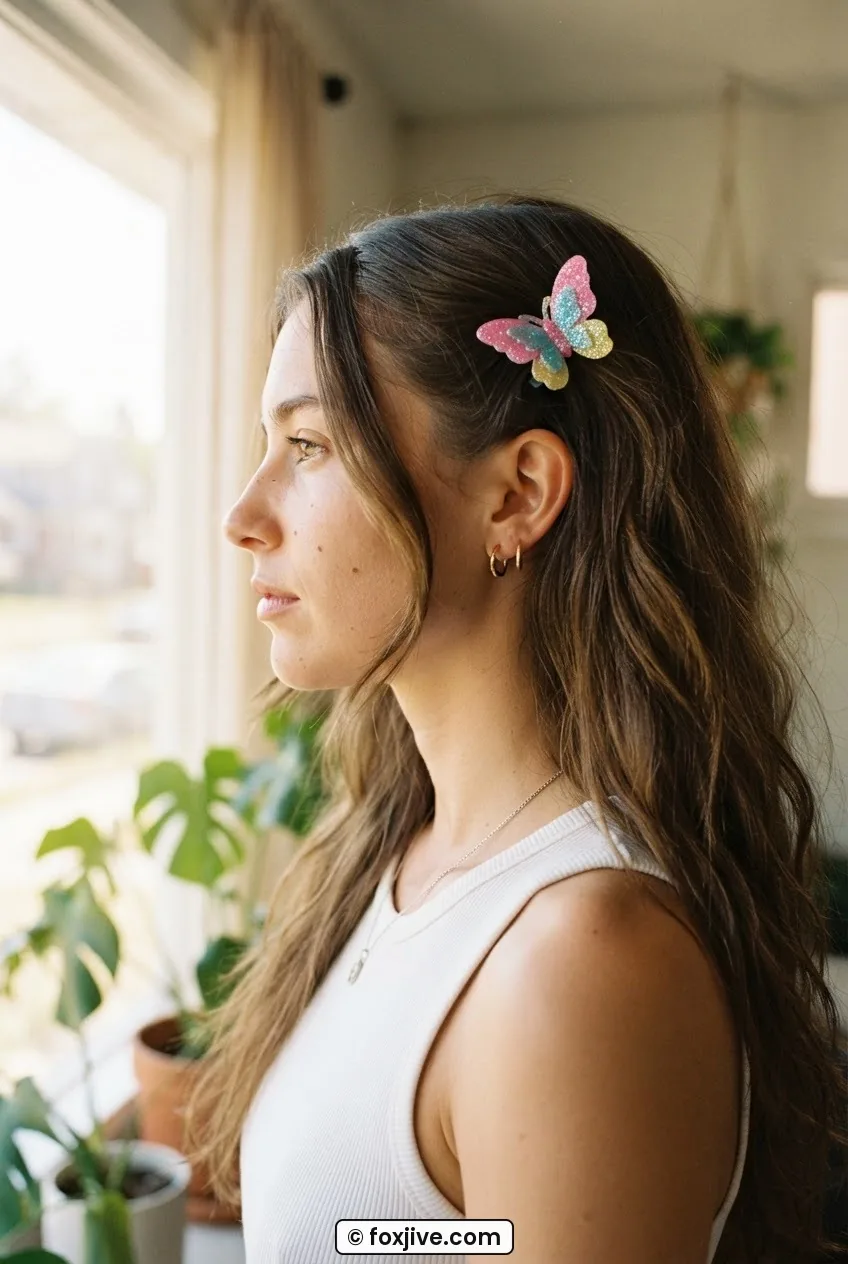
4. Double Clips on a Low Ponytail
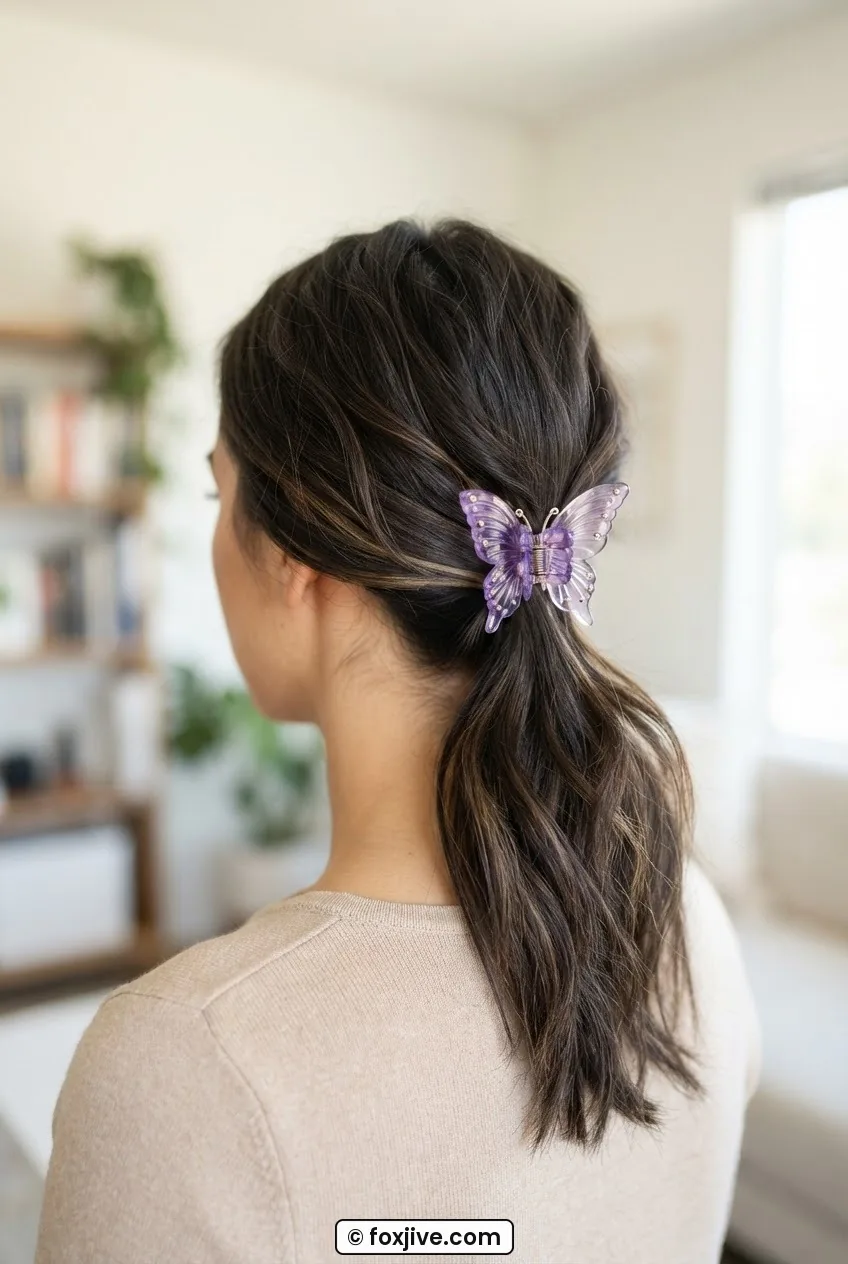
Put two butterfly clips on either side of a low, slightly undone ponytail — not holding it in place, just decorating it near the base. This is borrowed straight from late-nineties editorials, but the low placement modernizes it entirely. High ponytails with clips feel very 1998 Halloween costume. Low ponytails with clips feel very “I know what I’m doing.”
The adjustment here is height. That’s it. Drop the ponytail and everything changes. I’ve also seen this work with the clips placed midway down the tail itself, holding a small folded section — a little more involved but genuinely beautiful.
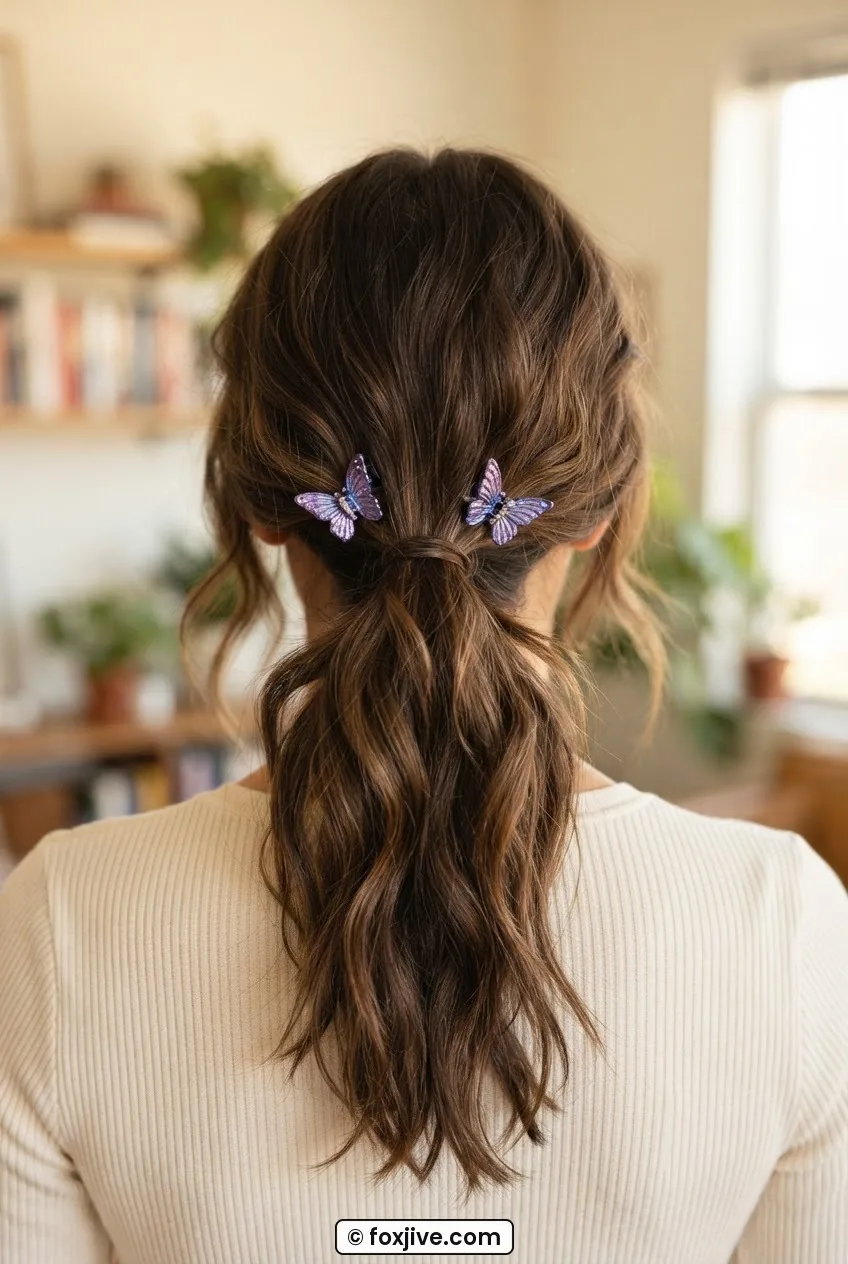
5. The Zigzag Part with One Clip
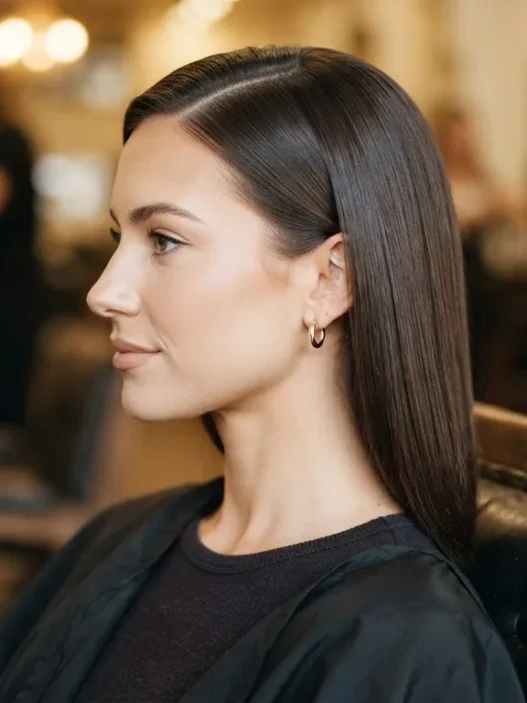
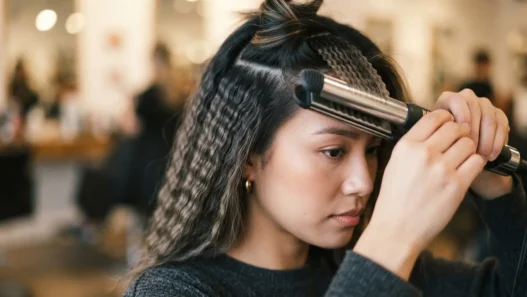
The zigzag part is one of those Y2K details that feels deeply nostalgic the moment you look at it. The original version involved the zigzag part PLUS multiple clips PLUS crimping PLUS possibly a butterfly hair tie. That’s too many things. The single adjustment: do just the zigzag part, and add one clip to keep a section from the heavier side swept behind the ear. Everything else stays down and unstyled.
The zigzag part does the decade-referencing. The clip just finishes it. You can learn more about creating a precise zigzag part before you try this one — it’s easier than it looks but benefits from a fine-tooth comb and a light hand with product.
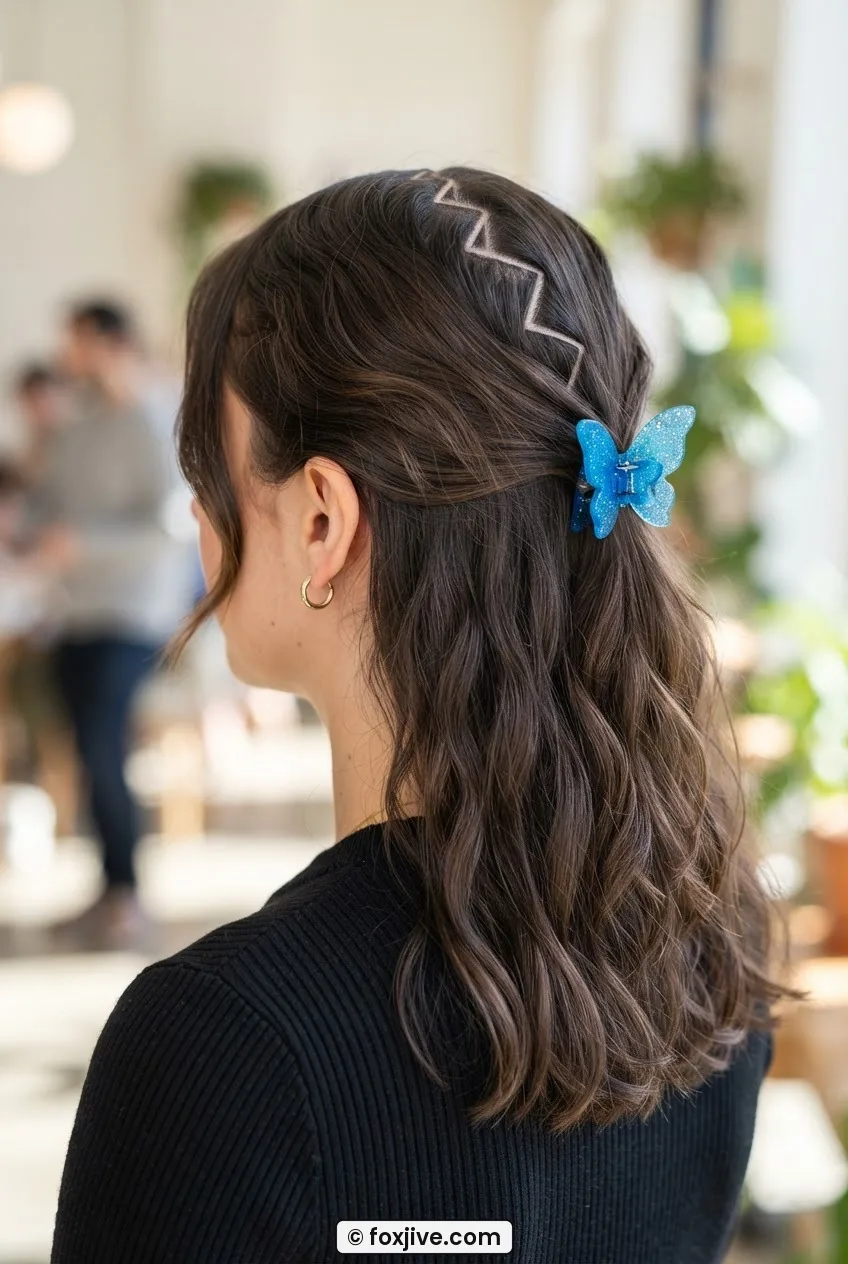
6. Clips Along a Side Braid
A loose, undone side braid with two or three mini butterfly clips placed along its length — at the start, the middle, and the end, or just wherever looks good — is genuinely charming. This never quite existed in its pure form in the original Y2K era; the clips were usually doing structural work back then, not decorative work. Using them as pure embellishment along a braid is the update that makes this feel current rather than nostalgic.
Keep the braid loose and slightly pulled apart. Tight braids read as more girlish; a relaxed braid reads as grown-up and considered. Same clips, completely different energy.
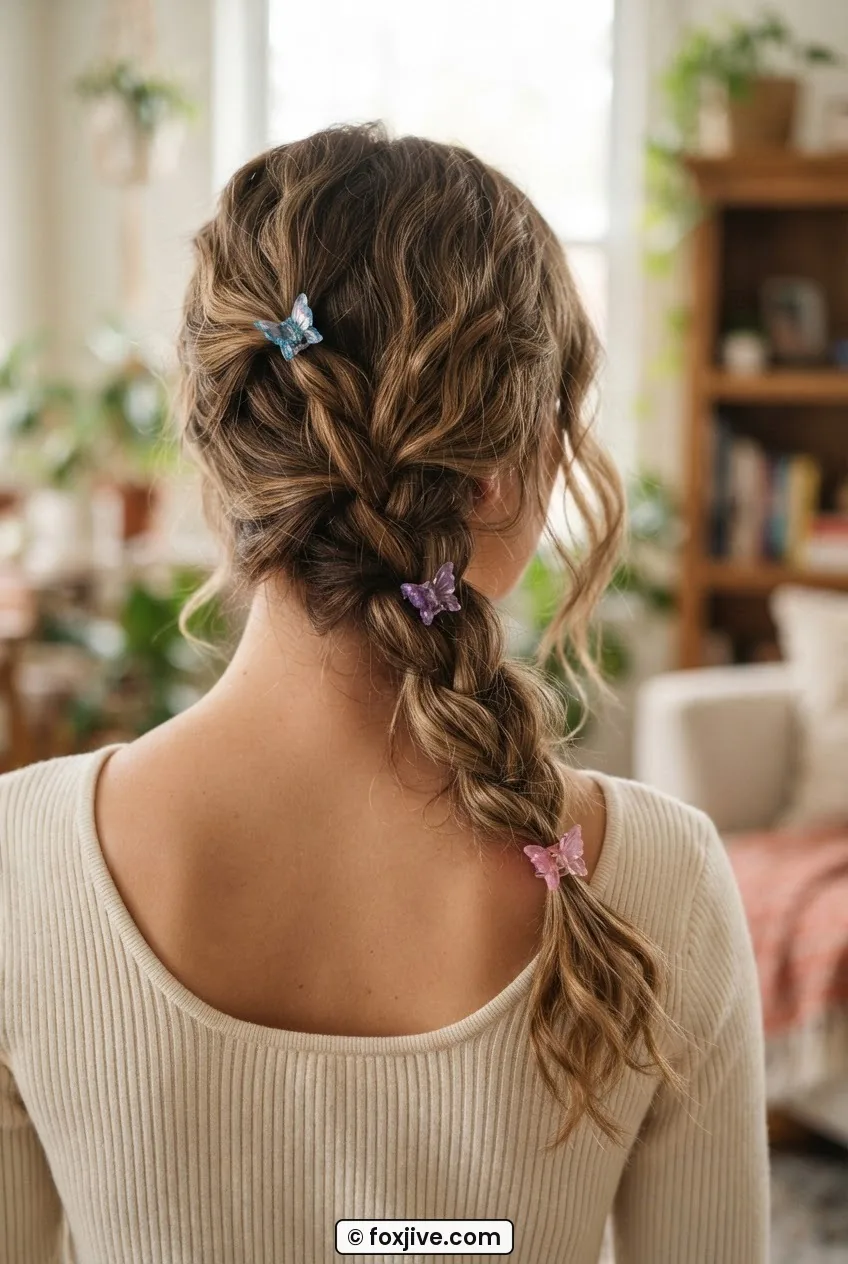
7. The Diagonal Swoosh
This one I think about a lot. The diagonal swoosh was a very specific early-2000s technique: gather a section of hair from above one ear, sweep it diagonally across the back of the head, and pin the whole thing with a row of butterfly clips along the diagonal line. It looked architectural in a chaotic way that only that decade could pull off.
The adjustment: instead of a row of clips, use just one larger clip placed where the diagonal section is at its thickest. Keep the sweep loose. The geometric quality of the diagonal is still there — the single clip just means the whole thing reads as a purposeful style choice rather than “I ran out of time this morning in 2002.” Look at how she’s wearing hers in the image — that diagonal line across the back of the head is striking without being busy.
8. Space Buns — But Smaller and Lower
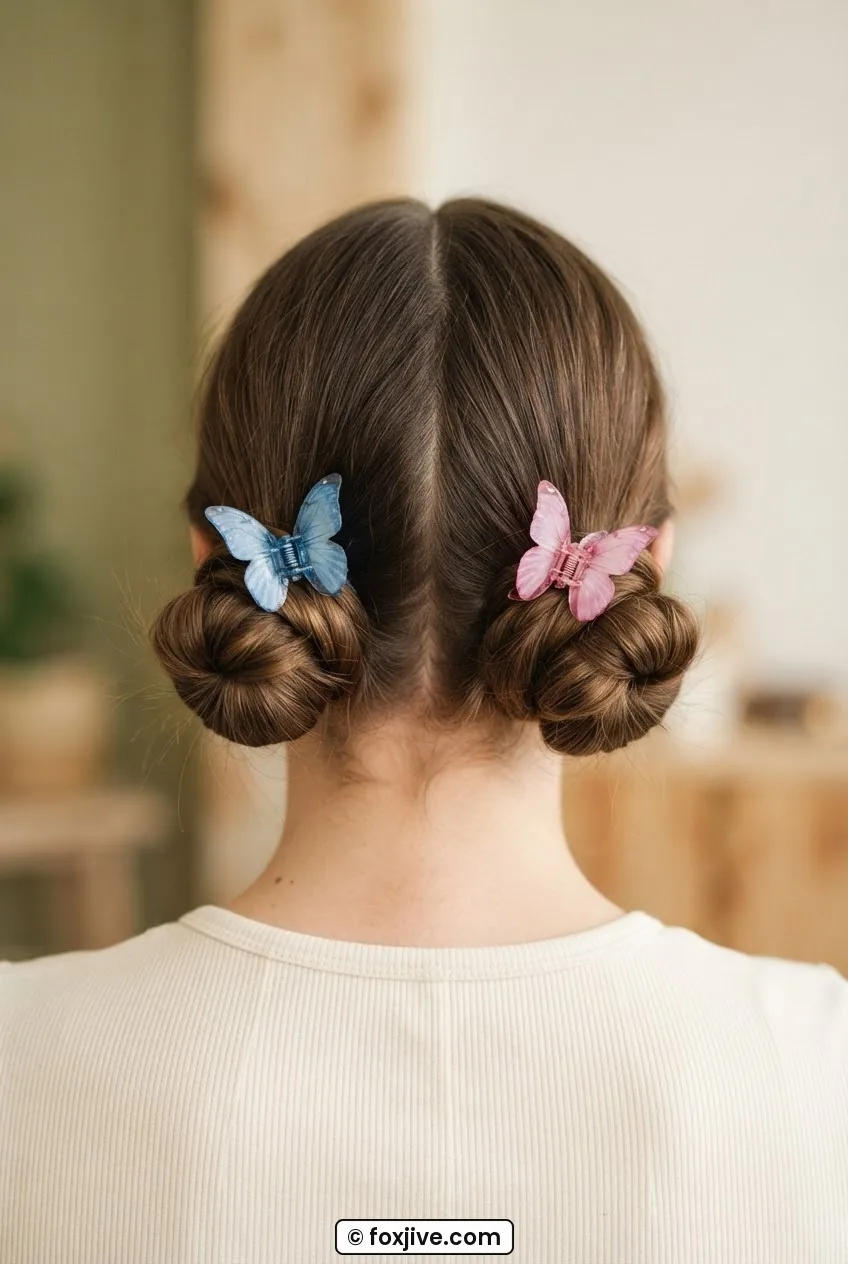
Space buns. They’re back, they’re everywhere, and they look incredible on the right person. The version that goes wrong is the one that sits high on either side of the crown — it’s an entirely valid look but it requires a specific commitment that not everyone wants to make at thirty-something. The adjustment: place the buns lower, at about ear-height, and use two butterfly clips to secure the base of each bun rather than a hair tie.
Lower placement changes the silhouette dramatically. It’s less “festival wristband” and more “I have an aesthetic.” The clips add that Y2K texture without screaming it. This look pairs surprisingly well with professional settings — which I did not expect, but here we are.
9. The Crown Clip, Repositioned
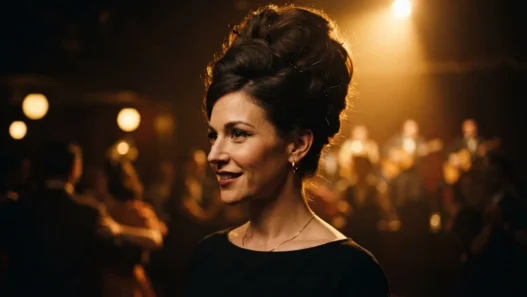
There’s a specific move that was everywhere from about 1998 to 2003: one large butterfly clip at the very top of the head, holding a gathered section straight up — almost like a tiny fountain of hair. Sweet on a child. Deeply odd on an adult. But the underlying structure of “one large clip at the crown” is completely salvageable.
The adjustment: instead of the very top of the crown, place the clip slightly behind the crown — maybe an inch or two back. Instead of gathering the hair upward, let the gathered section fall back naturally. Same clip doing the same job, but now it looks intentional and elegant rather than like you’re mid-bedtime-routine.
If you enjoy vintage accessories doing structural work, you might also like reading about Victory Rolls — a 1940s technique that uses very similar “hold and shape” logic, just with more curl. And for a ranked breakdown of how long different vintage-inspired styles actually take, the 9 Victory Roll Ideas Ranked by How Long They Take post is one I come back to often.
10. Clips on a French Twist That’s Actually Relaxed
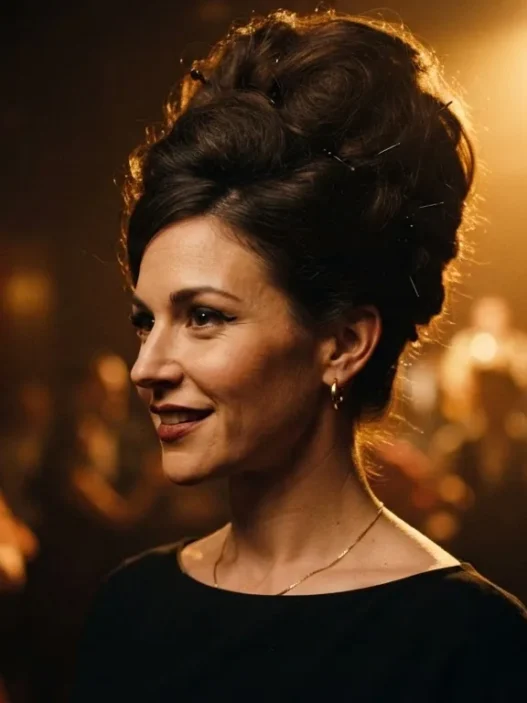
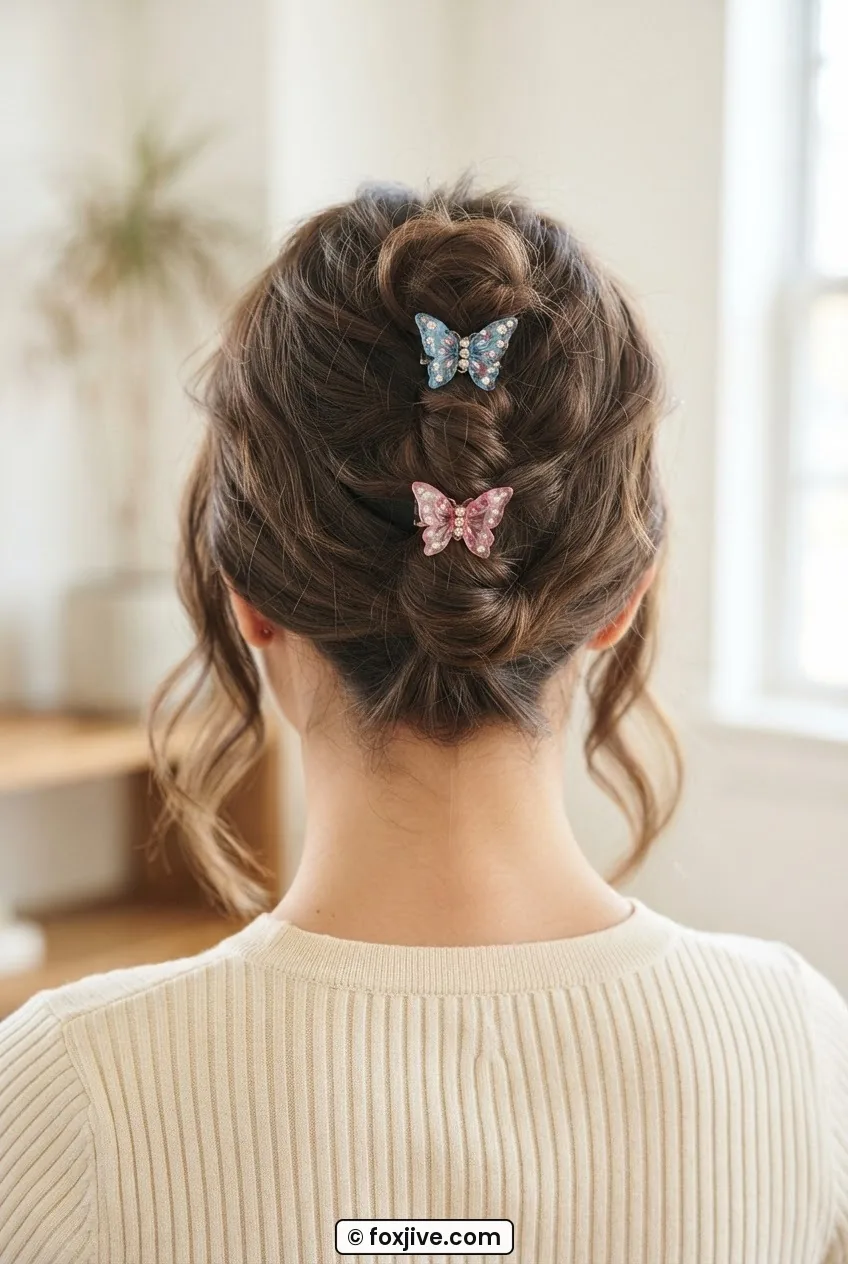
A French twist with butterfly clips holding the fold is a beautiful combination that sounds chaotic but works. The reason it works: a French twist is inherently structured and sophisticated, so adding Y2K clips to it creates a deliberate contrast that feels fashion-forward rather than confused.
The single adjustment is in the twist itself — make it relaxed. Not perfectly smooth, not every strand tucked in. Let the twist be a little undone, with a few pieces escaping at the front. Then use two or three butterfly clips along the vertical fold to secure it. The clips are doing real structural work here, not just sitting decoratively. You can also learn how styling a modern French twist might differ from the classic version — there are a few technique tweaks that make the loose version easier to achieve and hold.
11. The Single Statement Clip, Used Like a Barrette
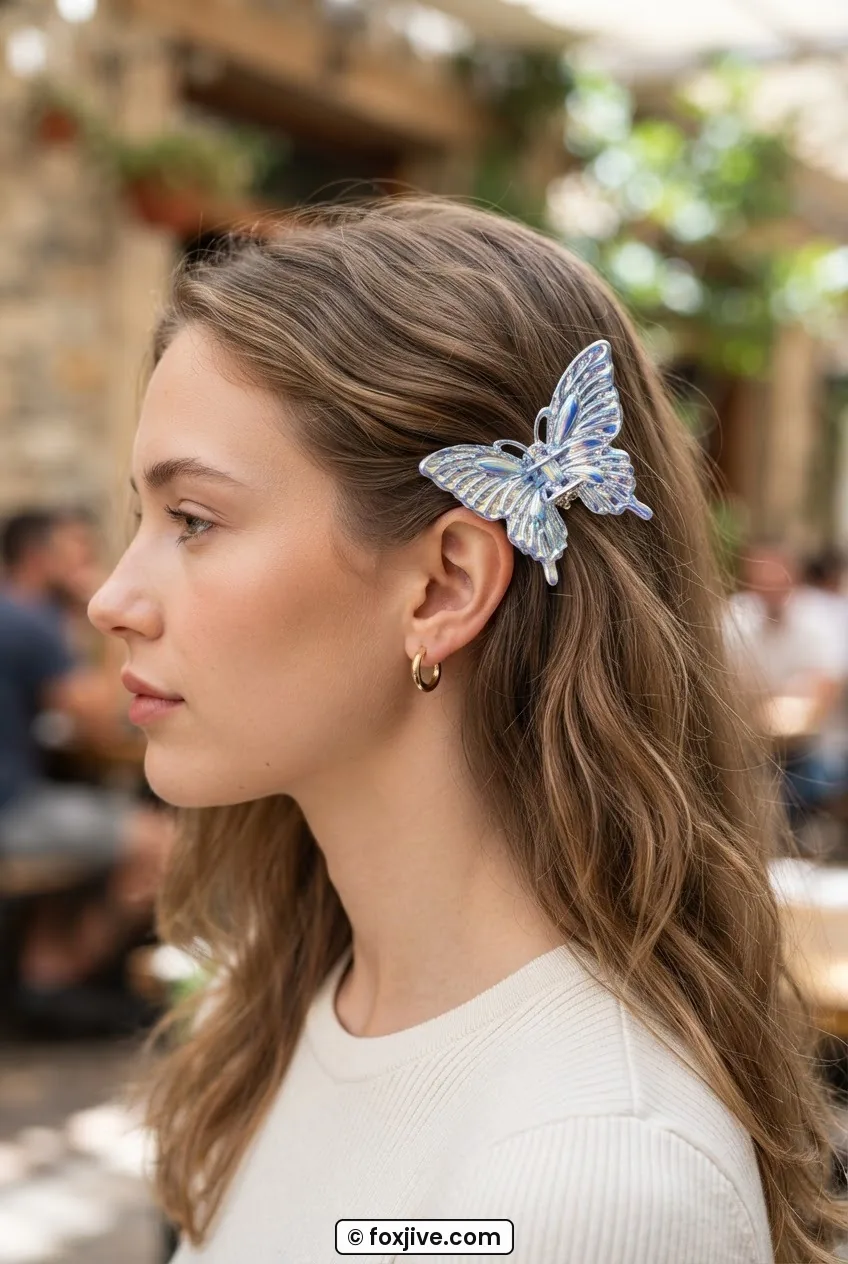
This is the most minimal interpretation and possibly the most wearable one. A single larger butterfly clip — ideally in a color or finish that’s doing something interesting, like chrome, tortoiseshell, or an unexpected blue — used exactly like you’d use a barrette. Sweep a section behind one ear and clip it. Pin back the top layer on one side. Hold a small braided section at the nape.
The adjustment here is treating the clip as a quality accessory rather than a pile-on piece. One beautiful clip, used with intention, is a completely different object from sixteen cheap ones scattered everywhere. It’s also worth knowing that the right clip size for your hair thickness matters — thin hair needs smaller clips with lighter spring tension, while thick hair can handle the larger statement pieces without them sliding out by lunch.
If you’re on the lookout for other vintage-meets-modern accessories and styling ideas, Foxjive has a whole section dedicated to retro hair that’s worth a browse.
Quick Answers About Butterfly Clips
Are butterfly clips only for thick hair?
Not at all — but clip size matters. For finer or thinner hair, stick to the smaller mini clips with lighter spring tension. The large statement clips designed for thick sections will slide and pop open on fine hair before the afternoon is out. Match the clip size to the section size you’re holding, and it works on any texture.
What’s the difference between a butterfly clip and a claw clip?
A claw clip has teeth that wrap around the hair in a continuous arc. A butterfly clip has two hinged “wings” that fold closed, holding a smaller gathered section. Butterfly clips are generally lighter, hold less hair, and have that distinctly Y2K visual profile. They’re decorative in a way that claw clips aren’t quite — the wing shape is the whole point.
How many butterfly clips is too many for an adult?
My personal ceiling is five or six, and even that works only with mini clips scattered loosely — not clustered in tight rows. If you can count all your clips at a glance from across the room, that’s probably too many. Three or four placed thoughtfully reads as intentional. Eight lined up across the crown reads as 2002. There’s nothing wrong with 2002 if that’s what you’re going for, but if you want the look to feel current, restraint is your friend.
Can butterfly clips work on short hair?
Yes — shorter hair is actually a great home for mini butterfly clips. A pixie or chin-length bob can carry two or three small clips pinning back face-framing sections beautifully. The key is using clips with a lighter spring so they don’t drag short sections out of place. Think of them as tiny functional barrettes with better aesthetics.
There you go — eleven ways to wear butterfly clips hairstyles without feeling like you raided your childhood bedroom. The shoebox is officially back in rotation for me, and honestly I think a few of these look better now than they ever did the first time around. If you’ve got a look you’ve been working with and want to share it, feel free to reach out — I genuinely love seeing how people are putting these back together. And if you want to know more about the brain behind this blog, the about page has the full story.